U.S. authorities uncovered and stopped a nearly $4 million plan to buy and smuggle military-grade weapons from the United States to South Sudan, leading to prison sentences for two conspirators and forfeiture of funds and materiel tied to the scheme.
Peter Biar Ajak, 42, of Maryland, received a 46-month prison term from United States District Judge Sharad H. Desai for the District of Arizona, followed by three years of supervised release. His co-defendant, Abraham Chol Keech, 46, of Utah, was sentenced on December 18, 2025, by Judge Desai to 41 months in prison and three years of supervised release. Both men previously pleaded guilty to Conspiracy to Violate the Arms Export Control Act and Conspiracy to Violate the Export Control Reform Act.
According to court filings, the conspiracy ran from at least February 2023 through March 2024, during which Keech and Ajak tried to illegally acquire and export nearly $4 million worth of export-controlled, military-grade weapons and ammunition. The plan targeted opposition groups in South Sudan that wanted to topple the existing government. Authorities say the defendants understood they needed U.S. export licenses and moved to evade that requirement.
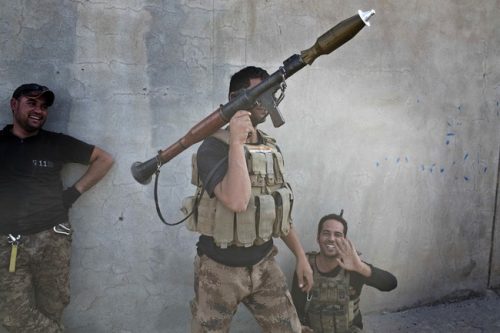
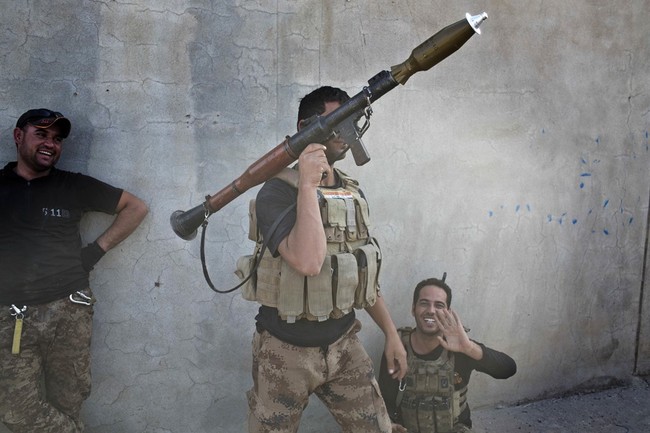
Prosecutors spelled out a brazen list of items the defendants sought to move: ten Stinger missile systems, two hundred grenade launchers, more than a thousand machine guns and rifles, and over 3.5 million rounds of ammunition. The scale and specificity of the haul alarmed investigators because these are advanced systems and bulk munitions that can change the balance of conflict. The intent, investigators say, was regime change in South Sudan and installing Ajak as the new leader.
“From a suburb of our Nation’s capital, Ajak conspired to export U.S. weaponry to South Sudan, where he planned to lead a coup and install himself in power,” said Assistant Attorney General for National Security John A. Eisenberg. “Ajak discussed ways to conceal his conduct, which he knew was illegal, including by misrepresenting financial transactions as attempts to provide humanitarian aid. The National Security Division is committed to prosecuting violations of U.S. export control laws to ensure that U.S. weapons do not fall into the wrong hands.”
Federal agents say the defendants discussed bribing officials, concocting false paperwork, and disguising shipments as humanitarian aid to slip the weapons past export controls. They even created a fake invoice to hide the origin and purpose of payment from banks and other intermediaries. That level of concealment made the scheme a priority for multiple national security units across government.
“The defendants in this case sought to bypass U.S. export control laws, with Mr. Ajak directing a conspiracy that amassed a $4M arsenal of military-grade weapons intended to effect a coup d’état of South Sudan,” said U.S. Attorney Timothy Courchaine for the District of Arizona. “Thanks to federal prosecutors, agents and investigators from across the spectrum of U.S. government agencies, the plot was thwarted and the defendants were brought to justice, safeguarding our national security interests.”
As part of the plea agreements, defendants agreed to forfeit nearly $2 million they had raised to buy the weapons; those funds and related materiel were seized by the United States. The forfeiture reflects both an effort to deny bad actors the proceeds of their crimes and to strip away the logistical means to reattempt similar trafficking. Investigators emphasized the seizures were crucial to shutting down the network involved.
Law enforcement stressed that South Sudan was under an arms embargo and that exporting without a license was a clear violation of U.S. law. The defendants’ awareness of that embargo was central to the charges, and prosecutors noted their deliberate attempts to mislead both regulators and financial institutions. That deliberate deception elevated the case beyond a simple smuggling scheme to a targeted effort to subvert controls designed to prevent destabilization abroad.
“By disrupting an attempt to unlawfully export advanced weapons systems, this investigation helped protect U.S. forces from weapons that could potentially be utilized against them on future battlefields,” said John Helsing, Special Agent in Charge of the Defense Criminal Investigative Service’s Western Field Office. “As the investigative arm of DoD’s Office of Inspector General, DCIS remains fully committed to safeguarding DoD equities and ensuring that military-grade weapons do not fall into the hands of those who would endanger American service members.”
The investigation combined resources from multiple agencies, creating a coordinated front to block the illicit transfers. The Department of Homeland Security’s Homeland Security Investigations, the Department of Defense Office of Inspector General, Defense Criminal Investigative Service, the Department of the Army Criminal Investigation Division, the Department of Commerce’s Office of Export Enforcement, and the Federal Bureau of Investigation conducted the investigation. Prosecutors from the U.S. Attorney’s Office for the District of Arizona and the National Security Division’s Counterintelligence and Export Control Section handled the courtroom work.
Acting Special Agent in Charge Matthew Murphy of HSI Arizona summed up the broader threat these schemes pose. “The defendants in this investigation knowingly sought to undermine national security by violating U.S. laws related to illegal arms trafficking and the export of weapons,” he said. “As part of HSI’s core mission to investigate illicit transfers of arms to countries in turmoil, these conspirators attempted to destabilize national and international peace and security. HSI and our partners remain committed to pursuing charges against those who violate these laws.”
The sentences and forfeitures send a clear message that attempts to weaponize American industry and finance for foreign coups will be met with coordinated legal force. For officials focused on national security, stopping export violations at home is as important as battlefield readiness abroad. This case shows how investigators and prosecutors can combine tools to stop dangerous plots before they reach foreign shores.