A sharp look at a growing pattern: intensified protests, theatrical behavior from left-wing activists, and the consequences when performance replaces policy in public life.
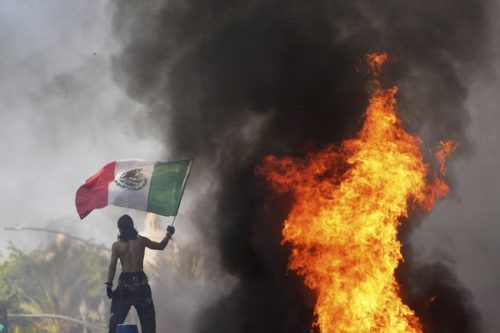
Los Angeles recently saw a surge of “protests” where officers were told to stand back while crowds swarmed a federal detention center. The scene outside the facility looked like a post-apocalyptic set, full of trash, shouting, and people trying to manufacture drama. That visual chaos gives you a clear window into how many of these demonstrations are staged for attention rather than public safety or coherent argument.
Most of the participants act like they are auditioning for a streaming show, not engaging in serious civic debate. You see people who seem to feed off the spectacle, performing for their peers instead of making a persuasive case to the broader public. It’s hard to take their demands seriously when everything is choreographed for cameras and applause.
These people 100% think they’re in a movie. It’s a performance. It’s all about their own egos and about imagining themselves as badass rebels fighting “the man.” In reality, they’re privileged little nerds who have zero relationships with working class or poor people and have no… pic.twitter.com/i5TLy5WCra
— Meghan Murphy (@MeghanEMurphy) January 31, 2026
Some of the footage is almost comical in its desperation. One clip shows a young woman doing her best Jim Carrey walk from Ace Ventura while flailing her arms and repeating canned slogans. Theatrics like that undermine legitimate grievances and turn protests into a bad reality sketch.
Other videos capture failures framed as bravery, like a woman on a loudspeaker trying and failing to start a chant, then complaining nobody joined her. In Austin, a protester flipped off officers amid tear gas and acted like that made a point. These are stunts, not strategy, and they reveal more about the performers than the cause.
This kind of behavior isn’t new, it’s a trend. It’s a staple of leftwing activism, the kind of showmanship that precedes what some call the “Theatre Kid-Occupied-Government” that echoes through campus politics and into public office. A famous bodycam video famously showed one campus activist reach out to an officer while begging him to “take [his] hand and come with [him]” to stand against the war in Gaza, a moment staged to feel cinematic rather than substantive.
The optics often matter more to these activists than outcomes. They borrow moves from failed ad stunts and viral marketing lessons to dramatize their message, just like the Pepsi fiasco that used a celebrity moment and backfired. When activism prioritizes image over policy, real problems—public safety, legal process, national security—get shoved aside.
It certainly doesn’t help the Left’s case when you have famous actors writing terrible poetry to “commemorate” the life of an individual who attempted to run down federal agents with her car, which is without a doubt a fate worse than death. Those gestures signal a cultural willingness to romanticize dangerous acts instead of condemning violence. The artistic crowd applauding violence is a frightening normalization of lawlessness.
Laughable as some of these moments are, they have political teeth. A generation of performative activists have transitioned into public office, bringing the same show-first instincts to governing roles. The result is policy that looks like an episode of a drama series—loud, impulsive, and often shallow.
When law enforcement is ordered to step back, the stage belongs to whoever makes the biggest scene, not whoever has the clearest solution. That dynamic rewards spectacle and punishes restraint, and it leaves neighborhoods, judges, and federal agents to clean up the fallout. Normalizing that trade-off corrodes trust in institutions and makes measured enforcement almost impossible.
From a Republican vantage, the trend is alarming because it swaps debate for drama and governance for grandstanding. Political power should come from convincing voters with facts, not viral clips and staged confrontations. Allowing theater to set policy risks turning serious civic duties into scripted performances.
Public life needs accountability, not applause lines. The more protests become a platform for self-styled stars, the less likely we are to see durable solutions to crime, immigration, and national security. Spectacle can draw attention, but attention without substance rarely produces anything that improves people’s lives.