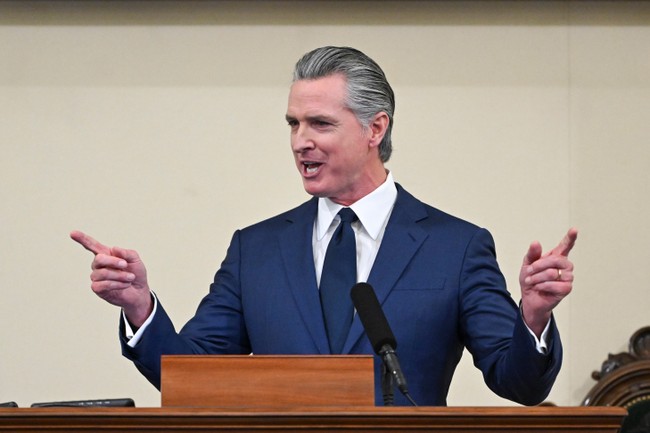
California Gov. Gavin Newsom exploded on social media after Louisiana moved to sue him over his refusal to extradite a doctor accused of shipping abortion drugs into the state.
Gavin Newsom reacted publicly and angrily when Louisiana officials signaled legal action over an indictment tied to alleged distribution of abortion-inducing medication. The fight centers on whether California will hand over a doctor wanted by Louisiana authorities under a new law that severely restricts abortion in that state. This clash has become a flashpoint, mixing criminal charges, state sovereignty, and a broader cultural war over reproductive law.
Newsom posted on X, “Louisiana plans to sue me because I won’t extradite a doctor for providing an abortion.” He followed that with a blunt message aimed at Louisiana Attorney General Liz Murrill: “Go f**k yourself. California will never help you criminalize healthcare.”
Murrill answered back in a post that leaned into the deep red tone of Louisiana politics: “Bless your heart, @GavinNewsom. Killing Louisiana babies isn’t healthcare, nor is shielding California drug dealers. The sovereign State of Louisiana will defend life. See ya soon,” she wrote.
The dispute stems from an indictment accusing doctor Remy Coeytaux of allegedly trafficking illegal abortion pills into Louisiana, where a near-total ban now makes distribution of abortion-inducing drugs a crime except to save the mother’s life. Louisiana authorities pursued charges and sought extradition, while California pushed back, arguing its officials will not cooperate in criminalizing what they call reproductive health services.
Louisiana plans to sue me because I won’t extradite a doctor for providing an abortion.@AGLizMurrill: Go fuck yourself. California will never help you criminalize healthcare. pic.twitter.com/1CPMAWwCNU
— Gavin Newsom (@GavinNewsom) February 6, 2026
That posture prompted Newsom to flatly deny Louisiana’s request. “Louisiana’s request is denied,” he said, adding that California would not permit politicians from other states to “try to punish doctors based on allegations that they provided reproductive health care services. Not today. Not ever. We will never be complicit with Trump’s war on women.”
The legal exposure for Coeytaux, if the indictment holds up in court, is severe: prosecutors say he could face decades behind bars. Louisiana leaders framed the case as enforcing state law and protecting unborn children, while California framed its refusal as a defense of medical practitioners and patients within its borders.
From a Republican perspective, this confrontation is exactly the kind of interstate lawlessness that voters ought to notice. States have different laws, but extradition exists to keep criminals from evading justice by crossing state lines. When a governor refuses a lawful extradition request for a criminal indictment, it throws a wrench into the rule of law and invites political theater over sober legal process.
Jeff Landry and other Louisiana officials have signaled they will not back down, arguing their state has the right to enforce its statutes and that alleged criminal activity must be addressed. That stance appeals to voters who want consistent enforcement of state laws and who view abortion-related offenses as serious crimes under Louisiana’s recently enacted statute.
At the same time, Newsom’s posture plays well with his liberal base in California, where protecting abortion access remains a top priority. But the showmanship and profanity-laced reply directed at another state’s attorney general stokes the perception of a governor who treats governance like culture war theater instead of a forum for legal argument and interstate cooperation.
What happens next likely lands in courtrooms and possibly the Supreme Court if constitutional issues about extradition or interstate enforcement arise. This is shaping up as a headline-ready standoff that mixes criminal law, state sovereignty, and political calculation, and it will matter at the ballot box and in statehouses as voters weigh how elected officials handle disputes that cross state lines.