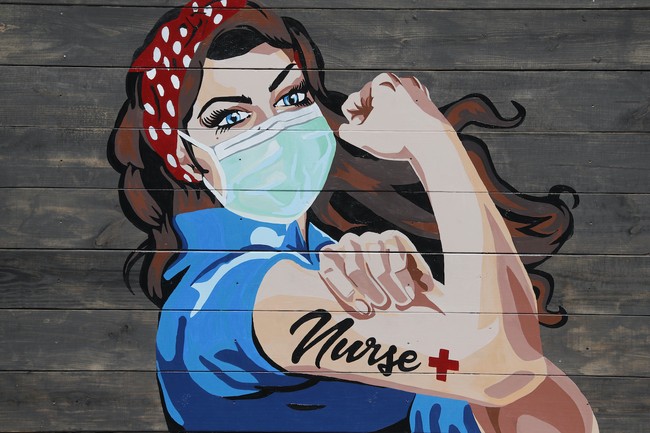
National Nurses Union Calls for the Abolition of ICE — a sharp turn that critics say exposes politics overtaking a care profession and fuels a broader debate about trust, safety, and who should represent health workers in the public square.
There is a clear sense among many conservatives that nursing has drifted from patient-first work into partisan advocacy. Instead of focusing on bedside care and professional standards, some groups are behaving like political outfits that push agendas far removed from clinical priorities. That shift matters because public trust depends on professionals being devoted to health, not ideology.
Several major nursing organizations are now seen as aligning closely with the Democratic Party, and that alignment brings real consequences. When unions or associations prioritize political battles, they risk alienating patients and colleagues who expect neutrality in healthcare. The result is a fractured profession where allegiance to an ideology can matter more than clinical competency.
So here’s another nurses’ union, demanding political obedience and the abolition of ICE.
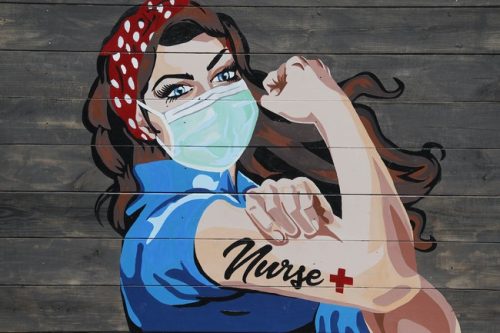
Nurses take a sacred oath to advocate for our patients so when armed agents create a climate of fear in our communities, we take action!
Nurses don't just treat symptoms – we fight the causes. #AbolishICE pic.twitter.com/b18T1snMwS
— National Nurses United (@NationalNurses) February 8, 2026
That demand is a flashpoint because it moves the debate from policy into professional identity. When a union calls for dismantling a federal agency, it signals that its scope includes national politics rather than worker protections and staffing concerns. That expansion of role makes many people question whether such unions still represent patients’ best interests.
Illegal immigration puts measurable strain on hospitals and clinics, costing taxpayers and providers billions every year and squeezing capacity for routine care. High patient volumes and uncompensated services push smaller facilities toward closure and force hard choices about resource allocation. Tragic cases highlight the stakes: Laken Riley was a nurse who was raped and murdered by an illegal immigrant, and critics say no major union stepped up to push for protections that could prevent similar tragedies.
For folks who believe in law and order, that omission is a glaring failure of responsibility. Nursing associations are supposed to champion safe workplaces and patient safety, not pick political fights that distract from those goals. When a union’s priorities look like partisan activism, it weakens their moral standing to demand protections for nurses.
People understandably want clear consequences when professional groups step into controversial politics. Some argue that nurse licensing boards and hospitals should rethink credentialing for those who make their practice a platform for political campaigns. That is why voices on the right are saying the profession should be accountable and that political advocacy can cost professional privileges.
Trust in healthcare is fragile, and making medicine into a battleground chips away at that trust. Patients expect clinicians to provide care based on medical need, not on political litmus tests. When ideological capture becomes visible, many patients will look elsewhere, and that harms community health overall.
There is zero trust with people who make healthcare so blatantly political.
Yes, they should. Give them a choice and 24 hours to decide.
Malpractice insurers and hospital administrators are watching too, because reputational damage has a cost. If a nurse’s political affiliations lead to a perception of bias or negligence, lawsuits and liability claims follow. One well-publicized case tied to political behavior can trigger a cascade of legal and financial consequences for employers and insurers alike.
We cannot tolerate this ideological capture of our medical field. Nothing good comes of it.
More and more, critics say, the medical profession is being used as a vector for pushing national policy rather than staying focused on healing and standards. That trend risks turning nursing into a disposable asset in political wars, rather than a respected calling centered on patient welfare.
If public perception slides and nursing ends up with the same low favorability as a broken institution, recruiting and retention will suffer. Fewer young people will want to join a field seen as politicized, and current staff may leave to avoid being painted into a corner. That outcome would damage healthcare access in communities that already struggle.
At stake are more than headlines: it’s the integrity of care, the safety of workplaces, and the long-term ability of hospitals to serve patients without partisan interference. Republicans urging reform want clear boundaries so medicine can return to its core purpose: helping people get well without political strings attached.