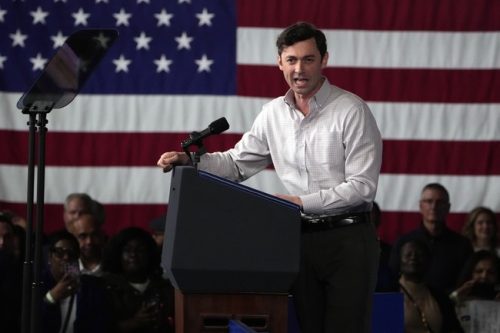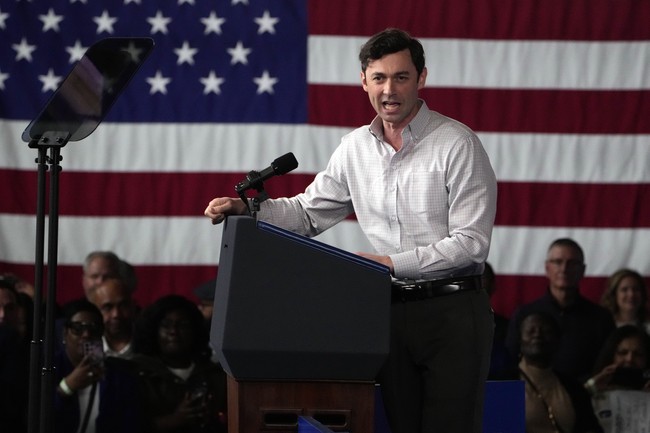
Sen. Jon Ossoff kicked off his re-election bid in Atlanta with a combative speech that targeted President Trump, conservative figures, and federal immigration policy while highlighting a split between the rhetoric he used and some policies he accepts for his own events.
Georgia Sen. Jon Ossoff launched his re-election campaign on Saturday in Atlanta, drawing a crowd and aiming punches at national Republican leaders. He used sharp language to paint a picture of an America he says is under threat from fear-driven politics. The event set the tone for a campaign that will likely lean on big-picture warnings about the right.
At the rally, Ossoff singled out President Donald Trump and other conservatives by name and framed their politics as exclusionary. “Trump, JD Vance, Stephen Miller,” Ossoff said. “They offer a small, closed, menacing vision of America defined by fear and scarcity and exclusion. They imitate the blood and soil rhetoric of history’s worst regimes.”
The senator’s broad-brush attacks came even as violent incidents around political events have been in the news. This week an Ohio man was indicted for threatening to kill J.D. Vance during an Ohio visit, and reports say Trump has survived multiple assassination attempts while conservative commentator Charlie Kirk was assassinated last year. Still, that didn’t stop Ossoff from attacking Republicans
Ossoff also took aim at federal immigration officials in his remarks, criticizing enforcement and the administration’s priorities. Those comments came alongside references to the federal government’s public lists of dangerous illegal immigrants arrested, which include individuals accused of serious crimes. His language was pointed and intended to rally voters who view immigration enforcement as inhumane or politically motivated.
🚨 DEMOCRAT SENATOR JON OSSOFF just went FULL unhinged:
Compared President Trump and his administration to WHITE SUPREMACISTS and NAZIS.
“They imitate the blood and soil rhetoric of history’s worst regimes.”
Ossoffs evil rhetoric is sickening
pic.twitter.com/pJwTyrTx1C— Gunther Eagleman™ (@GuntherEagleman) February 7, 2026
There’s an awkward contrast in Ossoff’s approach to identification and security. He required attendees to show a government-issued ID to get into the event, enforcing a practical security measure at his own rally. Yet he opposes the SAVE Act, legislation that would establish a government-issued ID requirement for voting in federal elections, drawing criticism for appearing inconsistent on ID policy.
Ossoff’s stance on voter ID and the SAVE Act underscores a broader debate about rules versus rhetoric. Requiring an ID to enter a private campaign event is a narrow safety step; opposing a uniform federal voter ID requirement is a policy choice tied to beliefs about accessibility and federal power. Voters watching this campaign will likely ask whether the rules a candidate applies to his events should match the standards he seeks to impose nationwide.
While Ossoff focused on cultural and rhetorical critiques, the Trump administration has been touting a series of policy moves it says benefit everyday Americans. The administration introduced Trump RX, a marketplace intended to lower costs for about 40 common prescription drugs, including GLP1 treatments in both injectable and pill forms. That pitch is being aimed at voters who want cheaper drugs without expanding government-run programs.
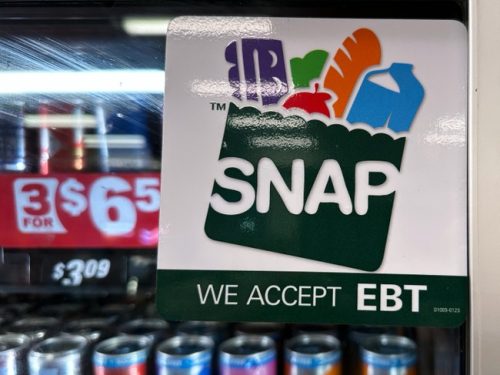
Beyond drug pricing, the administration claims reforms to dietary guidelines and changes to the Supplemental Nutrition Assistance Program are providing practical help to families. SNAP remains a central safety net for roughly 41 million people, and adjustments to how nutrition guidance and benefits operate are part of a broader conservative push to reshape welfare and health policy.
The campaign trail in Georgia now frames a contrast between sharp, moralizing rhetoric and concrete policy claims. Ossoff’s language intends to mobilize progressive voters and framers of the national debate, while the administration’s talking points emphasize measurable changes voters can point to in daily life. That divide—between moral critique and policy deliverables—will be a central storyline as the race moves forward.