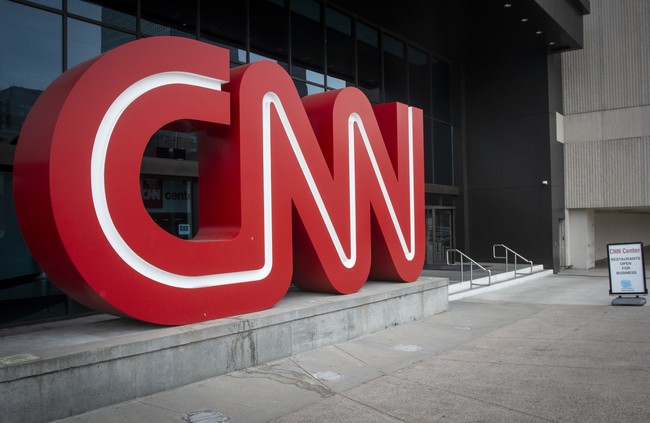
Scott Jennings challenged a liberal guest on CNN over the SAVE Act and voter ID, pressing for specifics and highlighting broad public support for requiring proof of citizenship at the ballot box.
The SAVE Act would limit voting to U.S. citizens and tighten voter ID requirements, a policy position that has ignited sharp debate on cable news. Supporters argue it protects election integrity, while opponents claim it risks disenfranchising communities of color. That clash played out vividly when Jennings pushed a guest to explain how the bill would supposedly strip away voting rights.
Republicans see this as a straightforward defense of the franchise: safeguard ballots by ensuring only citizens vote. Polling lines up with that view, with substantial majorities across demographic groups backing voter ID measures. The argument from the Left has become that these protections are somehow discriminatory rather than commonsense safeguards.
On CNN, the exchange between Scott Jennings and Alencia Johnson boiled down to one simple demand: show the mechanism. Jennings repeatedly asked how the SAVE Act would operationally prevent eligible voters from casting ballots. That insistence forced the liberal case into a series of broad claims instead of verifiable specifics, creating an uneven moment for the cable panel.
Democrat strategist Alencia Johnson was spinning wildly on CNN, accusing President Trump of taking away the voting rights of black Americans.
Scott Jennings didn’t interrupt her. Instead, he waited for her to finish.
When he entered the fray, he asked the one question that… pic.twitter.com/cRWB0JuwsI
— Overton (@overton_news) February 12, 2026
JOHNSON: “He is actually championing a bill that actually would take voting rights away from a lot of black people in this country, all during black history month, and then call the president the first black president and the first lady monkeys and apes in this during this month.”
“So this doesn’t absolve Donald Trump of his racism. We all know exactly who he is. The reality is the conversation, and the question should be, why do people continue to support him if they don’t want us to believe they are okay with racism?”
JENNINGS: “Wait, what voting rights is he taking away from black voters?”
JOHNSON: “The SAVE Act! That’s exactly what we’re talking about.”
JENNINGS: “How?”
JOHNSON: “That is actually going to disenfranchise overwhelmingly a lot of people of color.”
JENNINGS: “How? How?”
JOHNSON: “There are so many civil rights organizations that have run the data. If you look at the way it is going to disenfranchise black voters—”
JENNINGS: “How?”
JOHNSON: “It’s the same reason Chuck Schumer called it Jim Crow 2.0.”
JENNINGS: “How? You haven’t said how yet!”
JOHNSON: “I am talking about it. It’s the way that you’re putting new poll taxes on us.”
JENNINGS: “Poll taxes?!”
JOHNSON: “If you want to say that people have to prove that they are citizens, that they have to prove with a voter ID, the reality is you’re layering what is a constitutional right for the American people and making it harder for people to vote in this country, and it’s going to disenfranchise black voters.”
[…]
JENNINGS: “Does it concern you that you’re making all these claims you’ve yet to lay out how it’s hurting anyone.”
“But 76% of black voters think we should show an ID to vote. 80% of hispanic voters, 83% of the American people.”
“Are you saying that black voters are too dumb to know what’s good for them?”
“I mean, it sounds pretty condescending to me.”
That clip underscores the tactic of charging racism without detailing the causal path from the bill to alleged harm. Jennings kept the focus on concrete mechanics instead of labels, which made the debate about evidence rather than talking points. From a Republican angle, that’s the right move: push opponents to explain the policy consequences in clear terms.
The panel also included a tense moment with the host, where Jennings shifted attention to the lack of specifics backing the claims of disenfranchisement. When accusations land as assertions instead of documented effects, they lose persuasive power with an audience that cares about facts. Republicans argue that insisting on proof and transparent rules strengthens trust in the system.
Beyond that single segment, the larger fight is about how to balance access and security in modern elections. Conservatives favor measures that reduce fraud risk while preserving accessible voting for eligible citizens. That translates into policies like voter ID and citizenship checks, which many voters say make sense.
The political consequence for Democrats is acute: attacking voter integrity reforms without presenting clear evidence of harm opens them to the charge of protecting partisan advantages. Republicans see the national polling and the on-air exchange as proof that the usual lines of attack are fraying. The conversation will keep moving toward policy details because voters want answers, not slogans.