Sherrod Brown’s endorsement of Elliot Forhan has raised eyebrows after Forhan said he was “going to kill Donald Trump,” a comment he later framed as seeking a conviction and capital punishment, and Brown’s response has drawn criticism for appearing to reward that rhetoric with fundraising support.
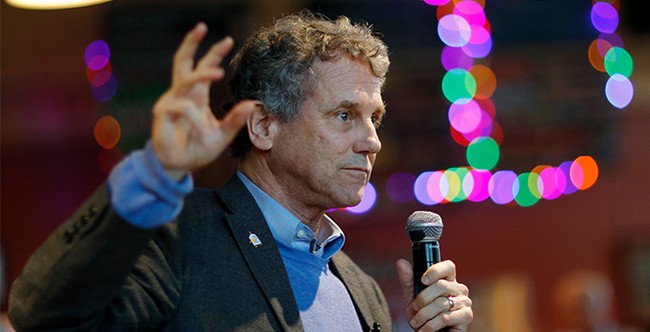
Sherrod Brown has publicly backed Elliot Forhan, who is running for Ohio attorney general, even after Forhan’s explosive statement about Donald Trump drew national attention. The endorsement ties a high-profile Democratic senator to a candidate whose language many found alarming. That connection has put Brown on the defensive with voters who expected clearer boundaries around violent rhetoric.
Forhan stated plainly, “I want to tell you what I mean when I say that I am going to kill Donald Trump,” and then explained the legal framework he claimed to mean. “I mean, I’m going to obtain a conviction rendered by a jury of his peers at a standard of proof beyond a reasonable doubt based on evidence presented at a trial conducted in accordance with the requirements of due process, resulting in a sentence duly executed of capital punishment.” That quote has been replayed and dissected across the political spectrum.
Instead of stepping away from Forhan after the backlash, Brown has hosted multiple fundraisers in the candidate’s favor and praised allies in ways that suggest tolerance for extreme statements. Brown called a fellow Democrat “the best damn senator in the land,” language that signals affection for party figures even when they court controversy. On the same day he lauded a candidate, Brown received almost $19,000 in contributions from Ohioans, an outcome critics point to as evidence of mixed priorities.
BREAKING: Elliot Forhan, Democrat Candidate for Ohio Attorney General, says he’s going to kiII President Trump through capital punishment
🚨🚨🚨 @secretservice @fbi pic.twitter.com/Suofbyme9i
— Libs of TikTok (@libsoftiktok) January 27, 2026
Republican observers see this as more than a misstep; they view it as emblematic of a broader tolerance in one party for rhetoric that crosses lines most voters expect leaders to respect. The optics of a senior Democratic figure accepting money and praise while a party ally uses violent phrasing is difficult to spin away. That dynamic feeds narratives about double standards in accountability for political speech.
Brown’s own comments about the political right in Ohio have not been measured in the same way he treats friendly fire within his party. He has described the rise of MAGA in his state as a “troubling time,” a phrase that signals deep concern about the movement’s local influence. He also once said, “I understand that they are supporting a racist for president, but it works for them,” a line that many on the right consider an inflammatory brush across millions of voters.
The fallout from Forhan’s words has had ripple effects beyond Ohio, feeding a national conversation about prosecutorial discretion, political violence, and accountability. Democrats heading into the midterms are largely positioning themselves as opponents of Donald Trump, but endorsements like Brown’s complicate that posture. Voters are left weighing whether opposition politics justifies extreme talk or if it demands restraint and clarity.
For Brown, the choice to stand by Fundraisers and praise donors suggests a strategy focused on shoring up local money and loyal voters rather than addressing the substance of the controversy. That approach may work short term with a party base, but it risks alienating independents who recoil at threats, even those couched as legal ambition. Critics argue the distinction between prosecutorial zeal and rhetoric that sounds like a vow to “kill” is too fine for the public square.
From a Republican perspective, the episode highlights what many see as a troubling tolerance for aggressive language when it targets conservative figures. Opponents say that selective outrage weakens public trust in the fairness of political and legal norms. They contend that even talk framed as legal strategy should be avoided if it mimics violent phrasing reserved for criminals, not candidates.
Ohio voters now face a clearer choice about the tone and tactics they want from elected officials and their allies. The development places Brown’s judgment under scrutiny as he balances national profile and local politics. For some conservatives, the episode is another sign that Democrats are comfortable with rhetoric that looks dangerous when aimed at political rivals.
Beyond Ohio, the incident feeds into a larger conversation about how Democrats position themselves against Donald Trump and his movement. Figures like California’s governor are being elevated for their willingness to confront Trump, and that posture sometimes overshadows governance records. The debate now includes whether confrontation should ever cross into language that sounds criminal or vengeful.
At root, this is a debate about standards: standards for public speech, standards for endorsements, and standards for what party leaders will tolerate from their allies. Brown’s decision to back Forhan while fundraising alongside him leaves those standards unclear. Voters will be the ultimate arbiters of whether this strategy is acceptable at the ballot box.