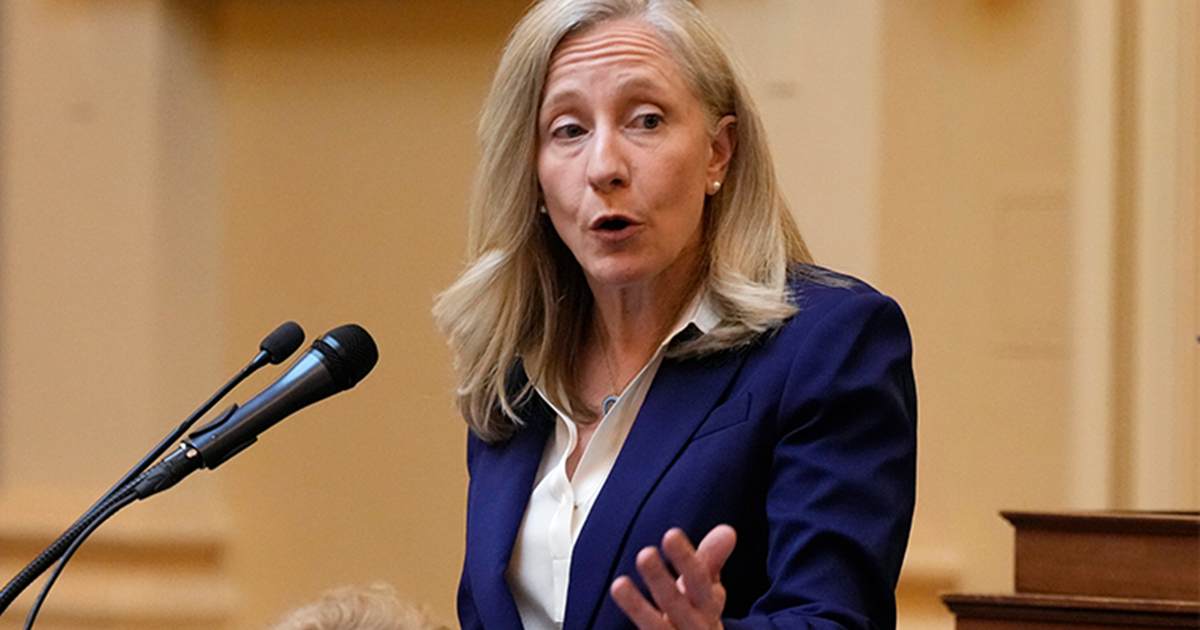
Virginia Democrat Abigail Spanberger will deliver the State of the Union rebuttal after President Trump’s lengthy address, and the reaction to her location choice has blown up online.
Abigail Spanberger is slated to give the official response to the State of the Union, likely in the early hours after President Trump finishes what many expect to be an unusually long speech. Trump is known for going off-script and stretching these events, so timing has been a big topic. That sets the scene for a response that will struggle to find an audience.
No one wants the job of delivering the rebuttal, and that’s not just snark. Historically these responses draw modest attention, and when the president treats the State of the Union like a marathon address the rebuttal risks being an afterthought. That reality shapes how the party picks spokespeople and staging for these moments.
Spanberger’s team chose Colonial Williamsburg as the backdrop for her remarks, and that decision has lit up the left-leaning corners of social media. Complaints landed quickly on platforms like Bluesky, with critics treating the historic setting as if it were some outrageous provocation. The backlash was loud, bizarre, and immediate.
Abigail Spanberger's counter-SOTU from Williamsburg Va. is triggering. pic.twitter.com/CwBGqdtzI5
— Tim Carney (@TPCarney) February 24, 2026
The online reaction shows how untethered much of progressive media has become from ordinary political judgment. People are weaponizing aesthetic choices and twisting history into political theater instead of engaging with the substance of the message. When a location becomes a stand-in for a culture war argument, the signal-to-noise ratio collapses.
Watching the left argue over colonial-era architecture while a national speech is underway feels surreal to many conservatives. It reads less like policy debate and more like performative outrage aimed at scoring cultural points. That approach rarely wins over undecided voters who care about practical issues.
Commentary from critics has not been subtle, and in some corners it has veered into extreme comparisons that are tone deaf and offensive. Smearing Colonial Williamsburg with charged analogies crosses a line from political critique into absurdity. Those hyperbolic claims do more to reveal the mood of the critics than they do to undermine the venue choice.
There is a pattern here: pick a symbolic target, amplify outrage, and claim moral superiority while refusing to engage on policy. That formula energizes a base but alienates everyone else. The result is a politics of spectacle rather than a politics of persuasion.
Conservatives will point out that voters see through these stunts, and they remember which side focuses on real-world problems. Jobs, crime, immigration, and the economy are the yardsticks most people use when they decide how to vote. When opponents spend their energy on symbolic battles, it hands the narrative advantage back to those who promise practical solutions.
Spanberger’s choice of venue probably aimed to evoke tradition and continuity, themes that play differently depending on your audience. For a Republican-minded viewer, the image of Colonial Williamsburg taps into a familiar story about the nation’s roots and resilience. For progressives, the same imagery becomes another flashpoint to protest and reinterpret.
That mismatch explains why responses to political theater feel so disconnected. Each side speaks its own language and expects affirmation rather than persuasion. The wider electorate, though, is watching what actually affects their lives, and they tend to ignore the theater.
Trump’s marathon approach to the State of the Union guarantees the rebuttal will come late and into the small hours for some viewers. That timing makes it harder to control the narrative and easier for critics to dominate the immediate reaction cycle. The digital echo chamber amplifies whatever outrages get traction first, not necessarily whatever arguments are strongest.
There is a clear takeaway for political communicators: symbolism matters, but substance wins elections. Choosing striking backdrops and staging viral moments can draw headlines, but it does not substitute for connecting with voters on bread-and-butter issues. The side that focuses on solutions tends to have the upper hand when voters decide who best serves their interests.
The online tantrum about location is a reminder of how polarized and performative modern politics has become. It also highlights an opportunity for conservatives to press on issues that matter and to point out the absurdity of sniping over backdrops while real problems persist. Voters will judge based on results, not outrage cycles.