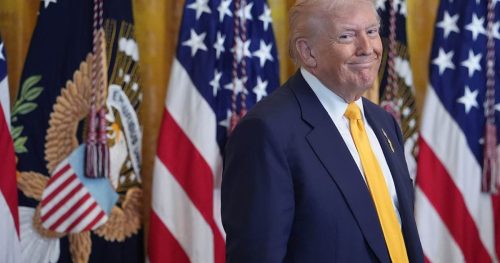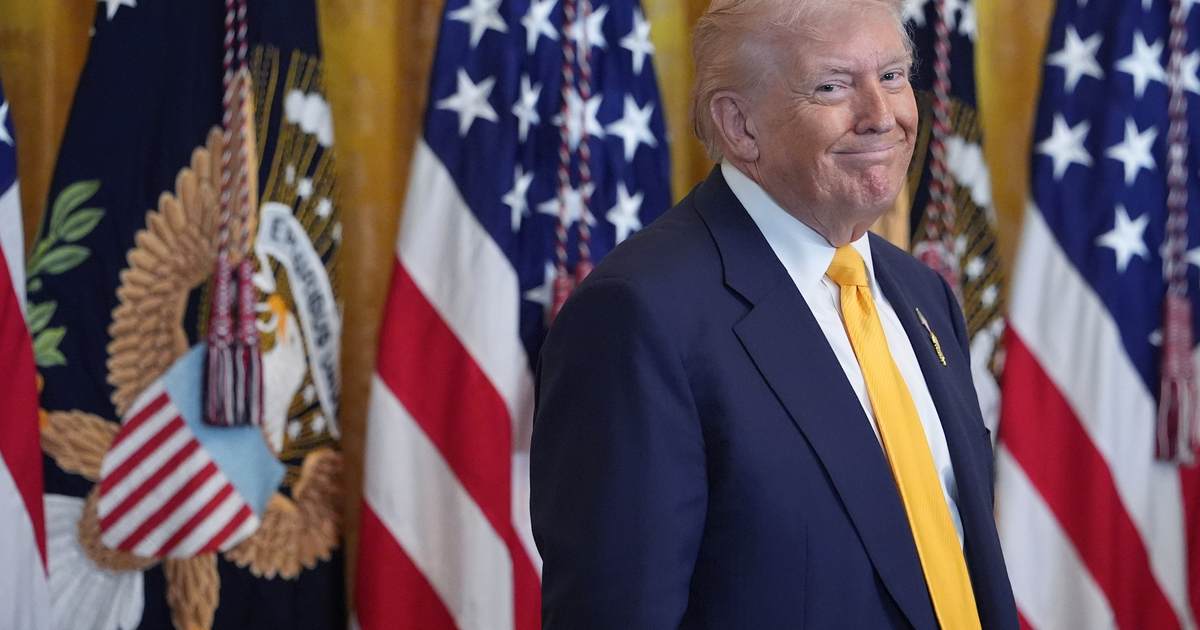
A surprise caller impersonating President Trump dialed into C-SPAN’s Washington Journal to blast the Supreme Court’s tariff decision, used the old “John Barron” name, and sparked a mix of laughter, suspicion, and debate after the court limited presidential tariff authority in a 6-3 ruling.
The call-in segment on Washington Journal has always been a place for pointed commentary, and this episode was classic live radio drama. A caller from Virginia launched into a loud, colorful critique of a recent Supreme Court ruling on tariffs, and listeners were quick to debate whether it was the president or a skilled impersonator.
Many people immediately noticed the voice matched familiar rhythms and mannerisms, which only added to the spectacle. Some guessed an impersonator, others wondered if advanced AI had finally mastered public appearances. Whatever the origin, the tone was unmistakably combative and unapologetic, the kind of freewheeling political commentary that gets national attention overnight.
“John Barron” was also the pseudonym Trump used for himself for many years. The president mentioned that “Barron” was his spokesperson and representative of his organization. “Barron” went on about how this decision was terrible, how Chuck Schumer couldn’t cook a cheeseburger, and how this ruling will hurt the American people. He was cut off mid-call, however. Still, you should enjoy this:
Because so many of you are talking about Friday’s C-SPAN caller who identified himself as “John Barron,” we want to put this to rest: it was not the president. The call came from a central Virginia phone number and came while the president was in a widely covered, in-person…
— CSPAN (@cspan) February 22, 2026
That name drop is what made the whole thing feel like a wink to longtime observers, and people immediately shared clips and reactions online. Whether it was a stunt or a prank, invoking “John Barron” carried clear intent—either to imitate a familiar brand of blunt political talk or to troll the media. The interruption by the show’s producers left listeners wanting more, which only amplified the buzz.
Beyond the theater of the call, there is a serious legal backdrop: the Supreme Court’s recent decision on presidential tariff authority. In a 6-3 opinion, the court held that the president cannot unilaterally impose tariffs under the International Emergency Economic Powers Act, narrowing executive latitude on trade actions. That ruling has real-world implications for how future administrations respond to national economic threats and foreign pressure.
From a Republican perspective, that outcome feels like a limitation on needed flexibility. Tariffs and trade tools are part of the president’s toolbox for protecting American workers and industries, and stripping authority without a clear legislative fix leaves officials boxed in. Conservatives who favor assertive trade policies see the decision as a call to Congress to clarify the law, not as an endorsement of judicial micromanagement.
Critics of the decision worry it hands more control to the judiciary and less to elected leaders who answer to voters. If crises arise that demand swift economic responses, the administration must have tools that are both effective and defensible. The debate now shifts to lawmakers: either restore clear statutory authority or accept a world where trade policy is hamstrung by procedural limits.
The whole episode also highlights how media moments can shape public perception of big legal questions, even when they’re wrapped in satire or spoof. A convincing impersonation or a viral clip can turn a complex legal ruling into a punchline faster than any court opinion can be parsed. That dynamic matters because public understanding often hardens into political pressure before policymakers have a chance to react thoughtfully.
As the dust settles, two things stand out: the court’s decision changed the legal landscape for presidential tariff power, and a single call-in spot became a flashpoint for conversation about authority, media, and political theater. Listeners and lawmakers alike are sorting through the implications while the internet runs with the rest. The laughter and the legal questions both have legs, and judging by the reaction, this story isn’t going away anytime soon.