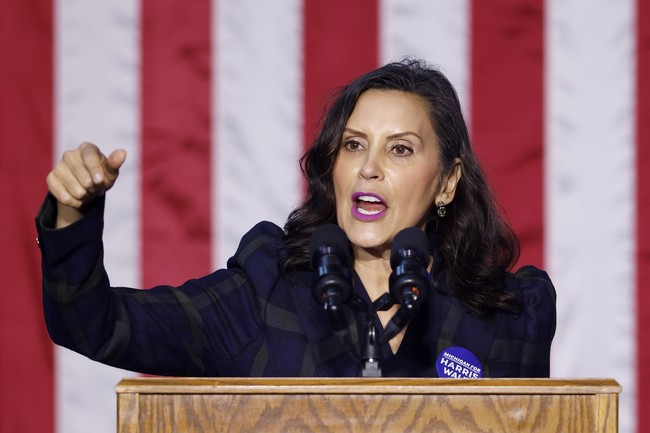
This piece looks at a shaky foreign policy moment by Michigan Gov. Gretchen Whitmer and how it could matter for a 2028 presidential bid.
Gretchen Whitmer stumbled when a simple foreign policy question landed in front of her at a national security conference, and that moment is worth examining. Her answer came across as hesitant and unfocused, the kind of clip opponents will replay endlessly. For anyone watching with a political eye, it raises questions about readiness for the national stage.
The moderator asked a direct question: “On Ukraine: What does victory look like?
Whitmer diverted, handed the floor to a Trump appointee, and made it clear she felt less qualified than others on the panel. Then she said, “It is, I, the, two, the two that I am on the panel with are much more steeped in foreign policy, than is, than a governor is. But, you know, I do think that Ukraine’s independence, keeping their land mass, and having the support of all allies, I think, is the goal, from my vantage point. Go ahead, ambassador, do a better job.” That answer sounded like someone trying to avoid owning a difficult policy position.
During a "foreign policy" panel in Munich, Gretchen Whitmer said AOC knew more about foreign policy than her. She struggled to answer about Ukraine and even looked to a Trump ambassador for an answer.
This is the @gretchenwhitmer the Michigan media has insulated for 8 years. pic.twitter.com/AYwE31tmUL
— The Midwesterner (@Th_Midwesterner) February 14, 2026
Whitmer was in Munich for the conference, but the stumble in front of national and international audiences was hard to miss. If you plan to run for president, the ability to answer a clear question about a major foreign war is a baseline expectation. Watching a governor struggle on that stage makes voters wonder why she spent time traveling instead of sharpening a command of basic strategic language.
Critics point out the optics: Whitmer logged more than 4,000 miles out of state and federal funds covered significant travel in 2025, while the public expects a candidate to be fluent in national security issues. She spent $1 million on international travel in 2025, visiting Australia, the United Kingdom, Germany, Japan, Singapore, the United Arab Emirates, and Canada. That level of globe-trotting invites scrutiny when you can’t clearly define what victory in Ukraine would look like.
Being a governor requires many skills, and foreign policy is often not a daily task for state executives. Still, if you make national aspirations explicit or implied, voters and reporters will press you on real-world matters like alliances, sovereignty, and deterrence. A muddled reply undercuts claims of seriousness and invites a narrative that a candidate is more style than substance.
Beyond Whitmer, the same conference produced other awkward answers from prominent progressives, offering fodder for critics on both sides. The exchange underscored a larger problem for some on the left: ideological slogans often replace crisp policy explanations. That’s dangerous when the subject is war, peace, or the use of American power.
One high-profile exchange involved U.S. Rep. Alexandria Ocasio-Cortez, whose response echoed the rambling tone now familiar to some Democrats in leadership. As the conversation shifted toward economic and fiscal options, AOC called for a sweeping new tax policy rather than addressing immediate strategic questions on the global stage. At the event she said, “I don’t think that—I—I don’t think that anyone—and we don’t have to wait for any one president to impose a wealth tax. I think it needs to be done expeditiously,” Ocasio-Cortez said. That line will please the base, but it does little to reassure mainstream voters worried about competence on either foreign policy or fiscal discipline.
For Republicans and undecided voters alike, these exchanges matter because they reveal priorities and poise. A candidate who cannot clearly articulate what success looks like in a foreign conflict suggests a lack of strategic clarity. Meanwhile, progressive demands for heavier taxation signal domestic priorities that clash with voters who favor economic growth and strong national defense.
The larger takeaway for those watching the 2028 horizon is simple: national campaigns expose gaps fast. Time spent jet-setting for visibility does not substitute for detailed policy preparation or persuasive, crisp answers when the lights are on. Political careers are built and broken by short clips like these, so expect opponents to use them freely.
Whitmer’s performance in Munich and the reactions it provoked create a choice for Republican strategists and conservative voters: highlight competence contrasts and push the argument that national leadership requires steadier, clearer judgment. That’s the political lesson this episode delivers, and it will be replayed for anyone who wants to make the case.