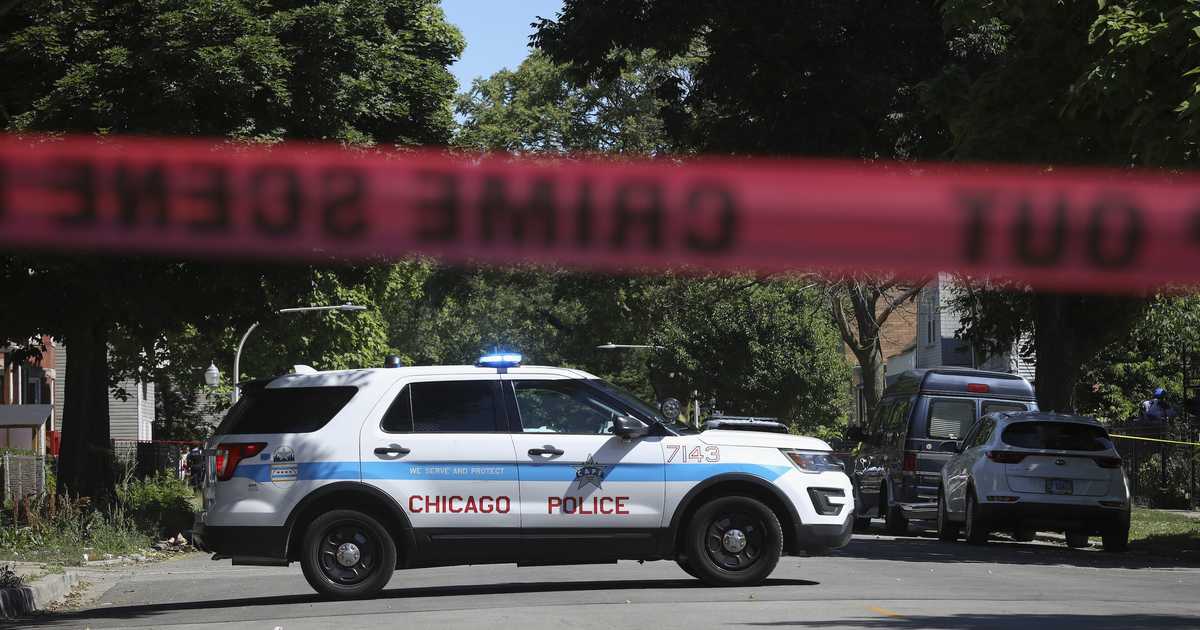
The neighborhood is stunned after 16-year-old Lilly Bova was fatally shot in Glenview, Cook County, and local authorities have not released the identity of a suspected killer, stirring questions about transparency, enforcement priorities, and how similar cases are handled.
The basic facts are terrible and simple: a well-liked high school sophomore, Lilly Bova, 16, was shot and killed Saturday morning around 11 a.m. in a typically quiet Cook County suburb. People who knew her are reeling and officials have said they are investigating a person of interest while offering little public detail. That silence is what has many observers uneasy.
A 16-year-old girl was gunned down in a quiet Chicago suburb Saturday morning — and authorities have neither caught nor identified her suspected killer.
The victim, identified as high school sophomore Lilly Bova, was killed in the Cook County neighborhood of Glenview around 11 a.m., authorities said.
Sheriff’s deputies are searching for a person of interest but have revealed few details about who may have killed the well-liked teen.
“While we cannot share further details at this time, this was an isolated incident and does not appear to pose a risk to the general public,” the Cook County Sheriff’s Office said in a statement — without revealing further details about the murder that has shocked her loved ones in the peaceful, affluent village.
That quoted sheriff’s statement is short on specifics and long on reassurance, and reassurances don’t bring Lilly back. When an incident involves a child or a teen, parents and neighbors reasonably expect clear and timely information about suspects and public safety. Withholding basic details feeds speculation and distrust, particularly when commuters and school runs are part of daily life in these suburbs.
There’s also a pattern here that makes people suspicious beyond the immediate heartbreak. Recent weeks have seen other fatal shootings that grabbed national attention, and when those cases involved noncitizen suspects, they became lightning rods for debate about border security and local enforcement. For many conservatives, repeated incidents tied to illegal entry or lax immigration enforcement are not isolated flukes; they’re symptoms of policy failures.
One widely discussed case involved Sheridan Gorman, an 18-year-old student who was killed on March 19, and later reporting named a 25-year-old suspect, Jose Medina, who was said to have entered the country illegally in 2023. That case, and others like it, are being used as evidence by critics who say current policies invite repeat tragedies and make communities less safe. Those critics argue the public deserves more candor from law enforcement and from leaders who set border and enforcement priorities.
When officials label a shooting “isolated” but refuse to identify suspects, it raises two immediate concerns. First, families and neighbors want actionable information to protect themselves. Second, there’s a public policy angle: if certain crimes are disproportionately linked to people who entered illegally or who were already wanted for other offenses, the community has a right to know that so elected officials can be held accountable. Transparency isn’t partisan; it’s a basic expectation in a free society.
Silence from authorities sometimes comes from legitimate investigative strategy, but it often coincides with political pressure to avoid inflaming tensions around immigration or crime. That calculus can look like political calculation to those who think public safety is being weighed against optics. Republicans who care about both the dignity of victims and the rule of law see selective disclosure as unacceptable and demand consistent standards.
Community leaders and local law enforcement should explain their choices clearly: when they withhold names, why, and how that decision protects the investigation without leaving the public in the dark. If a person of interest is being sought, the public should know what that term means in practice, what the suspect’s risk to others is judged to be, and what steps residents can take to stay safe. Vague phrases about “no threat to the general public” mean little to grieving families.
Politicians and the media also have roles to play. Sensationalism and spin both make matters worse, but so does silence that looks designed to avoid inconvenient questions. Demand for accountability is not the same as a demand for spectacle; it’s a demand for honesty from officials sworn to protect citizens. Families deserve that honesty before political convenience or fear of backlash dictates the narrative.
Until investigators share clearer information about who killed Lilly Bova and why, suspicion will fill the gaps. The community deserves both justice for Lilly and the assurance that safety, law, and common sense are being prioritized over optics. That’s the hard, necessary conversation that needs to happen now.