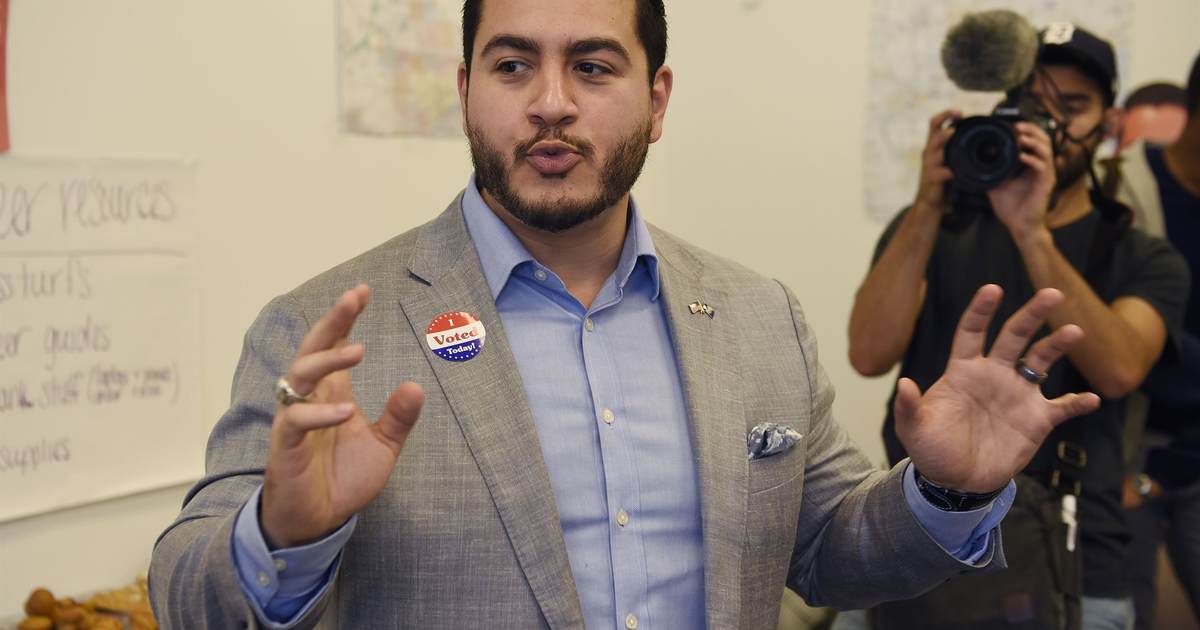
Leaked audio shows Michigan Democratic Senate hopeful Abdul El-Sayed told staff he would stay silent on Ayatollah Ali Khamenei’s assassination because “there are a lot of people in Dearborn who are sad,” and the clips have sparked outrage, context, and dozens of reactions online.
Michigan Democratic Senate candidate Abdul El-Sayed is under fire after new recordings surfaced showing his campaign debating whether to comment on the killing of Iran’s supreme leader. The clips also reconnect him to controversial allies, including a planned appearance with a host whose comments about October 7 have proved explosive. “It doesn’t matter if f***ing rapes happened on October 7,” Piker said on his show. “That doesn’t change the dynamic for me even this much. So that’s the other part of this problem that many people can’t contend with. Like, the Palestinian resistance is not perfect.”
Now El-Sayed faces criticism for telling staffers he would avoid public comment on Khamenei’s death because of sympathy in parts of Michigan. The candid remark — “I also want to remind you guys that there are a lot of people in Dearborn who are sad today. So, like, I just don’t want to comment on Khamenei at all. Like, I don’t think it’s worth even touching that,” — has been replayed and analyzed across social platforms.
Michigan’s left-wing Democratic Senate candidate, Abdul El-Sayed, told staffers he wanted to avoid making a public statement about the assassination of Ayatollah Ali Khamenei—or taking any public position on it at all—because “there are a lot of people in Dearborn who are sad” about his death, according to audio from a private campaign strategy call obtained by the Washington Free Beacon.
Exclusive audio: Michigan's left-wing Democratic Senate candidate Abdul El-Sayed told staffers he wanted to avoid making a public statement about the assassination of Ayatollah Ali Khamenei because "there are a lot of people in Dearborn who are sad" via @alanagoodman @FreeBeacon…
— Eliana Johnson (@elianayjohnson) March 30, 2026
…
His remarks came during a conference call with his communications team on March 1, during which the candidate and his communications team discussed his messaging on Operation Epic Fury. The previous day, Feb. 28, an Israeli airstrike killed the Iranian dictator, who, as president of Iran and then as the country’s supreme leader starting in 1989, oversaw the murder and torture of political opponents inside Iran and deadly terrorist attacks against the country’s enemies, including hundreds of Americans.
The reporting pointed readers to a full conference call clip, a YouTube recording just over 35 minutes long, so anyone can hear the exchange for themselves.
When journalists pushed El-Sayed about the matter, his responses included references that many saw as deflections, and more audio surfaced offering additional context. He leaned into explanations that failed to satisfy critics demanding clarity about where he stands on the Iranian regime and its violence.
Reporters also released raw audio files from the campaign call, giving the public direct access to the candidate’s internal deliberations about messaging and voter reaction. Those clips are available alongside commentary, and they’ve only intensified scrutiny of his relationships and judgement.
Reactions were fast and pointed: commentators called the silence a political calculation at odds with mainstream American sentiment about Iran’s brutality, and opponents framed it as proof of misplaced priorities. That’s quite the admission, of course.
Critics on social platforms picked apart the tone and timing of the comments, arguing they reveal where El-Sayed’s instincts lie when sensitive foreign-policy events intersect with local voter blocs. Yes. That’s what we’re hearing, too.
Some responses leaned sarcastic, others furious, but many converged on the same conclusion: a Senate candidate should be clear about whom he supports and why. That works.
Observers also wondered who leaked the audio and why it surfaced when it did, since campaign strategy calls are normally private and damaging clips often get released for maximum political effect. It makes you wonder who leaked this audio.
More clips and commentary continued to appear, each clip feeding the narrative of a campaign scrambling to explain a choice that looks tone-deaf to many voters. Yes, it is incredible. Those posting reactions celebrated the nuclear option of transparency; others said it was merely the start of accountability. That’s a good start.
For those watching the Michigan race, these revelations reinforce wider concerns about candidates who seem disconnected from mainstream security priorities and the emotional response of Americans to foreign terror. These people cannot be elected to the Senate.
At the same time, partisans on both sides expected this fallout and prepared lines to use in the coming weeks. Literally no one is surprised by this.
As the campaign rolls on, the leaked audio will be replayed, dissected, and used to frame debates over judgment, messaging, and who a candidate truly represents. The clips, allied commentary, and reactions make clear how raw internal conversations can reshape a race and force candidates to answer for the company they keep and the choices they make publicly and privately.