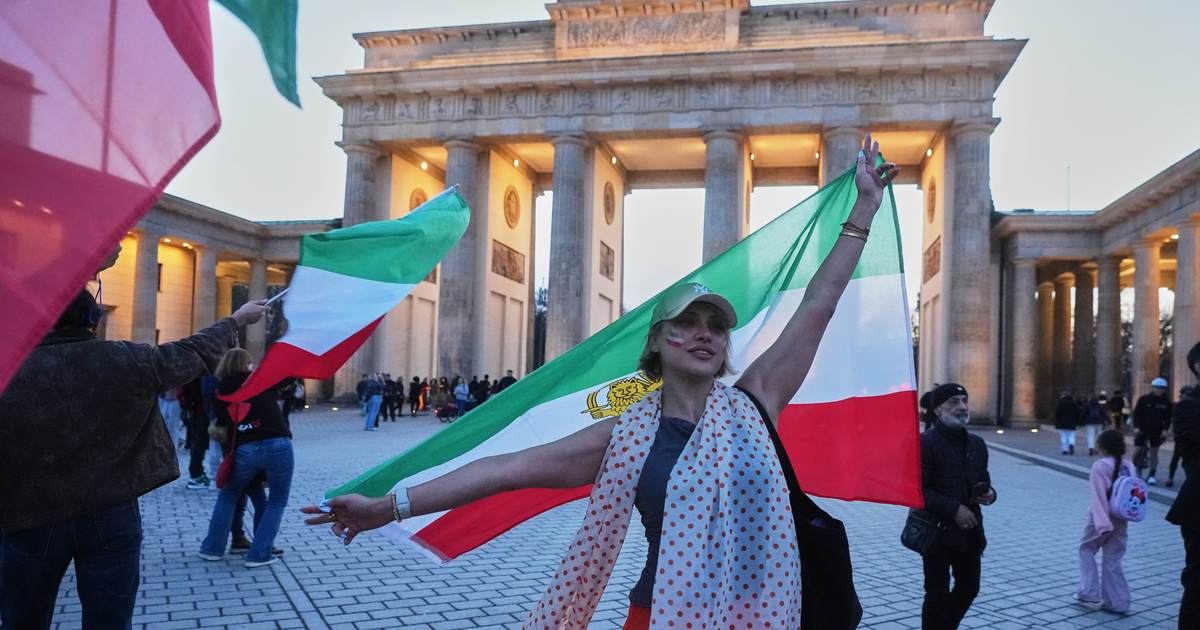
You Cannot Dialogue With Evil — a personal take on why diplomacy fails when an opponent rejects basic decency and how force sometimes becomes the only path to protect the innocent.
I remember watching the Berlin Wall fall in 1989 and then Operation Desert Storm in 1990 with a child’s mix of awe and dread, unable to grasp what those images meant. Years later I watched 9/11 unfold live on television and witnessed the wars in Afghanistan and Iraq that followed, and I say that as someone who changed her mind on the 2003 Iraq war. Those early shocks taught me that history repeats when we ignore hard lessons about human nature and regime intent.
Diplomacy works when both sides play by basic rules of good faith, but you can only meet halfway with someone willing to meet you. Neville Chamberlain tried that in 1938 with the Munich Agreement, trading Czechoslovakia’s Sudetenland for “peace for our time.” How’d that work out? Hitler marched on Europe anyway, and that failure is a blunt warning for today.
So when religious leaders or global elites call for immediate peace at any cost, the words can ring hollow for those who remember what appeasement produced. Calls for dialogue sound noble until you remember the scoreboard: promises cheapened, lives lost, and aggressors emboldened. The practical question is whether the other side recognizes your humanity or is committed to your destruction.
The Iranian regime has been explicit since 1979 about its hostility: it declares America the enemy, aims to remove Israel, and brutally represses its own people. That record is not theoretical; it is backed by decades of statements and actions that demonstrate intent and capability. Anyone assessing strategy has to start from that reality, not wishful thinking.
Throughout the last 47 years Iran has operated through proxies and direct terror to advance its goals, and Americans have paid the price. Hezbollah and Hamas have killed U.S. servicemembers and civilians, including 241 Marines in Beirut, and there are multiple incidents across the 1990s and 2000s that underline the pattern. Those events are the evidence base for a firm response when containment fails.
In 1995 a car bomb in Riyadh killed five Americans, and in 1996 the Khobar Towers bombing took 19 members of the U.S. Air Force. The 1998 bombings of the U.S. Embassies in Nairobi and Dar es Salaam killed more than 220 people, and in 2000 the U.S.S. Cole attack killed 17 sailors. Stacked together, these attacks show a consistent willingness to use terror as policy.
That is why some of us use a blunt word: Iran, like countless regimes before it, is evil. There is no other word to describe a system that openly celebrates the annihilation of another nation and silences its citizens at home. “You do not negotiate with evil. You destroy it.” That phrase captures a hard reality many would prefer to ignore.
I understand that a pope wants peace, but the Catholic Church has adopted a naive and heartless pacifism which allows ppl to remain oppressed with no recourse and no defenders.
It demands “dialogue” with an oppressor who vows never to yield while the people suffer. pic.twitter.com/PpSbj3s4DV
— Jackie Chea ⚖️ (@Fair_and_Biased) March 2, 2026
As I have said multiple times, both online and off, when the push for peace becomes radical pacifism, it is no different than being indiscriminately violent. Radical pacifism can be a moral posture that refuses to protect the vulnerable, and that refusal carries real consequences. Sitting on our hands while predators sharpen their teeth is not neutrality; it is a choice that permits brutality to expand.
Both ideologies — militant aggression and doctrinaire pacifism — often show an utter disregard for human life, just in opposite clothes. Violence kills, maims, and destroys, but ignoring aggression can do the same by leaving innocents exposed. Radical pacifism says, “My ideology is more important than the life of innocents.” That is an ugly statement with immediate consequences.
What does that leave the rest of us? It leaves the possibility that a world could be slowly claimed by those who only understand force, where peace is impossible without confronting evil directly. Sometimes deterrence and diplomacy work, but when an adversary is committed to eradication, deterrence must be backed by credible, enforceable consequences. History and recent attacks show what happens when consequences are absent or weak.
People on the left like bumper stickers that read, “War is not the answer,” and I get the sentiment; nobody celebrates bloodshed. My response then, and now, is “It depends on the question.” If the question is how to stop murderers who will not negotiate in good faith, then repeating that slogan without a plan is a luxury we cannot afford when innocent lives are at stake.