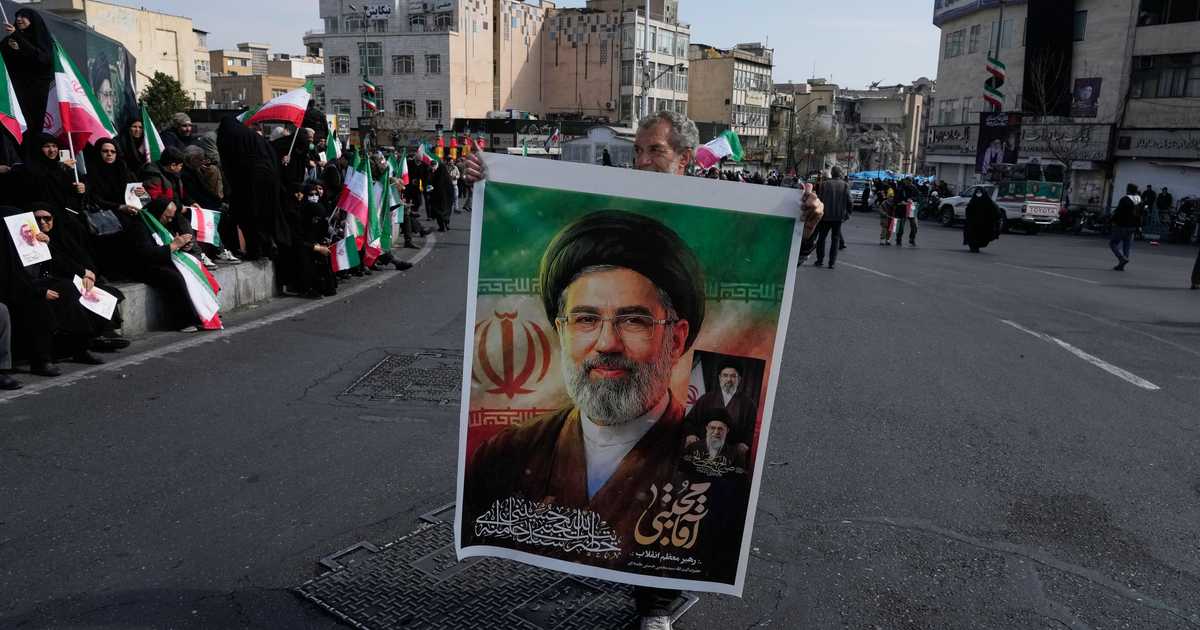
Mojtaba Khamenei has made a brief, state-approved appearance as Iran’s supposed new supreme leader, yet multiple reports claim he was critically wounded in an Israeli strike and remains in a coma, unable to assume control or even know his family’s fate. The situation points to a seriously fractured Iranian command structure and suggests recent operations have struck at the heart of the regime’s leadership and military capability.
Mojtaba Khamenei’s on-air emergence came on state media, the same outlet Tehran uses to shape narratives after blows to its system. That broadcast tried to present normalcy, but outside reports paint a different picture of chaos and severe injury. When a nation’s own media is left to paper over the cracks, you know things are not stable.
Several accounts say Mojtaba was badly injured in an airstrike, losing one or both legs and being placed in a medically induced coma. He reportedly does not yet comprehend his new title, the deaths of relatives, or the wider war unfolding around Iran. Those details, if accurate, mean the supposed transition of power is happening while the new leader is incapacitated.
Iran’s senior leadership has been under relentless pressure since Operation Epic Fury began, and the blows aren’t only symbolic. The regime’s military capacity has been degraded and key figures in both political and military ranks have been hit. A command structure that can’t communicate or move freely is a government that can’t govern effectively.
From a strategic view, air superiority changes everything. With control of the skies, forces can target high-value individuals and infrastructure while minimizing their own risk. That capability makes it possible to remove or neutralize leadership nodes that once allowed Iran to operate with impunity.
The pattern we’re seeing—precision strikes, intelligence-led targeting, and rapid follow-up—looks designed to break the cohesion of Iran’s governing apparatus. When leaders are isolated, injured, or dead, the bureaucratic machinery stalls and rival factions scramble for control. Those internal fights create openings for decisive action to end the threats they posed.
🚨 Breaking – Official Mossad account: Mojtaba Khamenei is dead pic.twitter.com/6IX9JqWI9B
— Dr. Eli David (@DrEliDavid) March 13, 2026
Iranian state media and loyalist networks will rush to maintain a façade of continuity, but appearances only go so far. A regime that must hide a leader in bunkers and script statements for a man who may not be conscious is not operating from strength. Reality, not propaganda, determines whether a government can respond to external pressure.
There’s also the human element: families mourning, commanders lost, and a populace watching their rulers falter. Disruption at the top ripples through security services and local power brokers, creating instability on the ground that complicates both repression and retaliation. The longer leadership remains unclear, the harder it is for Tehran to coordinate any coherent strategy.
Intelligence indicators and select public accounts suggest the Mossad and allied forces have scored meaningful hits against Iran’s leadership network. Those indicators deserve attention and verification, but they align with the observable effects: reduced operational tempo, damaged platforms, and gaps in decision-making. If true, this is a turning point in how threats from Tehran are being handled.
Reports like these must be tracked carefully, but they fit a broader pattern of deliberate pressure aimed at collapsing Iran’s capacity to export violence and project power. The combination of surgical strikes and follow-up intelligence can create strategic leverage without committing ground forces. It’s a modern approach to dismantling a state-sponsored threat.
That’s something to monitor for sure. Even at this stage, the message is clear: a decapitated or incapacitated leadership reduces Iran’s ability to coordinate attacks, support proxies, or intimidate neighbors. That consequence matters for regional security and for the safety of Americans and allies.
Editor’s Note: For decades, former presidents have been all talk and no action. Now, Donald Trump is eliminating the threat from Iran once and for all.