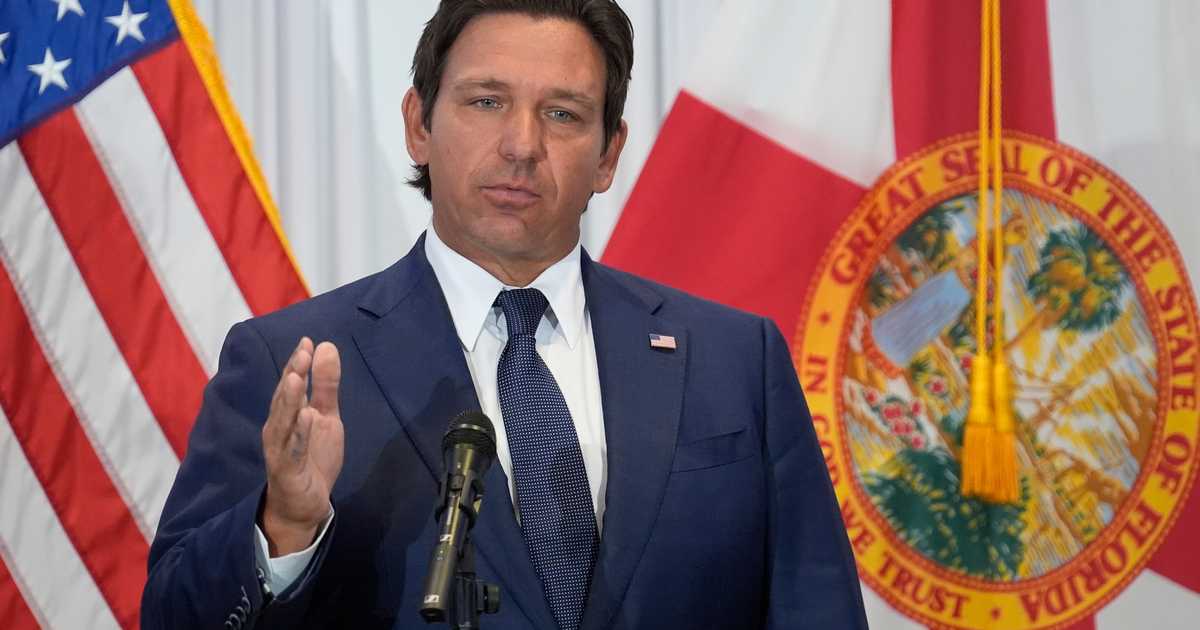
A federal judge has temporarily blocked Florida from enforcing Gov. Ron DeSantis’ executive order labeling the Council on American-Islamic Relations as a foreign terrorist group, issuing a preliminary injunction while the dispute moves through the courts.
A U.S. district judge stepped in on Thursday to pause state action that would have cut CAIR off from contracts and funding across Florida. The move puts DeSantis’ directive on hold while the legal fight plays out, and it raises broader questions about where authority to label terrorist organizations belongs.
U.S. District Judge Mark Walker issued the preliminary injunction and made clear the case will proceed through litigation rather than by immediate enforcement. He said the First Amendment limits a governor’s ability to use executive orders as what he called a “troubling trend” of political statements against opponents, framing the dispute as both constitutional and procedural.
The judge also noted that the state order likely intrudes on the federal government’s exclusive power to designate terrorist organizations, a point that resonates in constitutional debates. That assertion centers the clash not just on politics but on the balance between state and federal responsibility for national security labels.
The executive order from Gov. DeSantis instructed Florida agencies to deny contracts, employment, and funds to CAIR, the Muslim Brotherhood, and anyone who provides them with “material support” while the case proceeds. The directive aimed to sever formal ties between the state and organizations the governor views as linked to extremism.
🚨VICTORY: we just won an a federal court order that blocks Florida Governor @RonDeSantis from enforcing his defamatory and unconstitutional proclamation targeting our civil rights organization.
As we warned @GovRonDeSantis, no politician has the right to unilaterally declare… pic.twitter.com/HuegReK17Z
— CAIR National (@CAIRNational) March 4, 2026
For many conservatives, the order reflected a hard-line approach to protecting state resources and citizens from groups suspected of dangerous affiliations. Supporters argued the state should not be forced into partnerships that could, in their view, indirectly empower hostile actors or undermine public safety.
In his written ruling, Walker asked a blunt constitutional question: “the question before this Court is whether the Governor can, in a non-emergency situation, unilaterally designate one of the largest Muslim civil rights groups in America as a ‘terrorist organization’ and withhold government benefits from anyone providing material support or resources to the group.”
The judge’s formulation puts the spotlight on process and precedent, and it will likely shape how courts treat similar actions elsewhere. Conservatives who back the governor see the ruling as a setback for state-level initiative; critics of the order see it as a necessary check on executive overreach.
CAIR operates more than 20 chapters across the United States and presents itself as an advocate for civil rights and religious liberty through legal work, community outreach, and advocacy programs. Those activities are part of its public profile and the basis for supporters’ insistence that it engages in standard nonprofit civil rights work.
At the same time, the organization has drawn scrutiny over the past two decades for alleged connections to radical Islamic extremist groups, and it was listed as an unindicted co-conspirator in the Holy Land Foundation terrorism-funding case. Those historical notes form the backdrop for DeSantis’ order and for the debate about whether the label fits.
Also, some of the organization’s leaders have been investigated or charged in terrorism-related cases. Those incidents feed into public concern and the political pressure that led to Florida’s executive action, even as CAIR stresses its civil liberties work.
If Florida ultimately prevails in court and the designation stands, the practical fallout would be immediate: CAIR would be cut off from formal relationships with state agencies and face a chill in dealings with private vendors, nonprofits, and local governments worried about losing state business. The risk of collateral consequences is why both sides emphasize the stakes beyond the courtroom.
This case will test where bold state policy ends and federal prerogative begins, and it will force judges to weigh political realities against constitutional guardrails. From a conservative perspective, many see a need to defend state efforts to block groups they consider harmful, while also recognizing courts must protect constitutional limits on executive power.