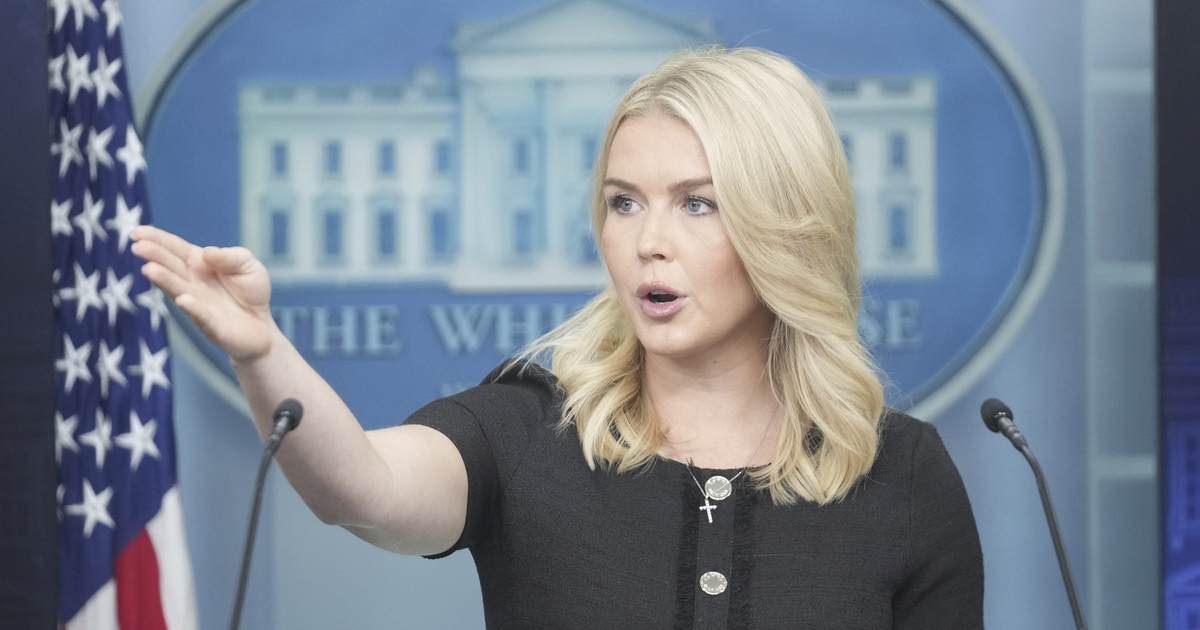
This piece recaps a tense exchange between White House spokeswoman Karoline Leavitt and CNN reporter Kaitlan Collins, highlights how the press handles coverage of fallen service members, and reflects a Republican perspective on media bias and accountability.
The exchange in question landed during a White House briefing and quickly became a flashpoint because it centered on how the press covers deaths of U.S. service members after Operation Epic Fury. The moment crystallized broader frustrations about media framing and what many conservatives see as persistent unfairness toward this administration. For Republicans, it was another example of a press corps that too often prioritizes narratives over balance.
Reporters in the briefing room pressed the administration on whether the press should give prominent coverage to the dignified transfer ceremonies honoring the six service members killed after Iran’s actions. That line of questioning set up the confrontation between Kaitlan Collins and Karoline Leavitt that many in the conservative audience felt was long overdue. Instead of folding, the spokeswoman pushed back hard, refusing to accept a premise she called disingenuous.
The back-and-forth came into public view via national outlets, and the clip circulated widely on social platforms and news feeds almost instantly, feeding an already heated media environment. Journalists will argue that tough questions are their job, and they are right to press on matters of policy and accountability. Still, tone and framing matter, and Republicans argue that selective emphasis can distort the public’s perception of the mission’s overall success.
🚨 HOLY SMOKES. Karoline Leavitt just carried out a STUNNING TAKEDOWN of Kaitlan Collins for claiming Pete Hegseth doesn't care about fallen troops
"That's NOT what the Secretary said and YOU KNOW IT! You KNOW you're being DISINGENUOUS."
"The press only wants to make the… pic.twitter.com/qum2vD3iRz
— Eric Daugherty (@EricLDaugh) March 4, 2026
Collins noted that President Donald Trump is expected to attend the dignified transfer ceremony honoring the fallen soldiers who were killed in the wake of Iran’s military response against the U.S. and Israel. She then invoked comments made earlier in the day by Secretary of War Pete Hegseth, who scolded the press for making tragic developments “front-page news” despite the mission’s broader successes.
“Is it the position of this administration that the press should not prominently cover the deaths of U.S. service members?” Collins asked.
“No,” Leavitt responded. “It’s the position of this administration that the press in this room and the press across the country should accurately report on the success of Operation Epic Fury and the damage it is doing to the rogue Iranian regime that has threatened the lives of every single American in this room.”
After Leavitt expressed gratitude to the service members who made the ultimate sacrifice and those continuing to serve overseas, Collins doubled down on her question, saying Hegseth was “complaining” about how the six fallen soldiers were making “front-page news.”
“No, that’s not what the secretary said, Kaitlan, and that’s not what the secretary meant, and you know it,” Leavitt shot back. “You know you’re being disingenuous — we’ve never had a secretary of defense who cares more —”
“‘But when a few drones get through or tragic things happen, it’s front-page news. I get it, the press only wants to make the president look bad,'” Collins read the quote from Hegseth. “You know we cover the deaths of U.S. service members under every president.”
“The press does only want to make the president look bad. That’s a fact,” Leavitt responded. “Especially you and especially CNN. And our secretary of defense cares deeply about our war fighters and our men and women in uniform. He travels all across this country to meet with them, to connect with them, and your network has hardly ever probably reported on that.”
Leavitt’s reply leaned on gratitude and on a broader point about how the mission’s outcomes were being reported, not to minimize loss but to insist context matters. From a Republican point of view, accurate reporting should include both the sacrifice and the strategic results military action produced. That balance, critics say, has been missing at outlets that repeatedly frame news in a way that reflects negatively on conservative leaders.
Collins attempted to frame the question as concern over whether the administration wanted the deaths downplayed, and she emphasized that coverage of fallen troops is routine under every president. Leavitt answered by calling the line of questioning disingenuous and by pointing to what she sees as consistent anti-administration bias from networks like CNN. The exchange made clear how distrust between certain media outlets and the White House has calcified into sharp public moments.
Moments like this play well to a base that already chants derisively at CNN, and for many conservatives the encounter reaffirmed a belief that the mainstream press will go to great lengths to damage the president’s image. That belief isn’t just about tone; it’s about selection, emphasis, and the habits that shape a story before most people even see it. When a spokesman pushes back, the reaction from viewers often divides neatly along partisan lines.
This wasn’t just a personality clash; it reflected differing views on responsibility and respect toward service members, plus a larger argument about whether the press should be a neutral observer or an advocacy engine. Leavitt framed her comments as defending both the troops and the truth of the mission’s results, while Collins presented a concern about how coverage of tragedy could overshadow other elements of the story. Neither side moved much in the moment, but the clip left a lot of people talking.
The broader takeaway for Republican readers is simple: expect these clashes to keep happening until newsroom habits change, and expect the White House to push back. For conservatives who already distrust elite media, Leavitt’s bluntness was the sort of pushback they want to see. Whether that strategy changes the press’s behavior is another question, but it does clarify where this administration stands.