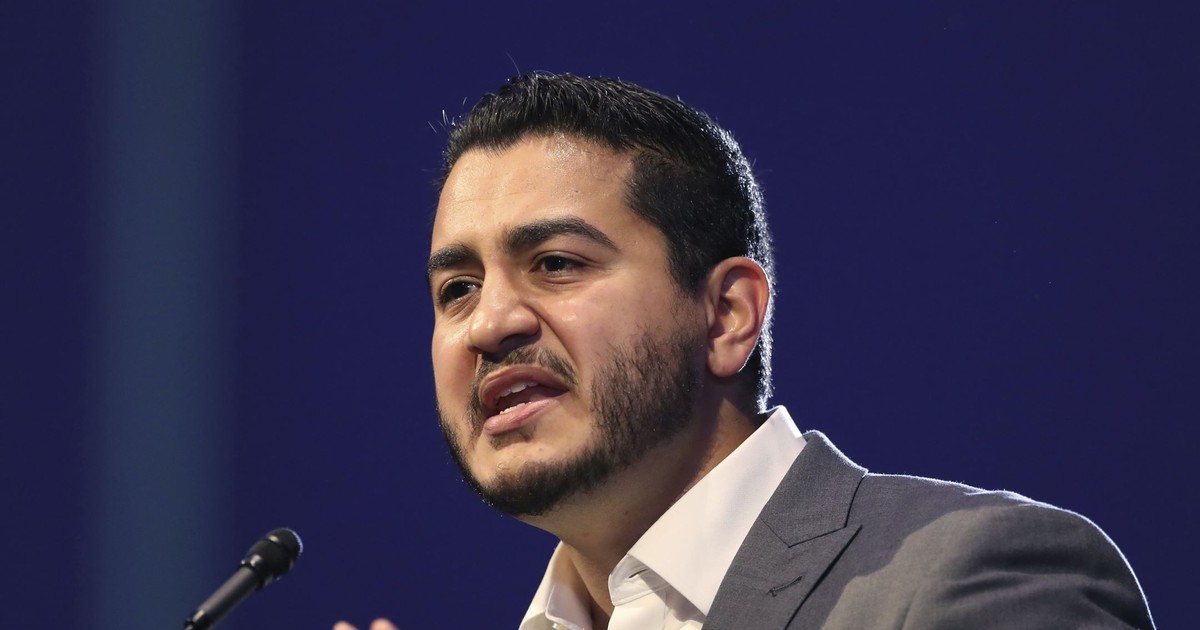
Leaked audio from Michigan Senate hopeful Abdul El-Sayed shows him avoiding comment on Ayatollah Khamenei’s death and saying he’d pivot to attacking President Trump, and his campaign’s official response blamed Trump and MAGA while critics pointed to Michigan’s one-party consent recording law and questioned the message.
Leaked campaign audio surfaced showing Abdul El-Sayed telling staff he would not touch the Ayatollah Khamenei question, noting local sensitivities in Dearborn. The tape also captured a nastier tactic he said he would use when pressed, promising to pivot the conversation rather than answer directly. That private discussion has opened the campaign to sharp criticism from opponents and conservative observers.
In the recording, El-Sayed told his team plainly, “I also want to remind you guys that there are a lot of people in Dearborn who are sad today. So, like, I just don’t want to comment on Khamenei at all. Like, I don’t think it’s worth even touching that,” and then added, “I’m just gonna go straight to pedophilia, frankly,” in response to being pressed on the Ayatollah issue. Those lines undercut any claim that he was blindsided by questions on the matter and show the campaign discussed a deliberate rhetorical pivot. The audio forced his campaign into damage control.
The official campaign statement attacked President Trump and the MAGA movement instead of addressing the content of the leaked planning session. It framed the leak as a distraction and blamed the administration for broader problems, counting military casualties and economic pain as part of the critique. That response shifted focus from what the candidate said behind closed doors to a policy argument about war and its costs.
Since this illegal and unjustifiable war has started, we’ve watched 13 brave service members lose their lives. We’ve watched tax dollars wasted to raise gas prices. We’re paying over a dollar a gallon more, making life even more unlivable. Americans are paying with their lives and livelihoods for a war MAGA swore they’d never take us into.
Abdul El-Sayed's campaign responds to this report: https://t.co/xzbW0CNoZY pic.twitter.com/MG257qJbbH
— David Wright (@DavidWright_7) March 30, 2026
The fact that a rightwing news outlet may have illegally and unethically obtained a deliberation about how to talk about this by way of a disgruntled former employee is only a distraction. They’re distracting from the fact that Donald Trump, Mike Rogers, the entire MAGA base doesn’t want to talk about the pain their forcing us all into.
Critics point out Michigan is a one-party consent state for recordings, which undercuts the campaign’s claim that the tape was illegal. That legal context matters because it removes a common defense used when private remarks leak. Voters and pundits seized on that point to argue the candidate should own his words rather than attack the messenger.
The substance of the audio feeds into a broader narrative Republicans are pushing about Democratic candidates losing control of their message. Instead of answering tough questions about foreign policy or sympathies toward foreign populations, the tape shows a quick retreat to personal and explosive allegations. That approach plays into accusations that Democrats rely on distraction and character assaults rather than clear policy explanations.
Observers also flagged the cultural angle: mentioning Dearborn and local reactions tied the candidate to a specific community in a way that opponents say could be used against him. Republicans argue that national security and respect for American service members are priority issues, and they say El-Sayed’s private comments damage his credibility on both. Those points have already been used in campaign ads and talking points.
Response time mattered too. It took hours for the campaign to issue its statement, and when it finally arrived the reply doubled down on blaming Trump rather than addressing the recorded tactics. That delay and choice of emphasis gave critics more ammo to claim the campaign lacks transparency. In a tight Senate race, Republicans see this as an opening to define the narrative before the candidate recovers.
Republican strategists are likely to highlight the recording as evidence that Democrats will pivot to personal attacks instead of facing voters on policy. They will emphasize veterans’ sacrifices, economic pain tied to foreign entanglements, and the legalities around recording to make their case. For GOP voters and independent skeptics, the audio acts as a compact illustration of why message discipline and accountability matter in a candidate.
The leak raises questions about internal campaign culture and judgment, and it hands Republicans a clear talking point heading into the coming months. Expect the tape and the campaign’s response to be replayed in debates, ads, and social media as each side fights to control the story. The fallout will depend on whether El-Sayed addresses the substance of the audio directly or keeps framing the controversy as a distraction.
At a minimum, the episode shows how quickly private strategy talk can become public and how vulnerable candidates are when staff disagreements surface. For conservatives watching the Michigan race, the audio reinforces a narrative about Democratic message tactics and the importance of confronting uncomfortable questions head-on. The issue isn’t going away until the campaign either explains itself or voters move on to something else.
Given the record and the response, Republicans expect to press the attack, stressing both the moral and political dimensions of the leak. This episode will be mined for weeks as part of a broader argument about leadership, national security, and political accountability. How the campaign responds next will determine whether the story fades or becomes a lasting liability.