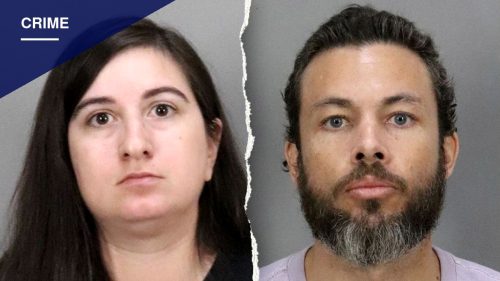
A New Jersey man has pleaded guilty in a sprawling interstate scheme that bought and moved stolen catalytic converters across the country, a criminal operation prosecutors say involved hundreds of millions of dollars and coordinated shipments of high-value parts from California and elsewhere.
Federal prosecutors say Navin Khanna, a New Jersey resident linked to DG Auto, admitted guilt to charges including conspiracy to transport stolen property interstate, conspiracy to commit promotional money laundering, and interstate transportation of stolen property, U.S. Attorney Eric Grant announced. The plea follows an investigation that traced sales, shipments, and financial transactions tied to a large-scale catalytic converter theft network.
The timeline laid out in court records runs from October 2019 through March 2024, during which Khanna, family members, and co-conspirators allegedly purchased stolen converters nationwide for more than $600 million through DG Auto. Authorities charged ten other New Jersey residents and three California residents as part of the nationwide probe that aimed to dismantle the organized ring.
Catalytic converter thefts have grown into a lucrative criminal market because the parts contain precious metals, can be removed quickly from parked cars, and lack unique identifiers that make tracing difficult. Thieves typically steal converters from vehicles parked on streets or in lots, then sell them to middlemen and recyclers who strip and resell the precious metals; prosecutors noted the black-market price for some California converters, such as those from the Toyota Prius, can exceed $1,200 apiece.
The indictment and related court filings say Khanna purchased more than $38 million worth of converters stolen from the Sacramento region, supplied by Tou Vang and relatives who reportedly ran Vang Auto. Records show Vang shipped large pallets to buyers like Khanna, often filled with a single high-value converter type that made sorting and resale simpler for the buyers on the receiving end.
According to filings, some shipments weighed over 1,000 pounds and contained only one model of catalytic converter, allowing traffickers to move bulk loads efficiently and focus on the most profitable units. Prosecutors pointed to a striking detail: the parts code GD3EA6, referring to Toyota Prius converters, appeared as a vanity plate on one of Khanna’s McLaren vehicles, a sign investigators say illustrated the scale and focus of the operation.
Tou Vang has already been sentenced to 12 years in federal prison for his role in transporting thousands of stolen catalytic converters across state lines, laundering money, and related offenses. The lengthy prison term reflects federal authorities’ view of the scheme as organized and sustained, not a series of isolated thefts.
Navin Khanna pleaded guilty to running a $600M nationwide catalytic‑converter theft ring. A big share of those stolen converters came from the Sacramento region through supplier Tou Vang, who’s already serving 12 years in federal prison.
➡️https://t.co/CN0M0ZYXgP#IRSCI #FBI pic.twitter.com/vT9RBxM0Yh
— IRS Criminal Investigation (@IRS_CI) February 28, 2026
The case is the result of a multiagency investigation led by IRS Criminal Investigation and the FBI, with support from multiple California and local law enforcement agencies. Assistant U.S. Attorney Veronica M.A. Alegría and Trial Attorney César S. Rivera-Giraud of the Criminal Division’s Violent Crime and Racketeering Section are prosecuting the case.
Navin Khanna is scheduled for sentencing before U.S. District Judge Dena Coggins at a later date, and the plea leaves open the possibility of further financial penalties and restitution alongside any prison term. The court will consider the scope of the conspiracy, the amounts involved, and the defendant’s role when determining an appropriate sentence under federal guidelines.
IRS Criminal Investigation, the agency that helped lead the probe, is the law enforcement arm of the IRS responsible for financial crime investigations, including money laundering and tax fraud. IRS-CI is the only federal law enforcement agency with statutory jurisdiction over violations of the Internal Revenue Code and maintains field offices around the country as well as international attaché posts for cross-border cooperation.
The sweep of charges and the size of the reported transactions underline how ordinary property crimes can feed larger criminal markets and complex money flows. Prosecutors and investigators say dismantling networks that harvest and traffic stolen vehicle parts requires tracing shipments, following financial trails, and coordinating federal and local resources across state lines.