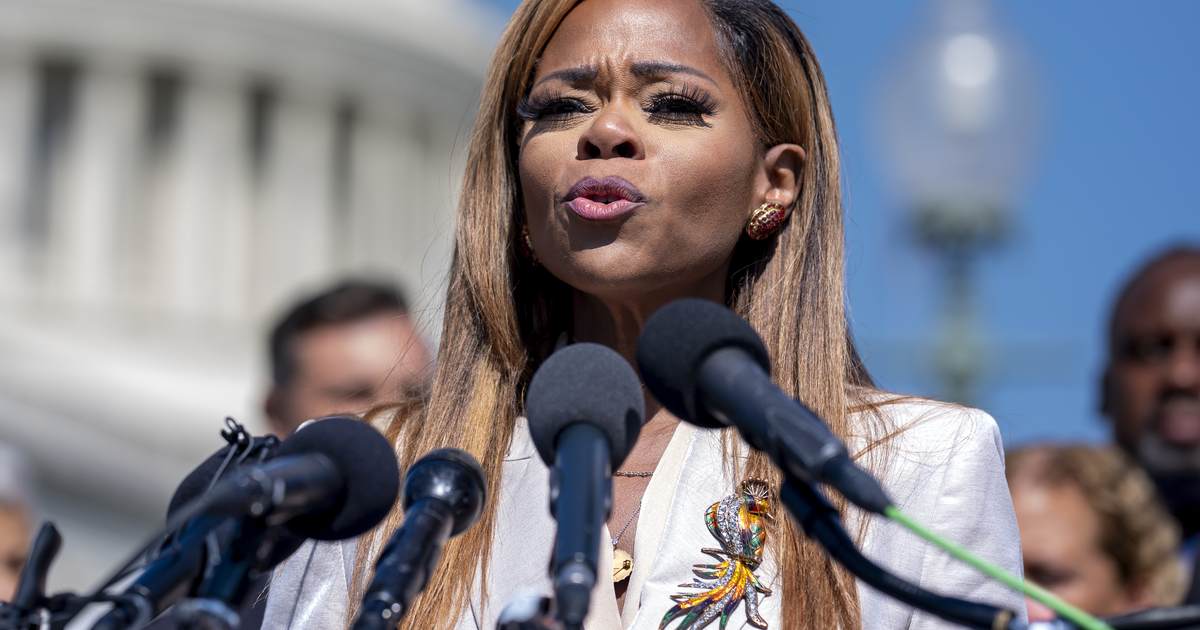
Rep. Sheila Cherfilus-McCormick was found guilty by a House Ethics subcommittee on dozens of counts tied to alleged misuse of federal relief funds, sparking rare talk of expulsion and criticism of how some outlets framed their headlines.
The case against Rep. Sheila Cherfilus-McCormick centers on allegations that roughly $5 million in FEMA relief funds were misappropriated and steered toward her congressional campaign. The House Ethics subcommittee concluded a multi-year probe with guilty findings on 25 ethics counts, and the fallout is reaching into the Democratic conference. What raised extra eyebrows was how some national headlines handled the story, leaving out details that mattered to readers.
After a rare and dramatic public hearing, a special House Ethics subcommittee on Friday found Rep. Sheila Cherfilus-McCormick, D-Fla., guilty of 25 ethics charges, capping a three-year investigation into allegations she stole millions in federal relief funds and funneled some of that to her congressional campaign.
NBC News isn’t saying she is a Democrat.
When there’s a scandal with a Republican, the party affiliation is always in the headline. #themoreyouknow https://t.co/XZwZhUiR3F
— Richard Grenell (@RichardGrenell) March 27, 2026
The secret vote came after Cherfilus-McCormick and her attorney sat for a nearly seven-hour televised House trial, after which lawmakers on the panel deliberated overnight for hours before reaching their decision.
Cherfilus-McCormick has denied wrongdoing and pleaded not guilty in a separate but related federal criminal case.
“I look forward to proving my innocence,” the congresswoman said in a statement. “Until then, my focus remains where it belongs: showing up for the great people of Florida’s 20th District who sent me to Washington to fight for them.”
The ethics hearing was public and dramatic, with lengthy testimony and deliberation that stretched past normal business hours. Cherfilus-McCormick and her lawyer took the stand for hours, and the subcommittee then voted in secret. Her denial of wrongdoing, and a pending federal criminal indictment, mean this story will continue to play out in multiple forums.
A growing number of House Democrats are calling on Rep. Sheila Cherfilus-McCormick (D-Fla.) to resign after the House Ethics Committee found her guilty of dozens of charges, including serious financial misconduct.
Why it matters: Some of those lawmakers said they are at least open to voting to expel the Florida Democrat, creating substantial new pressure for her to be ousted from Congress by one means or another.
Cherfilus-McCormick, who is also under federal indictment, said in a statement Friday: “I look forward to proving my innocence. Until then, my focus remains where it belongs: showing up for the great people of Florida’s 20th District who sent me to Washington to fight for them.”
The Ethics Committee is set to meet when the House returns in mid-April to vote on recommending punitive action, which could include fines, censure, or expulsion.
Across the House, reactions are unusually blunt for members of the same party, with some Democrats publicly calling for resignation and others at least open to an expulsion vote. That level of intra-party pressure is rare and suggests lawmakers see this as more than a garden-variety ethics lapse. When colleagues start talking expulsion, the political and legal stakes rise quickly.
At the core is the allegation that FEMA funds meant for disaster relief were redirected into campaign accounts, an accusation that, if true, crosses several ethical and legal lines. The optics are brutal: taxpayer money intended for recovery allegedly used for personal political gain. That provokes a hard question about suitable penalties and whether traditional punishments like fines or censure fit the scale of the claim.
This controversy also exposes how national outlets shape public perception by what they highlight and what they omit. Leaving out party affiliation in a headline about a member of Congress charged with serious ethics violations is a choice that changes context. Readers get a different take when key identifiers and the nature of the allegations are downplayed or missing entirely.
The House will have to decide next steps when it reconvenes, and Democrats will face a test of how they police their own. Whatever the legal outcomes, the political consequences are immediate: calls for resignation, possible committee sanctions, and the specter of an expulsion vote. Those moves would reshape the immediate narrative and set a precedent for how similar cases are handled.
The facts alleged here are stark: millions in federal assistance, a guilty finding on 25 ethics counts by a congressional subcommittee, and a separate criminal case still pending. The combination of congressional discipline and criminal exposure leaves little room for easy resolutions, and it forces colleagues and constituents to confront uncomfortable truths about accountability in elected office.