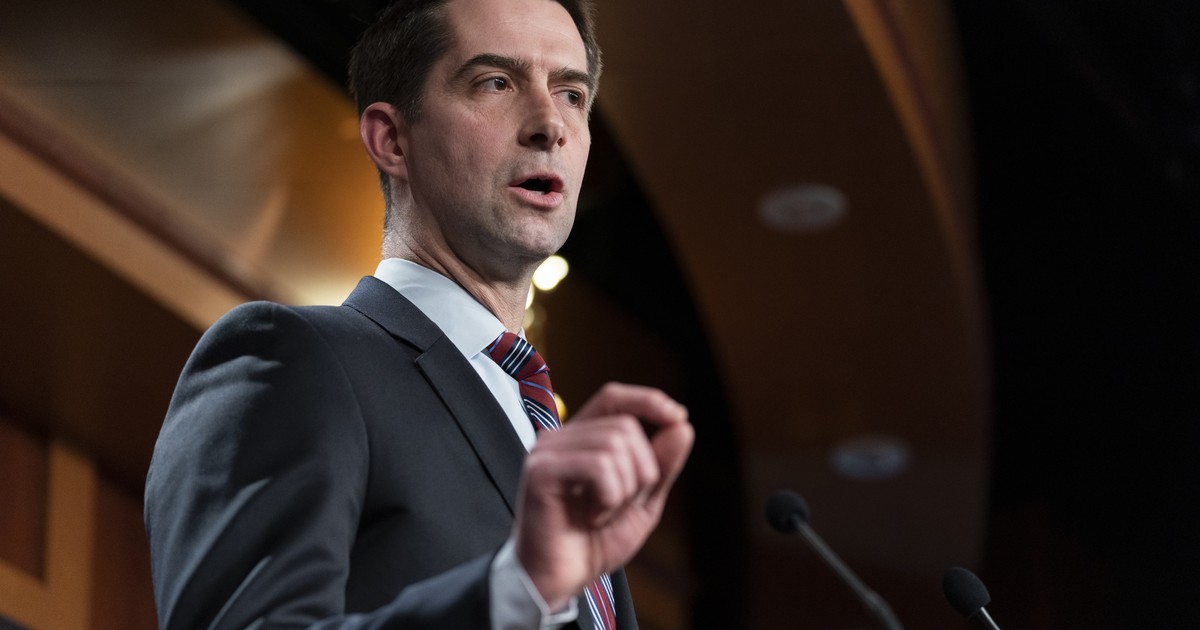
Sen. Tom Cotton sharply separated traditional conservatives from a cohort of influencers he calls antisemitic, arguing at National Review’s Symposium on Antisemitism that these figures have drifted from core conservative principles and adopted left-leaning policies, while new surveys show alarming trends among younger Republicans that worry party leaders about the movement’s future.
At the National Review Symposium on Antisemitism, Senator Tom Cotton of Arkansas publicly criticized influencers on the so-called right who have veered into antisemitic rhetoric. He made a point of drawing a bright line between those people and the broader conservative movement, framing the issue as one of principle and identity. His remarks landed at a moment when many Republicans are already debating the movement’s direction.
The rebuke reflects a broader effort inside conservatism to police its own ranks. Leaders who have claimed victories on policy fronts like border security still face a problem: public voices using the conservative label while promoting ideas that contradict its historic tenets. Those tensions are increasingly visible in media and on social platforms, and they raise questions about who truly represents conservatism today.
“I know many of you are also concerned, though, about a seeming rise of anti-Semitism among influencers on the erstwhile ‘right.’ Now, I use sarcastic air quotes for a reason,” Sen. Cotton said. “First off, these influencers are perceived to be on the right, and maybe they once were, maybe they once wrote for center-right magazines, maybe they once worked for center-right websites or media companies, but I do not agree that I share a political movement or a political party with anyone who traffics in anti-Semitism.”
.@SenTomCotton calls out "influencers" on the Right for antisemitism. #StopAntisemitism pic.twitter.com/DVYCC0tMRx
— National Review (@NRO) March 10, 2026
Cotton pushed beyond the moral critique to argue these influencers also abandon foundational conservative beliefs, especially support for free enterprise. He pointed out they borrow economic language and policies associated with the left, comparing some positions to those held by Senator Elizabeth Warren. That crossover, he warned, blurs ideological lines in a dangerous way.
He also tied economic and foreign-policy moves together when describing where these influencers end up politically. “And, for that matter, doesn’t just traffic in anti-Semitism, or at least adjacent to anti-Semitism, shares Liz Warren’s economic policies or Rashida Tlaib’s foreign policy,” he continued.
“Because, if you notice, these so-called influencers, like anti-Semites usually do, often have a deep antipathy to free market capitalism. Whatever their views once were, they have since adopted, indeed, Liz Warren’s economic policies. We also, as I said, share Rashida Tlaib’s foreign policy, which could be summed up, as Gene Kirkpatrick once said, ‘Blame America first.’ They always blame America first, if they’re not blaming Israel first.”
Other Republican leaders echoed the sentiment. Texas Senator Ted Cruz didn’t hold back either and several GOP voices publicly distanced the party from those influencers. The debate is no longer private; it is playing out in hearings, commentary, and inside campaign circles as Republicans think about 2028.
The concern is not just rhetorical. A recent study by the Manhattan Institute found that more than half of Republican men engage in some form of Holocaust denial, a statistic that alarms many within the party. That finding has prompted calls among conservative thinkers for clearer standards in teaching history and vetting influential voices. The survey’s result underlines why Cotton and others see a cultural problem, not merely isolated incidents.
Another poll from the Jerusalem Center reported that forty-five percent of Republicans under the age of forty-four view Jews as a threat to the American way of life, a figure that complicates outreach to younger voters. Those numbers suggest a generational shift in attitudes that could reshape the party’s coalition if left unaddressed. The implications extend to fundraising, candidate recruitment, and the GOP’s relationship with key constituencies.
The combination of growing antisemitic sentiment and a willingness among some influencers to adopt progressive economic and foreign-policy positions has produced a worrying pattern. If a sizeable wing of self-described conservatives continues aligning with progressive stances, the conservative coalition could face serious internal fractures. That ideological drift risks weakening unified messaging at a crucial time for the party.
Party strategists, elected officials, and media personalities are watching these trends closely and debating how to respond without alienating disaffected voters. Some commentators, like Ben Shapiro, and even the president, have publicly criticized figures such as Tucker Carlson, but public rebukes do not automatically change minds among younger conservatives. The issue now is whether institutional responses can alter influence networks online and in youth circles.
Absent corrective change, conservatism risks becoming untethered from principles that once defined it: support for free markets, a strong foreign policy, and clear moral lines against bigotry. The debate over who qualifies as “conservative” is now a fight over those fundamentals and over what direction the party will take heading into the next election cycle.