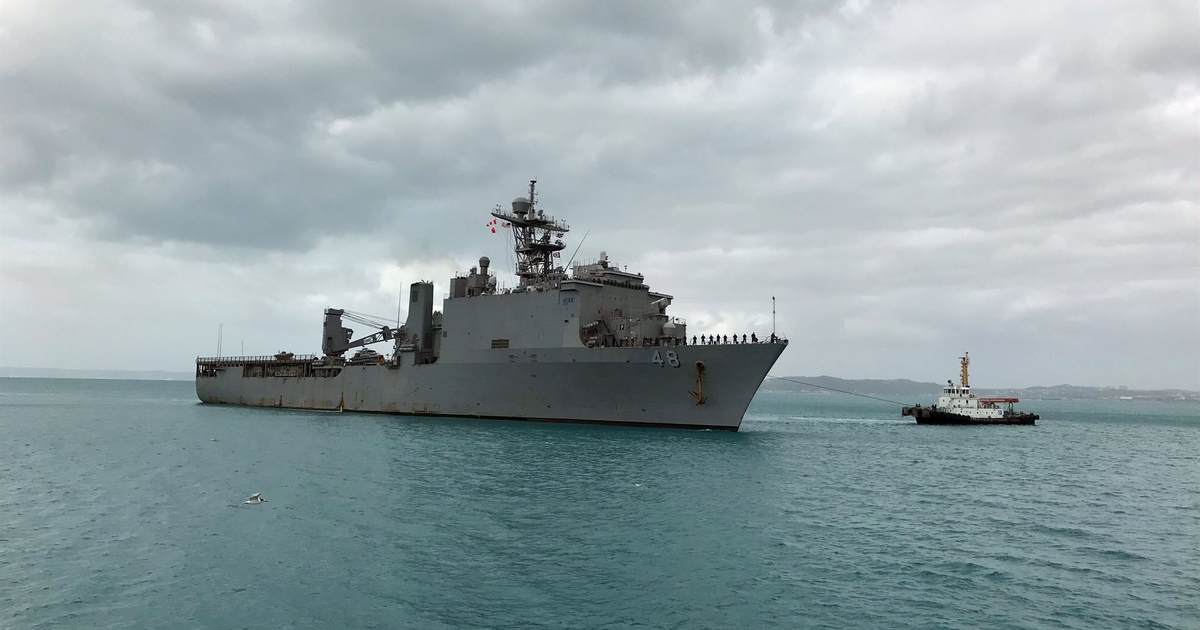
President Donald Trump announced a U.S. naval buildup in the Strait of Hormuz to secure a critical oil route, called on other powers to help, and said American strikes have targeted key Iranian oil infrastructure as part of Operation Epic Fury.
President Donald Trump declared that the United States Navy will begin deploying warships to the Strait of Hormuz to protect a vital global shipping lane and keep oil flowing. He said “many countries” would join the effort, though he did not list which governments would take part. The move is presented as a decisive step to deter threats against commercial traffic and to reassure markets and allies about uninterrupted energy shipments.
Trump urged major military powers to send forces to the region, specifically naming China, France, Japan, South Korea, and the United Kingdom. He characterized the opponent as “a nation that has been totally decapitated.” That language underscores the administration’s message that Iran’s command and control has been heavily degraded, even as the region remains volatile.
JUST IN – Trump claims that "Many countries" will be sending warships to the Hormuz Strait to keep it open and safe, in conjunction with the U.S.. pic.twitter.com/sxo6jW3g8V
— Disclose.tv (@disclosetv) March 14, 2026
The president also asserted that “100% of Iran’s military capability has been destroyed” while acknowledging Iran still retains weapons like drones, missiles, and naval mines. Those remaining systems have been used to harass and threaten vessels traversing the Strait, increasing the risk to merchant mariners and energy supplies. The administration frames the naval deployment as necessary to neutralize those asymmetric threats and protect commerce.
Earlier, Trump pledged to ramp up strikes against Iran if it continued to menace oil shipments, and that promise was followed by a large set of U.S. strikes on Kharg Island, a key piece of Iran’s oil infrastructure. The attacks were described by officials as aimed at chokepoints and facilities that support Tehran’s ability to project disruption into the shipping lane. For Republican policymakers and supporters, the strikes represent the kind of clear action long promised and now carried out.
The administration’s appeal to other powers reflects both a strategic and political calculation: share the security burden, increase legitimacy, and create a deterrent that few adversaries will test. Calling on rivals and partners alike signals that protecting maritime commerce is a universal interest, not a unilateral crusade. If those nations rise to the call, it would stitch a broader coalition around freedom of navigation and energy security.
The U.S. has emphasized it will target tools Iran uses to threaten shipping—drones, missiles, and mines—rather than engaging in open-ended occupation or regime change missions. That narrower operational focus aims to reduce escalation risk while still imposing real costs on Iran’s ability to interfere with international trade. The policy balances force with restraint, seeking to stabilize trade routes without dragging the region into a wider war.
Operation Epic Fury has now entered its third week. The operation combines strikes and forward deployments designed to diminish Tehran’s practical capacity to endanger shipping, and to reassure allies that the United States will act to defend global commerce. For conservatives watching closely, this is a show of strength that reasserts deterrence and punishes aggression.
The administration’s rhetoric and actions are meant to send a simple message: threats to energy and commerce will be met with force. Supporters argue this restores credibility after years of bland statements and empty warnings by past administrations. Critics will warn of escalation, but the White House frames the buildup as a measured, targeted response to immediate hazards in a crucial waterway.
On the diplomatic front, pressing nations like China and Japan to participate puts pressure on Tehran by widening the circle of interested parties. Shared patrols and joint operations complicate Iran’s calculations, making it harder for Tehran to single out one power for retaliation. For Republicans who prioritize American strength, that coalition approach multiplies leverage without committing the United States to unlimited ground warfare.
An assertive posture in the Strait of Hormuz also speaks to global markets: assuring the safe flow of oil helps stabilize prices and prevents economic shock. The administration argues that visible naval protection reduces insurance and shipping costs and reassures consumers and producers. In that sense, military deployments are also economic policy tools aimed at keeping global commerce steady.
As Operation Epic Fury continues, the focus remains on neutralizing threats while inviting international participation to share the burden. The president’s statements and the strikes on Iranian infrastructure reflect a strategy of decisive action paired with appeals to partners. The coming weeks will show whether that combination can restore security in a region that matters to every energy-dependent nation.