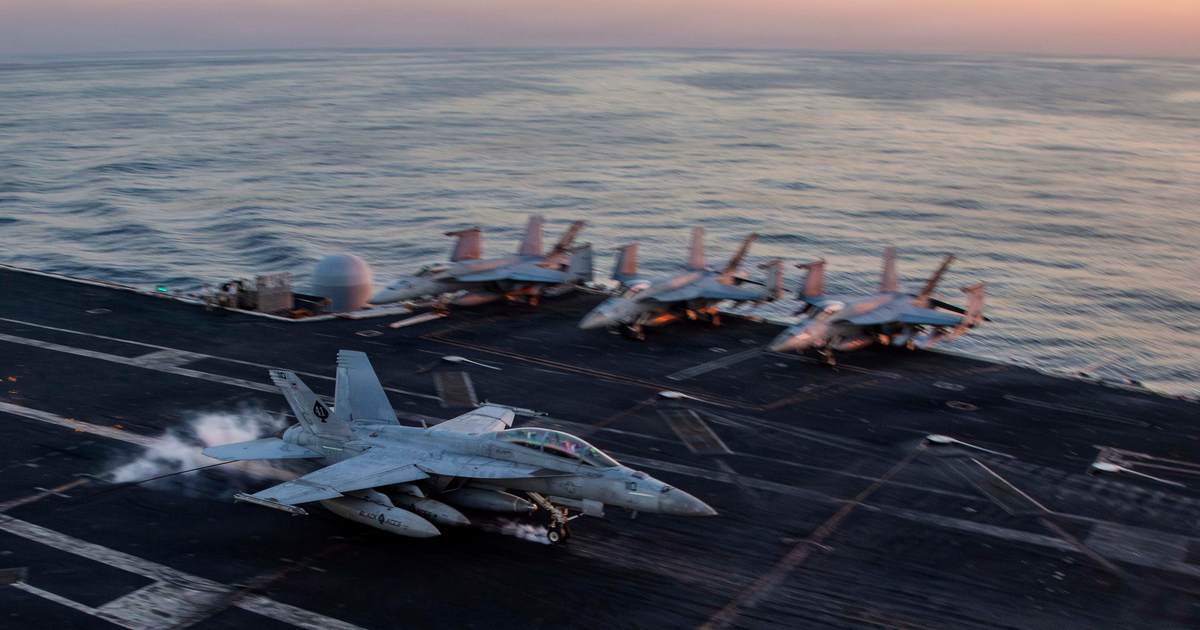
CENTCOM leaders briefed reporters in Tampa about Operation Epic Fury, describing a concentrated U.S. campaign that targeted Iranian naval and missile capabilities and produced rapid, measurable effects across multiple attack vectors.
Pete Hegseth stood with U.S. Central Command leadership in Tampa to update the public on the campaign’s progress, and he delivered a direct account of recent operations. He spoke from the posture of an administration that chose decisive action over passive statements, framing the effort as swift and aimed at crippling Iran’s ability to threaten the region.
At the news conference Hegseth emphasized the scale and precision of U.S. responses and said, “delivered nothing short of devastating, precise strikes, taking out the better part of Iran’s Navy, making it combat ineffective, neutralizing missile sites and launchers and establishing total dominance over the skies we fly over.”
Admiral Brad Cooper, commander of CENTCOM, reinforced that the mission has a clear objective ordered by the president: to ensure Iran can no longer use ballistic missile infrastructure to menace the United States. He described the task as eliminating the immediate threat posed by hardened missile facilities and launch systems through coordinated air and naval power.
Cooper reported that in just three days American bombers struck nearly 200 targets inside Iran, using heavy ordnance to reach deeply buried launchers and support facilities. The campaign included dozens of 2,000-pound bombs delivered against hardened sites, a choice that signals an emphasis on neutralizing subterranean infrastructure rather than conducting symbolic strikes.
Admiral Brad Cooper, @CENTCOM Commander provided an update on Operation Epic Fury. pic.twitter.com/qG1YIzksKe
— DOW Rapid Response (@DOWResponse) March 5, 2026
The operational results presented were stark: ballistic missile attacks have fallen by roughly 90 percent, and drone strikes have dropped about 83 percent, according to CENTCOM’s figures. Cooper also announced that U.S. forces have destroyed more than 30 Iranian ships, a number the command says undermines Tehran’s maritime reach and logistics in the short term.
Those numbers matter because they represent tangible shifts in the battlefield environment—reduced missile launches, fewer armed drones, and a diminished naval presence change threat calculations for both military planners and civilian leaders. From a tactical standpoint, degrading launch capabilities and clearing the skies allows American forces to operate with greater freedom and less risk to assets and allied partners.
Operation Epic Fury, as CENTCOM calls it, relied on coordinated airpower and targeting to achieve rapid effects without becoming entangled in protracted ground operations. That approach reflects a preference for surgical strikes and high-value targeting to accomplish strategic aims while limiting long-term occupation commitments, a posture many conservatives have advocated for when facing state threats abroad.
Military leaders also highlighted the logistics and execution required to strike nearly 200 targets in days, noting the planning, intelligence, and precision munitions that made it possible. Those details underline an important point for watchers: this campaign was designed and executed with a focus on results, not headlines, and it leaned on the kind of high-end capabilities the U.S. retains when it commits to decisive action.
Beyond immediate battlefield effects, CENTCOM officials argued the operation strengthens deterrence by demonstrating both reach and willingness to follow through on presidential orders. By targeting missile nodes, naval assets, and launch infrastructure, the U.S. aimed to raise the cost for Iran of future aggression and to signal to regional actors that American commitments can be backed by force when necessary.
Editor’s Note: For decades, former presidents have been all talk and no action. Now, Donald Trump is eliminating the threat from Iran once and for all.