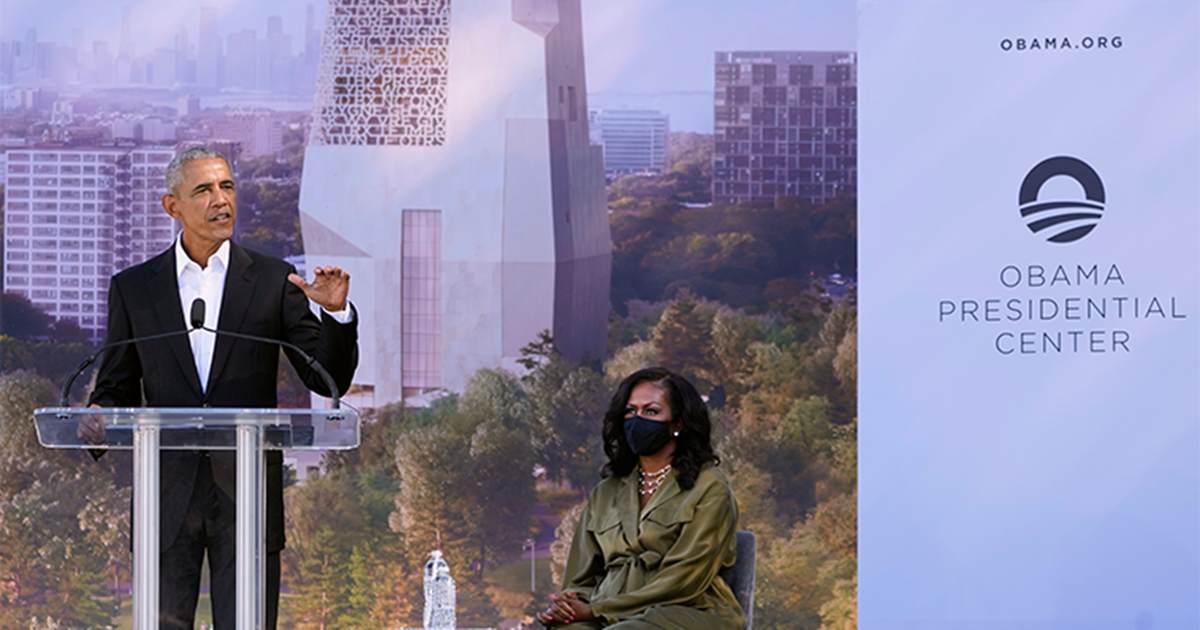
Barack Obama’s presidential center is opening with paid tickets and a notable exception: Illinois residents get free admission on Tuesdays, but only if they show proof of residency. A separate promotional giveaway limits eligibility to U.S. citizens and lawful permanent residents, creating a sharp contrast with the Democrats’ public stance on ID rules in other arenas.
The new center has listed its admission policy and that policy comes with a requirement: free Tuesday access is reserved for Illinois residents who can demonstrate residency. That detail matters because it shows Democrats are willing to insist on ID when it benefits their project or optics, even while opposing similar rules elsewhere.
Organizers also ran a giveaway for grand opening tickets and airfare, but there’s a condition attached—eligibility is limited to U.S. citizens and lawful permanent residents. That exclusion of undocumented people from the promotion highlights a selective approach to access that deserves attention and a little political bluntness.
The Obama Presidential Library is making people show and ID for proof of Illinois residency to get in for free.
So, Illinois residents have to show an ID and prove who they are to get into a library for free but they don't have to prove who they are to vote in their elections. pic.twitter.com/55AMr0iIR9
— The Constitutional Conservative (@TheCCShowcast) April 6, 2026
Look at the landscape: Democrats routinely argue that ID requirements for voting are discriminatory and suppress turnout, yet here they make ID a prerequisite for free entry to a major public-facing institution tied to a high-profile Democratic icon. It’s a clean example of politics by convenience—rules for others until the rules inconvenience the preferred group or the institution’s image.
This kind of selective ID enforcement raises real questions about principles and consistency. If ID is an unacceptable barrier at the ballot box, why is it suddenly appropriate for museum admission and promotional contests tied to a Democratic symbol? Republicans will point out the obvious: rules that change depending on who benefits are not rules, they are tools.
Beyond principle, there’s a practical angle. Taxpayers often help fund or support institutions tied to former presidents, and the idea that access is filtered by residency or immigration status makes this a public-policy issue, not just a private decision. If a taxpayer-funded project demands proof of residency for perks, voters should know why and demand the same standards across the board.
The giveaway’s language excluding noncitizens isn’t subtle. It sends a message about who gets privileged access and who does not. Conservatives can argue that this is exactly the sort of commonsense verification that should be standard everywhere, from government benefits to voting procedures.
This situation also exposes a cultural double standard. Liberals will celebrate the center as a shrine to a political brand while simultaneously arguing against identification requirements in other contexts. The contrast is striking and makes it easier to present a clear argument: consistency matters, and policies should be applied uniformly.
And let’s not forget the optics for immigration policy. When Democrats court votes by softening enforcement and celebrating open access for certain populations, but then erect ID barriers for a high-profile event, voters see the contradiction. Republicans can frame this as evidence that the left prioritizes political advantage over coherent policy.
The broader lesson here is straightforward and blunt: rules set by elites should be sensible and consistent, not tailored to convenience. If we ask people to show ID to collect a free ticket, we should expect the same standards where civic essentials are at stake. That’s not a partisan attack, it’s a demand for fairness.
Political theater aside, Americans deserve institutions that operate with clear, defensible standards. Whether you care about immigration, voting, or public spending, this episode is a useful reminder that the people making the rules should be held to the same rules they impose on everyone else.