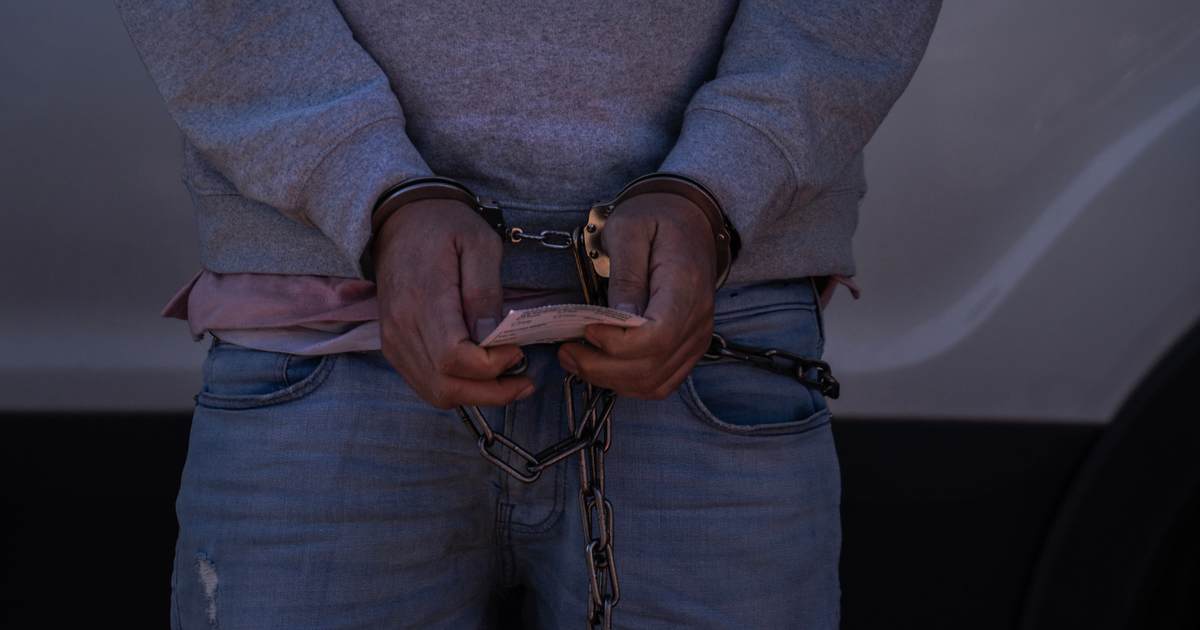
A federal indictment unsealed in the Western District of Texas charges 57-year-old Iranian national Jafar Tafakori with running a transnational human smuggling operation that moved large numbers of primarily Iranian migrants into the United States, charging some as much as $30,000 for passage and services.
An indictment was unsealed charging Jafar Tafakori for coordinating the smuggling of illegal aliens into the United States, and authorities say he arranged shelter, transport, and travel for migrants moving through South and Central America and Mexico. Tafakori was arrested in Colombia at the request of the United States, and the case alleges activity from at least Dec. 1, 2022, through on or about May 15, 2024. The charges focus on moving large groups of primarily Iranian nationals into the U.S. in exchange for payment.
The indictment alleges Tafakori coordinated routes and logistics so migrants could transit through multiple countries and then enter the United States at the southern border. In some cases, the complaint says airline tickets were provided; in others, migrants were housed and transported by associates. According to the document, Tafakori charged some aliens as much as $30,000 for his services.
“Securing our borders and stopping alien smuggling is a top priority for the Department of Justice,” said Acting Attorney General Todd Blanche. The arrest in Colombia followed a coordinated request from U.S. authorities and Colombian law enforcement, and officials say the swift detention demonstrates cross-border cooperation. Colombian authorities issued a warrant and arrested Tafakori on April 23 in Pereira, Colombia, pursuant to a request from the United States.
Assistant Attorney General A. Tysen Duva emphasized the duration and scope of the alleged scheme. “Jafar Tafakori allegedly smuggled Iranian nationals illegally into the United States for 18 months,” said Assistant Attorney General A. Tysen Duva of the Justice Department’s Criminal Division. Duva noted that when Tafakori is extradited he will face prosecution in the United States for the alleged offenses.
The indictment charges Tafakori with one count of conspiracy to bring an alien to the United States and five counts of bringing an alien to the United States for financial gain. If convicted, each count carries a maximum penalty of 10 years in prison, and the indictment warns that conviction on three or more counts carries a mandatory minimum of five years and a maximum of fifteen years. Those penalties reflect the federal government’s view of human smuggling as a serious cross-border crime.
New from DOJ:
“An indictment was unsealed today in the Western District of Texas charging Jafar Tafakori, 57, an Iranian national, for his role in coordinating the smuggling of illegal aliens into the United States. Tafakori was arrested in Colombia at the request of the United… pic.twitter.com/3l4NWvrOUX
— Katie Pavlich (@KatiePavlich) April 24, 2026
U.S. Attorney Justin R. Simmons framed the case as a caution about lax border enforcement. “Tafakori’s actions demonstrate the inherent dangers of an open-border policy,” said U.S. Attorney Justin R. Simmons for the Western District of Texas. He added that the indictment and arrest were facilitated by members of the Homeland Security Task Force and underscored the administration’s commitment to prosecuting organizers who exploit permissive border policies.
Homeland Security Investigations in San Antonio led the probe with help from multiple domestic and international partners, including HSI Bogotá, CBP’s National Targeting Center, and the Border Patrol’s Del Rio Sector intelligence unit. Significant assistance came from Colombia’s national police investigative units and the Colombian Attorney General’s Office. Officials credited the Justice Department’s Office of the Judicial Attaché in Bogotá, the Office of International Affairs, and Interpol Washington for support in the operation.
“Homeland Security Investigations remains steadfast in its pursuit of transnational criminal organizations that endanger national security by smuggling illegal aliens from regions associated with criminal activity,” said acting Special Agent in Charge John A. Pasciucco, HSI San Antonio. HSI leaders described ongoing efforts to identify, disrupt, and dismantle the networks that traffic people across the Americas. The investigative work is part of a larger push to stop those who would exploit our borders to move people linked to criminal activity.
Prosecutors from the Criminal Division’s Human Rights and Special Prosecutions Section and the Western District of Texas are handling the case, with Trial Attorney Bethany Allen and Assistant U.S. Attorney Adrian Rosales listed as prosecutors. “The arrest of this Iranian national involved in smuggling large numbers of individuals — primarily fellow Iranian citizens — into the United States underscores the global reach and threat of human smuggling networks,” said Assistant Director Ricardo Mayoral of HSI International Operations. Mayoral credited close coordination between U.S. investigators and Colombian partners for the successful detention.
The prosecution links to the Justice Department’s Joint Task Force Alpha, which focuses on high-impact human smuggling and trafficking led by cartels and transnational criminal organizations. JTFA and the Homeland Security Task Force were both invoked as part of the federal counter-smuggling strategy, using interagency and international cooperation to target organizers and leaders. To date, federal task force efforts have resulted in hundreds of arrests, convictions, and significant asset forfeitures tied to alien smuggling and trafficking.
An indictment is merely an allegation. All defendants are presumed innocent until proven guilty beyond a reasonable doubt in a court of law. Many in law enforcement and conservative circles view this case as proof that stronger border controls and sustained international cooperation are necessary to prevent criminal networks from exploiting migration pathways and threatening public safety.
Editor’s Note: Many Democratic leaders and their allies resist robust enforcement, and that resistance can complicate the work of agents and prosecutors trying to stop transnational smugglers from exploiting our borders.