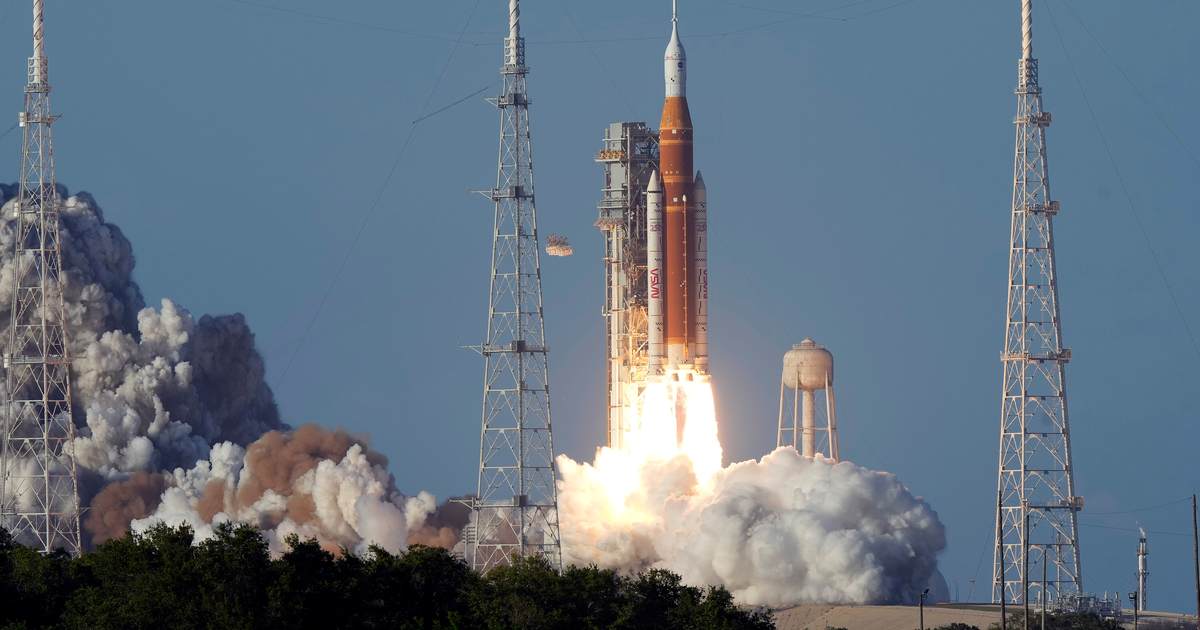
Artemis II successfully launched, kicking off a 10-day crewed mission that tests life support systems and extends America’s reach beyond low Earth orbit for the first time in more than five decades.
The Artemis II flight carries four astronauts—Reid Wiseman, Victor Glover, Christina Koch, and Canadian Space Agency astronaut Jeremy Hansen—on a mission to validate vital systems with humans aboard. The crew will travel farther and faster than any humans in a generation as NASA rehearses the hardware and procedures needed for future lunar operations. This outing is a stepping stone toward longer stays and more complex missions on and around the Moon.
The mission timeline runs roughly 10 days and is designed around system checks, trajectory confirmations, and crew health monitoring under deep space conditions. Engineers will focus on verifying life support, navigation, and communication systems while the crew experiences an authentic deep space environment. Those data will directly inform Artemis III and subsequent missions that aim to land humans and sustain a presence on the lunar surface.
This is the first crewed flight to the Moon in 54 years and the first time an Orion spacecraft carries a human crew this far. The last Apollo mission was in 1972, a gap that has left many eager for a sustained return. Artemis II is intended to prove that modern rockets, spacecraft, and procedures can reliably take people beyond low Earth orbit again.
Onboard the flight, the astronauts will test life support and environmental controls under continuous operation, monitoring everything from oxygen systems to thermal regulation. Those tests are about more than survival; they are about ensuring mission flexibility and crew comfort on longer journeys. Successful demonstrations lower risk for the longer Artemis missions that will follow.
Systems checks also include propulsion and trajectory burns that will place Orion on the correct path around the Moon and back to Earth. Flight controllers will measure performance under real conditions and compare the results to predictions from simulations and ground tests. Confirmed performance means planners can confidently expand mission scope in later flights.
Science and engineering teams will use the mission’s telemetry to refine designs, procedures, and contingency plans, turning live lessons into actionable improvements. This hands-on testing accelerates learning in a way simulations cannot match, because actual operations reveal small but crucial interactions. In short, Artemis II is about converting tested theory into proven practice.
🇺🇸🚀Artemis II LAUNCHED!
Astronauts are on their way to deep space after nearly five decades.
HISTORIC! pic.twitter.com/BxXnqbdFId
— Townhall.com (@townhallcom) April 1, 2026
Beyond raw hardware checks, the mission will evaluate how crew routines, sleep cycles, and human factors respond to deep space stressors. Those human performance metrics are essential for crewed missions that might one day travel to Mars, where autonomy and reliability are everything. The behavioral and physiological data gathered now will shape training and support for future explorers.
National pride and international collaboration are part of the package, with partners contributing hardware, expertise, and shared objectives for sustainable exploration. The mission architecture is built to enable long-term presence, not just short visits, and partners will benefit from the lessons learned. Artemis plans to open a pathway for science, industry, and geopolitics to advance together in space.
“Today’s launch marks a defining moment for our nation and for all who believe in exploration. Artemis II builds on the vision set by President Donald J. Trump, returning humanity to the Moon for the first time in more than 50 years and opening the next chapter of lunar exploration beyond Apollo. Aboard Orion are four remarkable explorers preparing for the first crewed flight of this rocket and spacecraft, a true test mission that will carry them farther and faster than any humans in a generation,” NASA Administrator Jared Isaacman said in a statement. “Artemis II is the start of something bigger than any one mission. It marks our return to the Moon, not just to visit, but to eventually stay on our Moon Base, and lays the foundation for the next giant leaps ahead.”
As data arrive and teams refine plans, Artemis II will be reviewed openly to guide budget decisions and technical milestones for the next phases. The mission’s outcomes will influence timelines for lunar surface missions, habitat development, and cargo logistics that support a stable presence. For now, the focus is clear: validate, learn, and push forward with confidence.
The flight reminds us that exploration requires steady technical work and persistent political and financial support. Each successful demonstration reduces unknowns and makes ambitious goals, like a sustainable lunar presence or a crewed Mars mission, more achievable. Artemis II is a concrete step in that long effort, proving systems and people can perform where it matters most.
Public interest and private sector momentum are likely to follow the mission’s milestones, creating opportunities for new technology and partnerships. Commercial capabilities in launch, lunar logistics, and surface systems can scale faster when government missions provide validated platforms and clear requirements. Artemis II’s success helps create a marketplace for next-generation space services.
For the crew, this mission is training by doing; for engineers, it is a full-scale test; and for planners, it is a reality check that shapes what comes next. The mission blends human courage with technical rigor, and the lessons learned will be visible in the next round of Artemis planning. In that sense, Artemis II is a practical trial that prepares the way for bolder steps across the solar system.