President Trump delivered a blunt warning to the remnants of Iran’s naval capability as U.S. forces began enforcing a maritime blockade, escalating pressure after talks with Tehran collapsed.
The administration has moved quickly to choke off maritime avenues Iran could use to project power or fund proxies, and the president made clear this is no diplomatic half-step. U.S. forces are actively preventing certain Iranian vessels from transiting strategic waters, and the message from the top is straightforward: violations will carry immediate consequences. That posture reflects a shift from restraint to enforced deterrence backed by military capabilities.
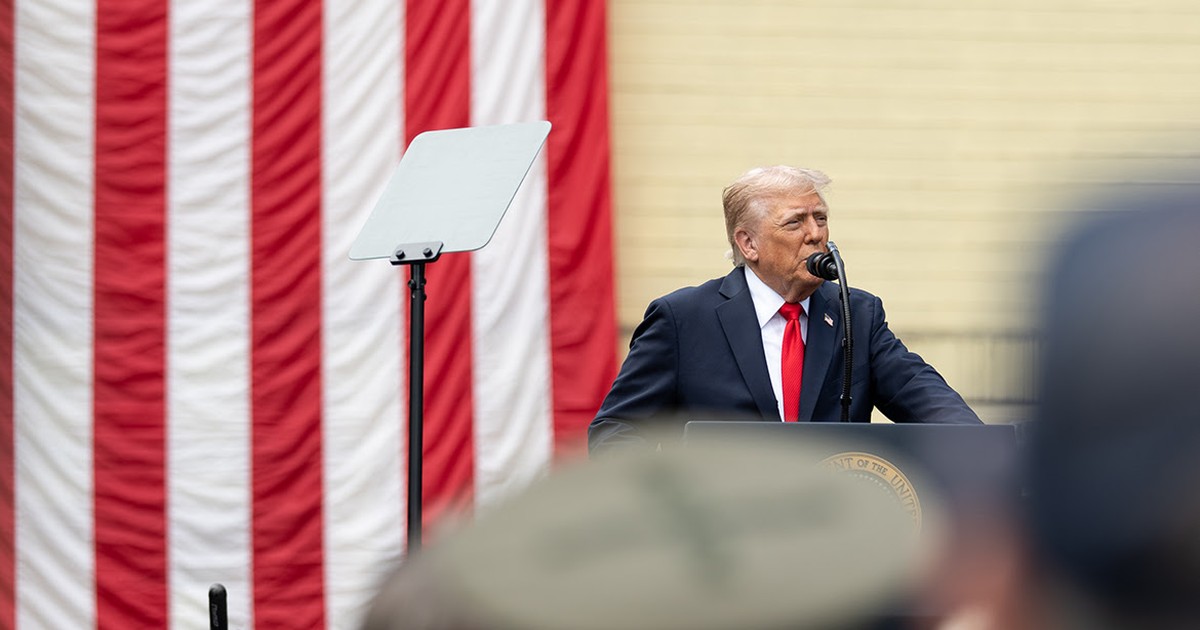
He spelled out that stance publicly in dramatic fashion and left little doubt about intent. “Iran’s Navy is laying at the bottom of the sea, completely obliterated – 158 ships. What we have not hit are their small number of, what they call, ‘fast attack ships,’ because we did not consider them much of a threat,” the president wrote on Truth Social. “Warning: If any of these ships come anywhere close to our BLOCKADE, they will be immediately ELIMINATED, using the same system of kill that we use against the drug dealers on boats at Sea. It is quick and brutal. P.S. 98.2% of Drugs coming into the U.S. by Ocean or Sea have STOPPED! Thank you for your attention to this matter. President DJT”
This show of force follows the collapse of weekend talks in Islamabad, where an Iranian delegation declined to abandon core elements of its nuclear program and refused to end its financial and material support for regional groups like Hezbollah and Hamas. Negotiators from Tehran walked away without meeting the key demands laid out by the United States and its partners, leaving diplomacy strained and leverage limited. In response, Washington pivoted from negotiation leverage to direct action at sea to prevent Iran from exploiting maritime routes.
— Rapid Response 47 (@RapidResponse47) April 13, 2026
Officials announced a blockade of Iranian traffic through the Strait of Hormuz, the narrow chokepoint through which a significant share of regional commerce passes. That move removes a primary lever Iran had to influence events, and it forces the regime to choose between de-escalation or confrontation. The blockade is framed as a targeted measure to deny Iran operational freedom while avoiding unnecessary harm to neutral shipping, though the risks of miscalculation remain real.
Until the talks fell apart, many expected the strait to remain off-limits to conflict after a ceasefire was agreed more than a week ago on the condition it stay fully open. Within twenty-four hours, however, the strait was closed again, apparently in defiance of the agreement’s terms and undercutting the fragile truce. That closure forced Washington to reassess the assumption that Iran would adhere to ceasefire conditions without credible consequences for violations.
The president has not formally revoked the ceasefire, which suggests a continued willingness to let diplomacy work if Tehran changes course. At the same time, the administration has been explicit that patience is limited and that military options remain on the table if Iran persists in backing terrorist networks or advancing its nuclear capabilities. That dual track of pressure-plus-diplomacy is designed to keep options open while applying immediate costs for bad behavior.
Republican policymakers backing the president argue the blockade is a necessary, proportionate step to protect American interests and regional stability when negotiations stall. They see decisive action at sea as a way to choke off Iran’s financial pipelines to proxies without sending large numbers of troops ashore, relying on maritime interdiction and precise tactics instead. Supporters also point to the administration’s broader claims of disrupting illicit flows, framing the blockade as part of a sustained campaign to deny hostile actors easy sea lanes.
Still, the situation is volatile and hinges on Tehran’s next moves and the discipline of commanders enforcing the blockade under strict rules of engagement. A single misstep could widen the conflict, so Washington is signaling readiness to escalate proportionally while also leaving room for a political off-ramp. For now, the posture is unmistakable: leverage at sea, pressure on Tehran’s proxies, and a clear warning that violations will be met with force appropriate to the threat.
Editor’s Note: For decades, former presidents have been all talk and no action. Now, Donald Trump is eliminating the threat from Iran once and for all.