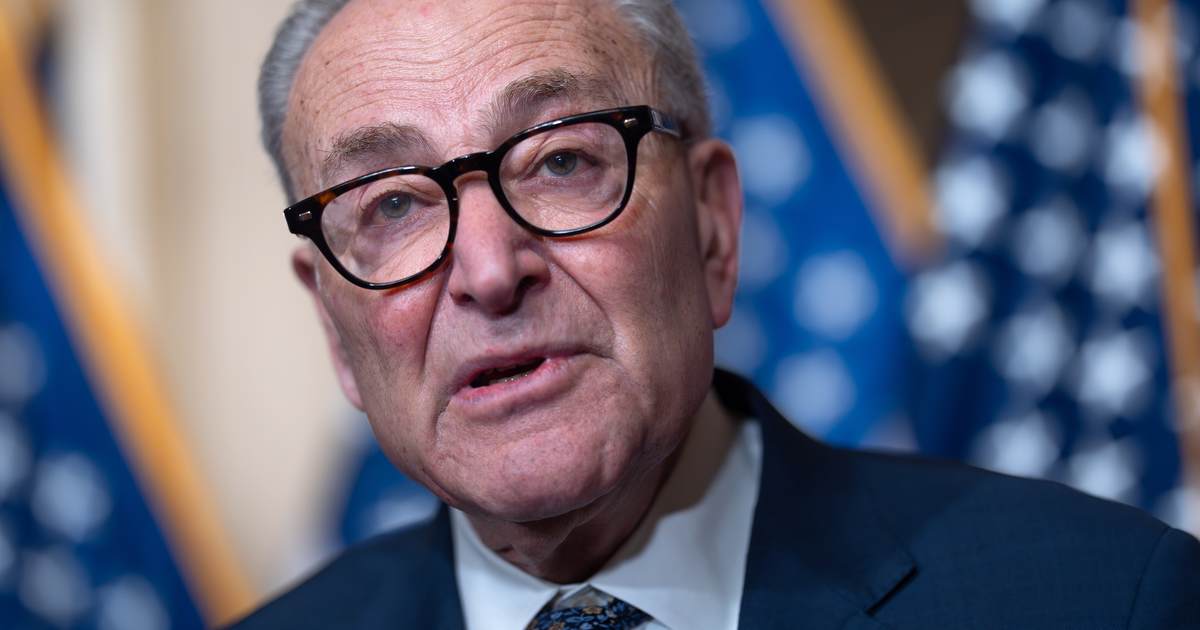
The Democratic revolt over Chuck Schumer’s leadership has widened, with candidates in more than a dozen states publicly opposing his return as caucus leader and internal factions openly sparring over strategy, while polling shows his approval has plunged into the 20s.
The pushback against Senate Leader Chuck Schumer keeps growing as the midterms approach, and Democratic politicians are airing their grievances in public. What started as whispers inside committee rooms has spilled into campaign statements and social media, exposing a split between establishment figures and more combative progressives.
At least 13 states now have Democratic Senate hopefuls who say they would not back Schumer for the caucus leadership, signaling an unusual level of unrest. That number reflects a party wrestling over whether old strategies still work and whether a different tone or new faces could energize voters this cycle.
In Maine, one insurgent candidate delivered a blistering critique after several Senate Democrats voted to end a government shutdown without extracting major concessions. Graham Platner declared the episode a failure of leadership and said bluntly, “This happened because Chuck Schumer failed in his job yet again, because they do not understand that when we fight, we win,”
Another Maine contender, Tucker Favreau, joined the chorus of critics and targeted Schumer’s stamina and voice in tough moments. Favreau said Schumer “simply lacks the energy to be the voice of angry Americans across the country that are demanding strong action in the face of this regime.”
Michigan State Sen. Mallory McMorrow has also gone on record that she would not support Schumer if Democrats regain the Senate, an unusual posture from a sitting state legislator tied to the party’s broader network. Her stance reflects a growing willingness among some Democrats to reject automatic deference to longtime leaders.
Democratic strategist Lis Smith described the uprising as highly atypical for Senate politics and suggested candidates are reacting to grassroots feedback. She said it is “pretty uncommon for sitting senators to endorse against the Senate leader” and that these candidates “are reading the tea leaves and are getting feedback from the grassroots that they are dissatisfied with Schumer’s performance as leader.”
Behind the headlines there are informal maneuvers inside the caucus: members reportedly ran an informal vote count to test support for Schumer, and a self-styled progressive bloc nicknamed the “Fight Club” is agitating for a more aggressive posture. That faction argues the party needs to take a tougher, pugilistic approach to confronting the White House and energizing disaffected voters.
Graham Platner to Chuck Schumer: “You need to stop having a problem with the illegal wars we have been starting simply because of the paperwork that wasn’t done properly. You should be against them because they are fundamentally immoral, unethical, and illegal. We should have… pic.twitter.com/1YdnD3Dj1W
— Marco Foster (@MarcoFoster_) March 27, 2026
The political cost for Schumer is tangible. A Gallup poll released in December put his approval at 28 percent, a steep fall from the 76 percent approval he once held among Democrats two years earlier. Those numbers give ammunition to challengers who argue new leadership is needed to reconnect with base voters.
What makes this rare is not just the criticism, but its public and organized nature: candidates and activists are openly positioning themselves against the party heir apparent. For a party that prizes unity going into midterms, this public fracturing creates headaches for messaging and candidate recruitment in competitive states.
With the midterms looming, the internal fight over Schumer’s future is likely to stay in the headlines as campaigns try to balance local dynamics with national strategy. The debate now centers on whether the party pivots to a more confrontational style or doubles down on the established playbook that has guided Senate Democrats in past cycles.