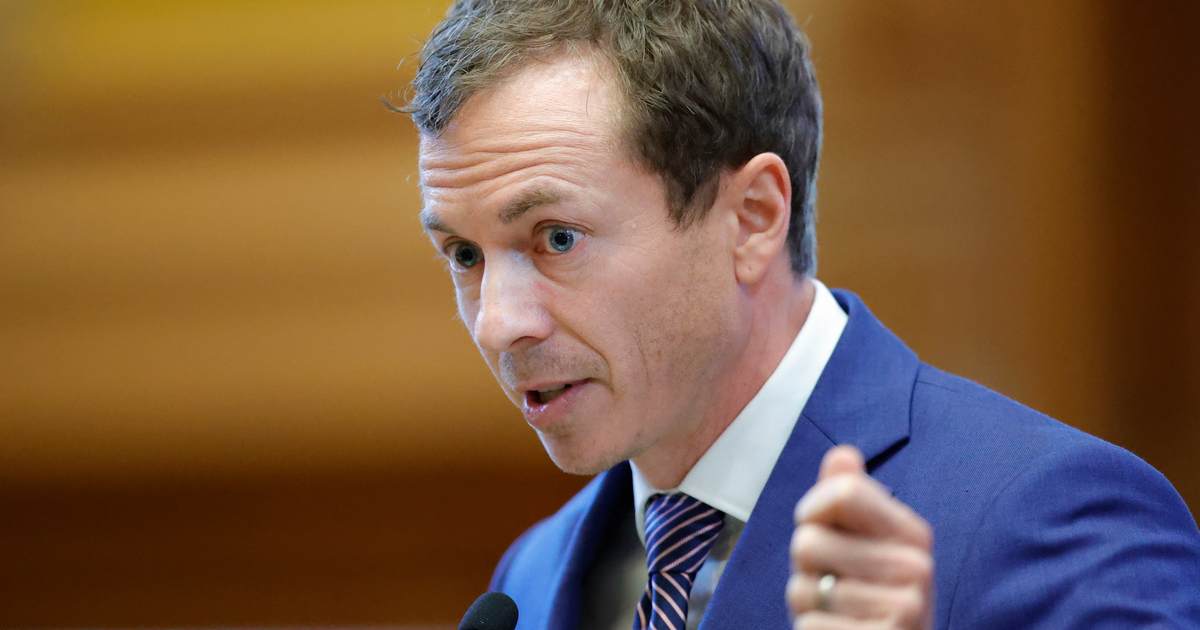
Georgia State Senator Greg Dolezal is urging Governor Brian Kemp to call a special legislative session to redraw congressional maps after the Supreme Court’s recent Voting Rights Act ruling, arguing the decision clears the way to remove racially gerrymandered districts.
State Senator Greg Dolezal moved quickly after the Supreme Court’s 6-3 decision, becoming the first Georgia lawmaker publicly demanding action to correct maps he says were drawn on the wrong basis. He framed the ruling as confirmation that race-based districting is unconstitutional and said Georgia must respond decisively. The tone from his office was blunt and unapologetic, reflecting a view that Republicans should not cede ground.
The high court’s decision struck down a Louisiana map that included a majority-Black district, while stopping short of overturning Section II of the Voting Rights Act. That 6-3 outcome, in Dolezal’s view, gives states clear cover to revisit maps where race was the principal factor.
Dolezal’s remarks were plain and pointed. “Alright, y’all, the Supreme Court just told us what we all already know to be true,” Dolezal said. “Racially gerrymandered maps are unconstitutional. So it’s time for Georgia and other southern states to remove these maps that we drew that were unconstitutional.”
🚨 Time to call a SPECIAL SESSION in Georgia.
Now is not the time for Republicans to be weak-kneed.
It's time to be bold. Call for special sessions. Redraw the unconstitutional Congressional maps in the South. pic.twitter.com/nfszJSuIdv
— Senator Greg Dolezal (@DolezalForGA) April 29, 2026
He connected the ruling to a larger political landscape in which Democrats have engineered maps to their advantage in other regions. “You know, if we look in the northeast, and we see what Democrats have done. Connecticut, Maine, Massachusetts, Rhode Island. They’ve completely removed every single Republican Congressional seat ever,” Dolezal continued. “The last thing that Republicans need to do is be weak-kneed in this moment. This is a time to be bold. This is a time to be aggressive, and in Georgia, that means calling a special session and redrawing our maps.
That push for urgency reflects two threads Republicans will have to manage: legal compliance and political survival. Dolezal argued compliance with the Court’s ruling is nonnegotiable, while also insisting the party must be strategic about protecting House seats. He warned against passivity and framed a redistricting fight as both lawful correction and electoral necessity.
Dolezal is no newcomer to hard-edged messaging; his recent campaign for lieutenant governor emphasized strict stances on immigration and counterterrorism. His style makes the ask of Governor Kemp louder, not subtler, and it signals an appetite within parts of the party to move quickly. That posture could force a fast calendar for map negotiations at the capitol.
Practical mechanics matter: under Georgia law the governor can call a special session alone, but the legislature can also convene one with the support of three-fifths of members. That reality puts the ball squarely in state hands and makes coalition-building essential for anyone hoping to redraw lines before the next cycle. Lawmakers will need to weigh legal risk, political optics, and the internal balance of power.
Nationally, the ruling and the reaction in Georgia are already reshaping arguments on both sides. House Minority Leader Hakeem Jeffries warned Democrats would treat redistricting as “maximum warfare” and planned to push aggressively for favorable maps. Republicans, hearing that language, are framing the situation as a must-win defensive battle to preserve fair representation and competitive districts.
Back in Georgia, the debate will center on how to redraw maps without inviting fresh litigation and while keeping Republican interests intact. Legislators who favor speedy action argue the state should move now to remove any map that relies on race as the decisive factor. Opponents will likely question timing and motive, ensuring a contentious session if one is called.
Whatever the next step, Dolezal’s demand makes the conversation public and urgent. Lawmakers and Governor Kemp now face a choice about whether to treat the Court’s decision as a roadmap for immediate corrections or to take a slower, more cautious approach. The coming weeks will show whether Georgia acts fast enough to realign maps under the new legal contours and political realities.