The latest U.S.-Israeli airstrikes in Iran reportedly eliminated another senior IRGC figure and possibly others tied to operations against Israel, while President Trump has publicly celebrated the strikes and issued tough warnings to Tehran.
Major General Majid Khademi, who led the Islamic Revolutionary Guard Corps intelligence organization, was reported killed in overnight U.S.-Israeli strikes, according to multiple accounts. His death marks another escalation in targeted operations aimed at Iran’s military leadership. The loss of a senior intelligence chief hits Tehran’s command-and-control and signals a clear intent to dismantle networks directing attacks.
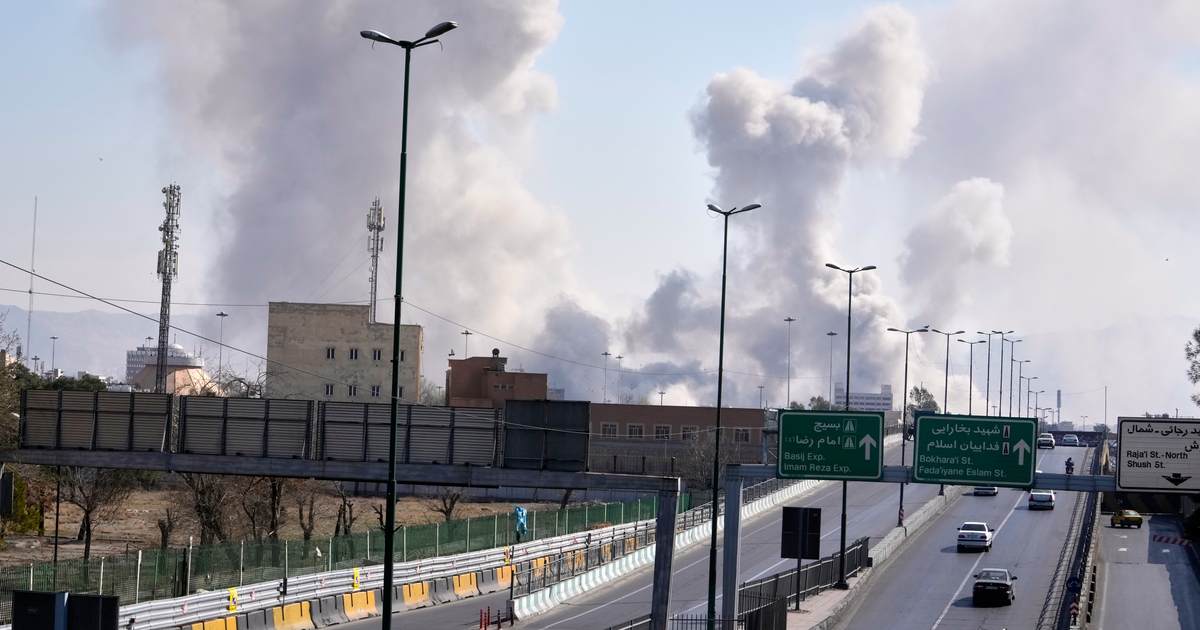
This comes after President Trump reported that dozens of Iranian forces were killed in airstrikes on Saturday. Officials and observers say the coordinated strikes focused on leadership nodes rather than broad civilian targets. Those moves are being framed as precise blows meant to degrade Iran’s ability to project force across the region.
🚨 BREAKING: Top IRGC intelligence chief killed
Iran’s IRGC confirms Major General Majid Khademi, head of its intelligence organization, was killed in a U.S.-Israeli strike. Khademi had nearly 50 years in Iran’s security and intelligence apparatus, overseeing key operations.… pic.twitter.com/FDhh4Xince
— Mossad Commentary (@MOSSADil) April 6, 2026
“Many of Iran’s Military Leaders, who have led them poorly and unwisely, are terminated,” President Trump wrote on Truth Social. That line captures the tone from the administration: direct, punitive, and unafraid to name outcomes. For the White House and supporters, such results validate a more forceful stance after repeated provocations from Tehran.
There are also reports that Asghar Bagheri, identified as head of the IRGC’s Unit 840 within the Quds Force, was eliminated in the same wave. Bagheri’s removal would be significant if confirmed, because Unit 840 has been linked to planning attacks and directing clandestine operations. Losing operatives at that level disrupts both planning cycles and institutional memory inside the Quds Force.
Bagheri was reportedly the architect behind operations targeting Israel and Jews. That description ties these strikes directly to a counterterrorism rationale rather than random escalation. Allies in the region saw coordinated action as necessary to blunt an expanding threat picture.
President Trump, who is planning to hold a press conference today at 1 pm Eastern, warned Iran that they’ve got until 8 pm Eastern on Tuesday to agree to a deal, or “Tuesday will be Power Plant Day, and Bridge Day, all wrapped up in one, in Iran.” His Truth Social post continued, “There will be nothing like it!!! Open the F***in’ Strait, you crazy bastards, or you’ll be living in Hell – JUST WATCH! Praise be to Allah.” Those words make clear the administration’s willingness to pair kinetic options with public pressure and a deadline-driven posture.
The recent escalation followed Iran’s downing of an F-15 on Good Friday, an incident that raised stakes dramatically. One pilot was recovered quickly, while the second required a prolonged extraction that sources describe as a major operation completed on Easter Sunday. The recovery showcased both resolve and capability, reinforcing confidence among U.S. forces and commanders.
Critics on the left continue to portray the situation as evidence the U.S. is losing in the region, but those critiques ignore the operational facts. When dozens of senior commanders are removed, a downed aircrew is recovered, and hard deadlines are issued, the evidence points to effective pressure and strategic success. From a Republican perspective, decisive action and demonstrated capability are the clearest deterrents to further aggression.
Editor’s Note: For decades, former presidents have been all talk and no action. Now, Donald Trump is eliminating the threat from Iran once and for all.
The partnership between U.S. and Israeli forces in these missions underlines longstanding operational ties and shared security priorities. Joint targeting and intelligence sharing allowed precision strikes while minimizing broader conflict risks. Supporters argue that visible coordination sends a warning to Tehran and reassures regional partners.
Removing senior figures in the IRGC and Quds Force will not end the threat overnight, but it complicates Tehran’s ability to wage asymmetric campaigns. Terror networks and proxy chains rely on senior direction, and decapitation strikes create friction and delays in operations. Policymakers will need to sustain pressure while preparing for possible retaliatory moves by Iran or its proxies.
With a major presidential press conference set for this afternoon, attention will turn to how Washington plans to follow up these actions. The posture on display is unapologetically firm, aimed at imposing costs while preserving freedom of maneuver. What happens next will be watched closely in capitals across the region and by allies who demand clarity and resolve.