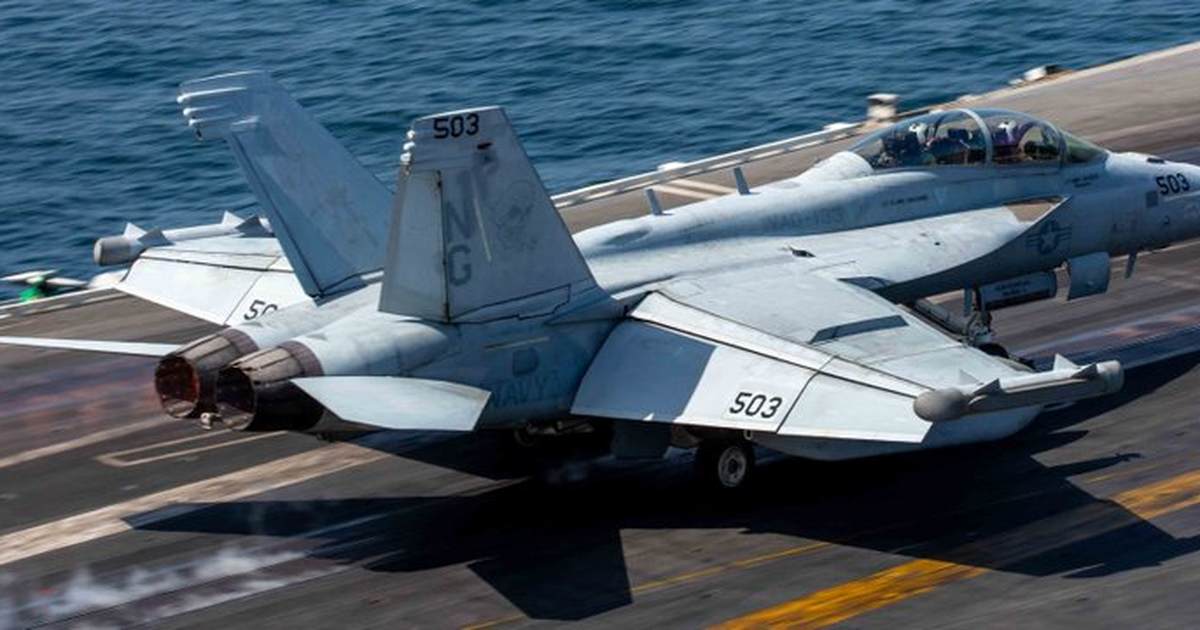
The downed F-15 led to a risky, high-stakes rescue inside Iran that ended with the missing crew member recovered after more than a day behind enemy lines.
They are already talking about making a film out of it. An F-15E was shot down over Iranian airspace on Good Friday, and one of the two crew was found quickly while the other remained missing for more than 24 hours. A separate A-10 responding in the rescue effort took fire and ditched in the Persian Gulf, and that pilot was also recovered safely.
The situation triggered a massive search-and-rescue effort involving special operators, attack aircraft and intelligence assets, and reports about the action were chaotic and often conflicting. Some accounts described fierce firefights with Iranian forces and claims that convoys were struck to keep enemy units away from the area. President Trump posted about the successful rescue mission and reiterated that no American warfighters would be left behind.
Officials described the operation as complex and dangerous, using air cover, special operations troops, and support from multiple services. There were hours of uncertainty while teams worked to locate and extract the weapons systems officer. The fog of war produced contradictory narratives, which made clear reporting difficult while the mission unfolded.
To recap, from the standpoint of local time:
Shot down early on Good Friday. Rescued Easter Sunday morning.
If it were a movie plot, we'd roll our eyes at it for being too on the nose but here we are in real life… https://t.co/YxPKiVdGJB
— Amy Swearer (@AmySwearer) April 5, 2026
Reported on-the-ground details were graphic: the missing airman reportedly survived with minimal gear and relied on a beacon and secure communications to stay in touch. U.S. forces coordinated airstrikes and interdictions as the rescue closed in, and commanders committed scores of resources to reach him before Iranian forces or local militias could do harm. The operation stretched across air, land, cyber and space support networks to create an opening for extraction.
U.S. forces rescued an American aviator trapped in Iran in a daring mission early Sunday morning, according to two U.S. officials. The crew member had been stuck in Iran for more than 24 hours. A specialized commando force extracted the crew member with the help of air cover, one of the officials said.
All forces involved in the rescue are safely out of Iranian airspace, according to the officials. The aviator, who has not yet been identified, was one of two aircrew flying in an F-15E Strike Eagle when it was shot down by Iranian forces on Friday.
A U.S. military team rescued the other crew member on Friday and that person is now safe. The rescue comes less than two days before President Trump’s deadline for Iran to negotiate a deal with the United States or open the Strait of Hormuz.
Local and international outlets tracked the story closely, and some foreign state media even offered bounties for anyone who captured the downed airman. The crisis highlighted both the danger American aviators face over hostile territory and the effectiveness of dedicated recovery teams that train specifically for these scenarios. Command-and-control and timely intelligence were decisive in turning a desperate search into a successful recovery.
The reporting preserved key context about how rare a shoot-down of this kind has been: experts noted the last comparable combat loss for a U.S. fighter in modern memory. There had already been previous incidents in the region, including friendly-fire shoot-downs early in the conflict, but this one carried heavier strategic risk because it occurred deep in Iranian-controlled territory. The risks underscored why commanders kept so many assets in play during the extraction.
The downing of the F-15E fighter jet marks the first time a U.S. fighter jet has been shot down in combat in over 20 years, retired Air Force Brig. Gen. Houston Cantwell, a former F-16 fighter pilot, told The Associated Press.
At least four U.S. fighter jets have been shot down since the Iran war began on Feb. 28, but three of those were in a friendly-fire incident, the Pentagon said. On March 1, three American F-15s were “mistakenly shot down by Kuwaiti air defenses,” U.S. Central Command said at the time, and there were no casualties from that incident.
CBS News national security analyst Aaron MacLean on Friday provided insight on how the search and rescue operation for the missing F-15E crew member might play out, explaining the U.S. military uses highly trained forces known as Air Force Pararescuemen who are “dedicated” for such missions.
The missing crew member would have had first-aid gear and “training in how to administer self-care in case they’re injured,” MacLean explained, and would be equipped with communications gear to “let their chain of command know that they are OK, and ideally participate in their own rescue.”
Another detailed account described hundreds of special forces, dozens of aircraft and coordinated strikes to keep Iranian convoys at bay while the recovery unfolded. As U.S. troops closed on the location, a firefight erupted and the rescue team moved the airman to evacuation points under fire. When transport aircraft became disabled at a remote staging base, commanders destroyed the broken planes rather than risk leaving them for Iran.
Finding the downed airman, who had been hiding with little more than a pistol as defense, had been the U.S. military’s highest priority over the last 48 hours.
The mission to save the crew member employed hundreds of special forces troops, dozens of U.S. warplanes, helicopters, and cyber, space and other intelligence capabilities.
U.S. attack aircraft dropped bombs and opened fire on Iranian convoys to keep them away from the area where the airman was hiding. As U.S. forces converged on the downed airman, a firefight erupted, two former senior military officials briefed on the operation said.
The airman was equipped with a beacon and a secure communication device for coordinating with forces mounting the rescue.
A senior U.S. military official described the mission to rescue the airman as one of the most challenging and complex in the history of U.S. special operations.
In a final twist after the weapons officer was rescued, two transport planes that would carry the commandos and the airmen to safety got stuck at a remote base in Iran. Commanders decided to fly in three new planes to extract all the U.S. military personnel and the airmen, and they blew up the two disabled planes rather than have them fall into Iranian hands.
The F-15E fighter jet was shot down in a region of Iran where there is significant opposition to the Iranian government As a result, the airman may have been able to rely on locals for shelter and assistance.
The crash also drew the attention of Iranian military forces, who were reported to have been scouring the area. The Iranian government asked locals for help finding the downed airman, and had offered a reward for the airman’s capture.
The C.I.A. often also plays a role in making contact with civilians willing to help vulnerable troops stay alive, a process known as “unconventional assisted recovery.”
CIA executed a misinformation campaign to confuse the Iranians:
This operation demonstrates the hard, necessary edge of American military power and the value of decisive leadership in moments that matter. The recovery cost planning, risk and resources, but it also showed what a force that refuses to abandon its own can accomplish. The incident will shape how commanders think about operations inside and near hostile territory going forward.