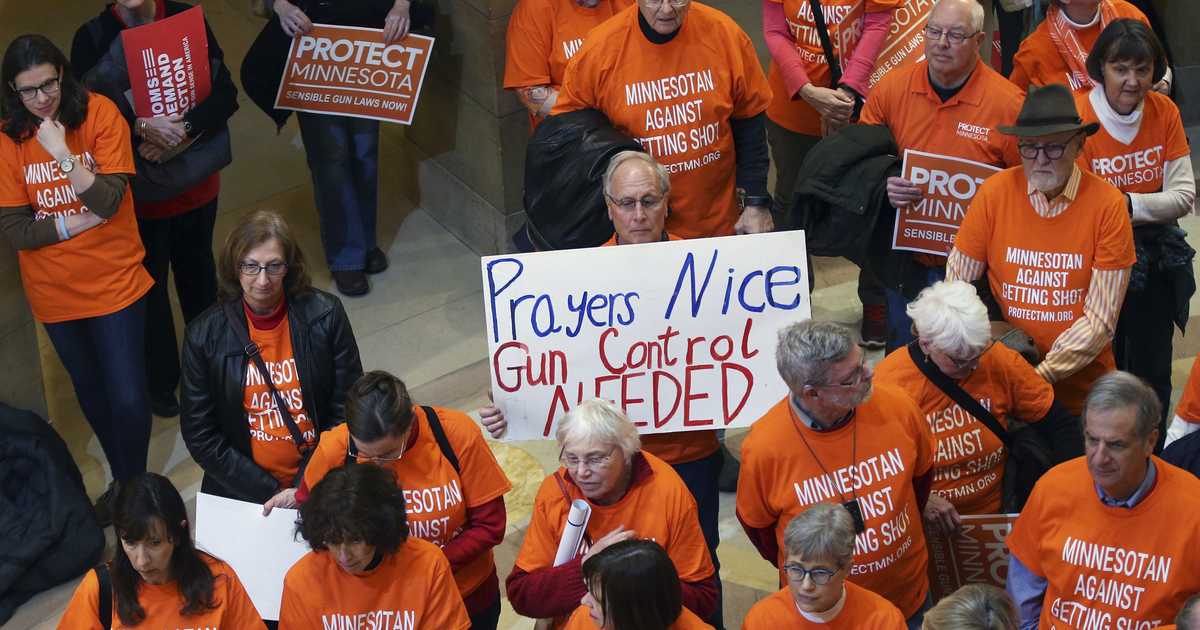
A Minnesota state representative erupted after a radical gun control bill failed, telling a Republican colleague to “go f***ing shoot himself,” a remark that has prompted calls for her removal from committee leadership and reignited fights over how Democrats handle guns and public safety.
Democrats keep pushing new gun-control laws after every mass shooting, insisting more rules will make people safer. From a Republican perspective, that ignores the fact that many existing laws go unenforced and that the focus too often lands on law-abiding owners rather than criminals. That disconnect is fueling frustration on the right and landing in ugly moments like this one.
Recent cases underline the point conservatives make: there have been instances where red flag measures and prosecutions did not stop violence, and judges and prosecutors sometimes made choices that put communities at risk. Last month a high-profile murder-suicide in Virginia involved a politician who supported stricter measures, and other cases saw repeat offenders released or given lenient sentences before committing further violent acts. Those examples feed the argument that enforcement matters more than piling on new statutes.
When the radical bill failed in Minnesota, State Rep. Aisha Gomez reportedly told her Republican colleague, Rep. Elliott Engen to “go f***ing shoot himself.” That outburst is what turned a policy fight into a discipline issue in the House.
Speaker Lisa Demuth and House Republican Floor Leader Harry Niska have publicly called for Gomez to be stripped of her role as Tax Committee Chair. Conservative lawmakers say leadership action is needed to uphold basic standards of conduct and to make clear that threats or calls for violence have no place in a legislative body.
This is not an isolated incident of Democratic temper or theatrics in statehouses. In Tennessee, the entire House Democratic Caucus was removed from committee assignments after a meltdown over redistricting, and similar scenes have played out elsewhere when political fights turn personal. Those patterns feed the broader narrative on the right that Democrats resort to tantrums and punishments rather than recruiting votes or building consensus.
🚨 BREAKING: Several members of the Minnesota House Republican Caucus have confirmed to me that Rep. Aisha Gomez (D) told Rep. @elliottengenMN (R) to “go f*cking sh**t himself.”
The incident occurred during a Democrat “sit-in” after a radical gun control bill failed to pass. pic.twitter.com/7qVYLAWAnW
— Dustin Grage (@GrageDustin) May 15, 2026
And, I fear, it won’t be the last. That trend — loud, volatile displays followed by excuses — keeps distracting from real crime prevention and gives Republicans ammunition to argue for better law enforcement and accountability over more prohibitions.
Conservatives argue Democrats pursue gun seizures from law-abiding citizens instead of focusing on criminals who use guns to commit violence. When prosecutors decline charges, judges give light sentences, or officials resist enforcement, adding new restrictions only limits people who follow the law and have done nothing wrong. That imbalance is a core Republican critique of contemporary gun policy debates.
Governor Tim Walz did little to calm things, blaming Republicans for not supporting “gun violence prevention” even as many on the right point to enforcement failures and prosecutorial decisions as the missing links. Using that phrase without addressing the enforcement gap only highlights the partisan divide and frustrates those who prioritize constitutional rights and public safety.
Democrats might consider stopping the personal attacks when policy votes go against them, but old instincts die hard. The party nominated and supported figures like Jay Jones, who publicly fantasized about shooting Virginia Republicans and their children to advance extreme gun measures, and those episodes reinforce the concern that rhetoric can cross into dangerous territory.
Democrats often accuse gun owners and Republicans of inciting violence, yet episodes like Gomez’s comment suggest the problem can flow the other way. When political frustration turns to threats or violent imagery from elected officials, it undermines democratic norms and hands Republicans a clear contrast on discipline and respect in public life.
They portray their opponents as the threat, but too often their own behavior gives the lie to that claim; imagine what could happen if those who make threats ever gained the power to disarm citizens who disagree with them. That is the real fear driving the Republican critique of Democratic gun policy and conduct.