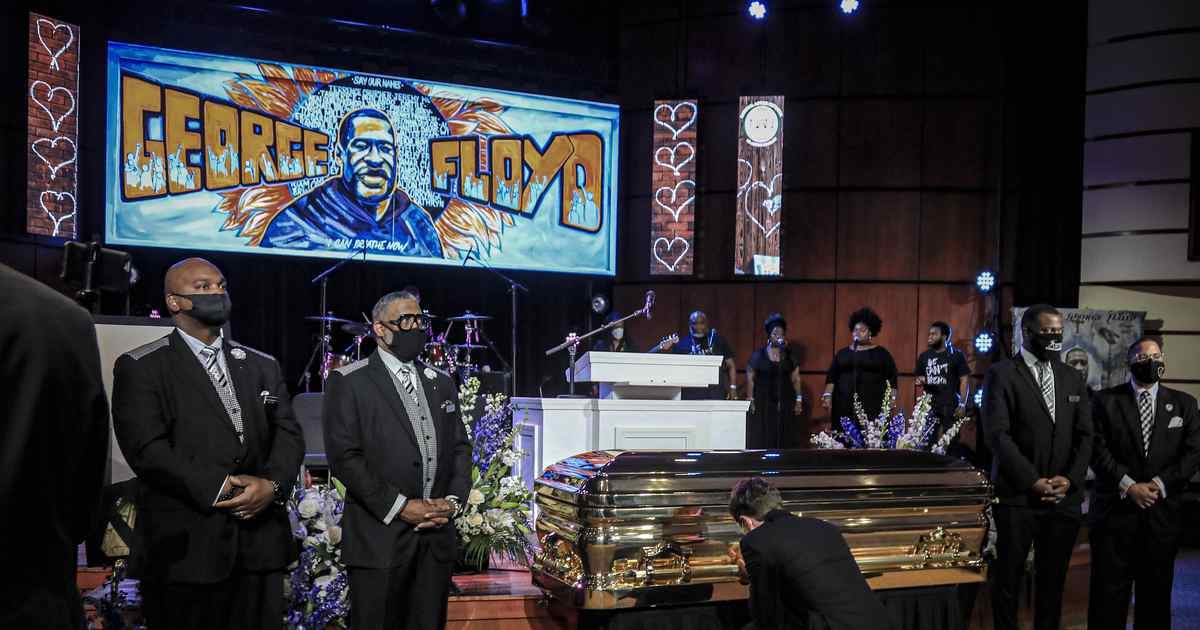
Democrats chose to center George Floyd on Memorial Day, sidelining traditional honors for fallen service members and leaning on a powerful narrative that serves their political goals.
On Memorial Day in Minnesota, Democratic officials held events that focused on George Floyd rather than on the service members Memorial Day is meant to honor. Minneapolis leadership and the state governor attended commemorations for Floyd, drawing criticism from those who expected the solemn holiday to be reserved for the military. The choice sparked immediate debate about priorities and political theater.
Why would Democrats redirect a day meant for our troops toward a single individual with a troubled past? The answer is simple: the story mobilizes people and shapes perception. When a narrative has traction, politicians follow it because it moves votes and controls the conversation.
Tampon Tim attended a George Floyd celebration while ditching an event for Memorial Day
Just when you think this freak can’t go any lower pic.twitter.com/VSULhsemP4
— Libs of TikTok (@libsoftiktok) May 26, 2026
Polls show how effective that narrative can be, with a striking share of people viewing Floyd in sympathetic terms. In one measure, 60 percent of left-leaning respondents and 40 percent of all respondents said they believed Floyd was a ‘model citizen.’ That gap between perception and record matters when political actors are trying to rewrite context.
Take the facts of Floyd’s criminal history into account and the picture is different from the sanitized version many were presented. His record includes multiple arrests and convictions stretching back decades, with sentences and jail time on various charges from the late 1990s through the 2000s. Those details rarely make headlines when the preferred narrative is being amplified by officials and the media.
Between 1997 and 2005, Floyd faced several convictions tied to drug offenses and theft, earning short jail terms at various points. He was convicted in 1997 for delivering cocaine and received six months, followed by theft convictions in 1998 and other drug-related sentences in the early 2000s. These are not peripheral incidents; they form a long-running pattern that should factor into public discussion.
In 2009, Floyd’s involvement in a violent home invasion in Harris County, Texas resulted in a five-year sentence after he and others posed as utility workers and committed robbery. One victim was pregnant and had a gun pressed to her abdomen during that crime. He was paroled in 2013, but the gravity of that offense is often omitted when he is presented as an emblem of innocence.
Fast forward to 2020, and Floyd was arrested in Minneapolis over a counterfeit $20 bill used in a convenience store transaction. That incident, which sparked the chain of events leading to his death and nationwide protest, sits alongside earlier convictions but rarely changes the simple storyline offered by his champions. Political operatives prefer tidy narratives that drive outrage and loyalty.
Yes, it does.
This is true.
Politicians and their media allies push that version because their aim is clear: hold or win power, regardless of inconvenient facts. When a party can turn a complex life into a symbol, it gains leverage in courts of public opinion, fundraising appeals, and election-year messaging. The consequences are simple: history gets simplified and priorities get shifted.
Meanwhile, the result is that Memorial Day ceremonies that should center those who paid the highest price for our nation’s freedom can become secondary to politically useful moments. Many Americans rightly ask whether a holiday supposed to honor the fallen should be repurposed as a vehicle for partisan advantage. That question underscores a larger debate about respect, memory, and political calculation.
Supporters of the decisions in Minneapolis will say community healing and attention to policing reforms justify the focus, and those points are part of a broader conversation about justice. Still, the choice to foreground Floyd on a day for the military feels deliberate, not incidental, to critics who see a pattern of using cultural moments to score political points. The tension between commemoration and campaigning is exactly what makes this controversy stick.