New statewide polling in Michigan finds one Democrat out front in the August primary while many voters remain undecided, and the survey raises questions about who the party’s base is rewarding as the nomination looms.
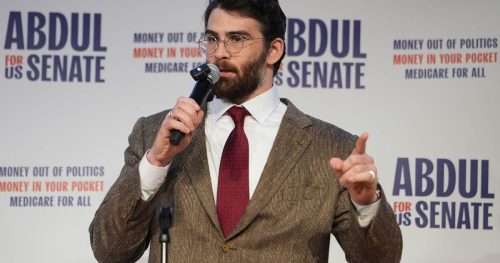
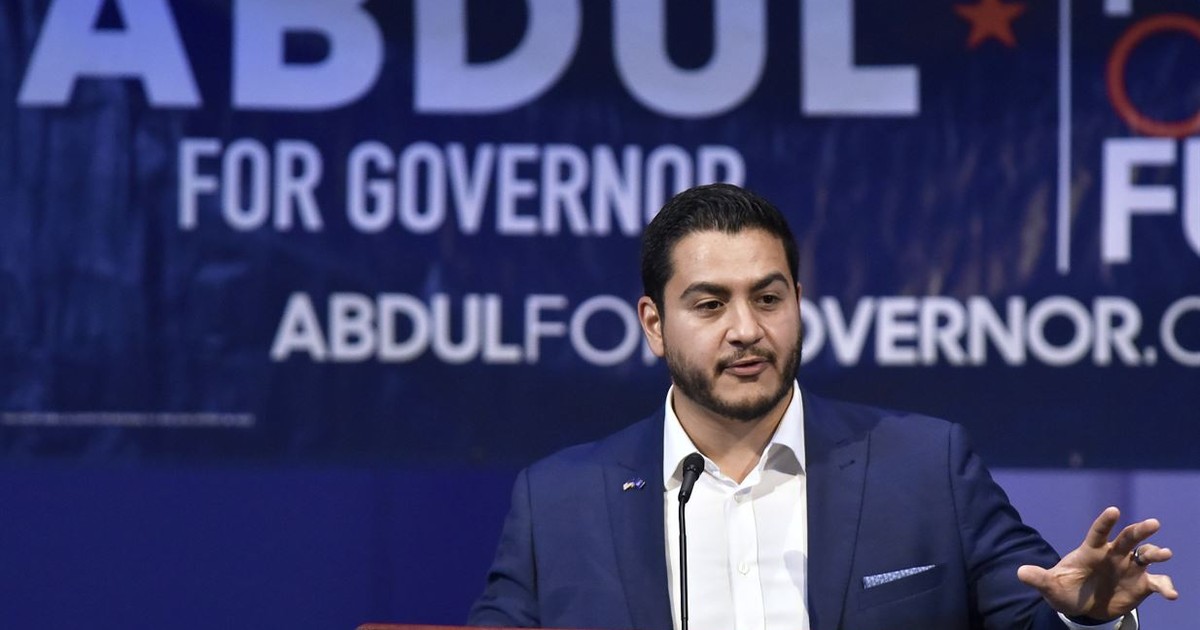
Three Democrats are competing for Michigan’s open U.S. Senate seat, and a new poll conducted May 1-7, 2026 shows Abdul El-Sayed leading the Democratic primary field with 28 percent support. Haley Stevens trailed at 18 percent and Mallory McMorrow registered 17 percent in the same survey, leaving a wide lane for undecided voters to shape the final outcome.
The statewide poll was run by Michigan Information and Research Service through Mitchell Research and Communications and surveyed 405 likely Democratic primary voters. Thirty-eight percent of respondents said they were undecided, creating a large pool that could decide who emerges as the nominee in August.
El-Sayed has attracted high-profile backers on the left, including U.S. Senator Bernie Sanders (I-Vermont) and controversial podcaster Hasan Piker, a pairing that energizes some primary voters but also raises alarm bells for others. Those endorsements make El-Sayed the clear pick of the progressive wing, yet they also sharpen divisions that could matter in a general election match-up.
The poll also included a look at the governor’s race, where incumbent Jocelyn Benson led with 62 percent while Genesee County Sheriff Chris Swanson polled at eight percent. About 30 percent of those surveyed for the governor’s question remained undecided, underscoring the volatility among Democratic primary voters this cycle.
“It has generally been the rule that the most liberal Democrats vote in a Democratic Primary and the most conservative Republicans vote in a Republican Primary. With El-Sayed tacking far left, and in opposition to both the United States and Israel in Gaza and Iran, El-Sayed is running as the most progressive and liberal candidate. Democrats saw the impact of the strong leftist progressive wing of their party take over the Democratic Nominating Convention held to determine Democratic nominees for state-wide office, like secretary of state, attorney general, and statewide education board seats. Piker, considered by many to be anti-Semitic, is probably a primary reason for El-Sayed’s movement upward in the Democratic Primary. Polling in 2024 showed a plurality of Democratic voters supported Palestinians in the Palestinian Israeli war. We see evidence of that same type of backing in the support El-Sayed is receiving in the Democratic Primary,” Steve Mitchell, CEO of Mitchell Research and Communications, said in a statement.
The survey was conducted entirely by text messaging a randomly selected list of registered voters’ cell phones and directing recipients to a SurveyMonkey web survey (MMS-Web). That text-to-web approach produced the 405 responses over the May 1-7 field period used for the analysis.
The poll reports a margin of error of plus or minus 4.9 percentage points at the 95 percent confidence level, a standard disclosure that signals caution when interpreting small gaps between candidates. Earlier surveys showed Stevens and McMorrow in a statistical dead heat with El-Sayed only a few points back, so this snapshot may reflect movement driven by endorsements and intra-party dynamics more than settled voter preferences.
Primary infighting has heated up amid newly resurfaced controversies, including a report that Mallory McMorrow deleted thousands of past tweets that were critical of Michigan and the Midwest. Those revelations have become fodder in the race as campaigns jockey for the attention of the Democratic electorate and try to define each other before the August vote.
Abdul El-Sayed is also facing scrutiny over how he presents his professional background, with critics noting he has marketed himself as a physician despite not having passed medical boards, completed a clinical residency, or practiced medicine outside of higher education. That line of attack has been emphasized by opponents seeking to undercut his credibility with moderate voters.
For Republicans watching this primary, the choice of a progressive nominee would be a clear line of contrast heading into the general election. A left-leaning standard-bearer may excite the Democratic base in a primary, but the same profile can create vulnerabilities in a statewide contest where independents and moderates decide the result.
Endorsements from national figures like Sanders tend to consolidate support among committed activists, while alliances with polarizing online personalities can energize certain blocs and repel others. The combination of high undecided totals and mixed signals from endorsements makes the coming weeks crucial for campaigning and turnout strategies.
Michigan’s primary electorate is not the same as the general electorate; the most liberal voters often dominate Democratic primaries, which can skew results toward progressive candidates. That dynamic helps explain how a candidate polling at under a third of voters can still lead a fractured field heading into August.
Methodological limits matter here: a 405-person sample produces sizable uncertainty around small margins, and text-to-web surveys can underrepresent older or less connected voters. Those caveats mean the numbers should be seen as indicative rather than definitive as candidates push to convert undecided voters.
NEW: Michigan Democratic Senate candidate Abdul El-Sayed for years has publicly said he’s a physician — but there’s overwhelming evidence that he’s had no experience as a licensed medical doctor. (W/ @adamwren) https://t.co/QZA7trhMH9
— Daniel Lippman (@dlippman) May 12, 2026
The next weeks will test whether El-Sayed can translate progressive energy into durable support or if Stevens or McMorrow can consolidate moderates and stop the momentum. With 38 percent of primary voters floating between options, the race remains very much alive and subject to rapid change as campaigns and endorsements continue to bite and counterattack.