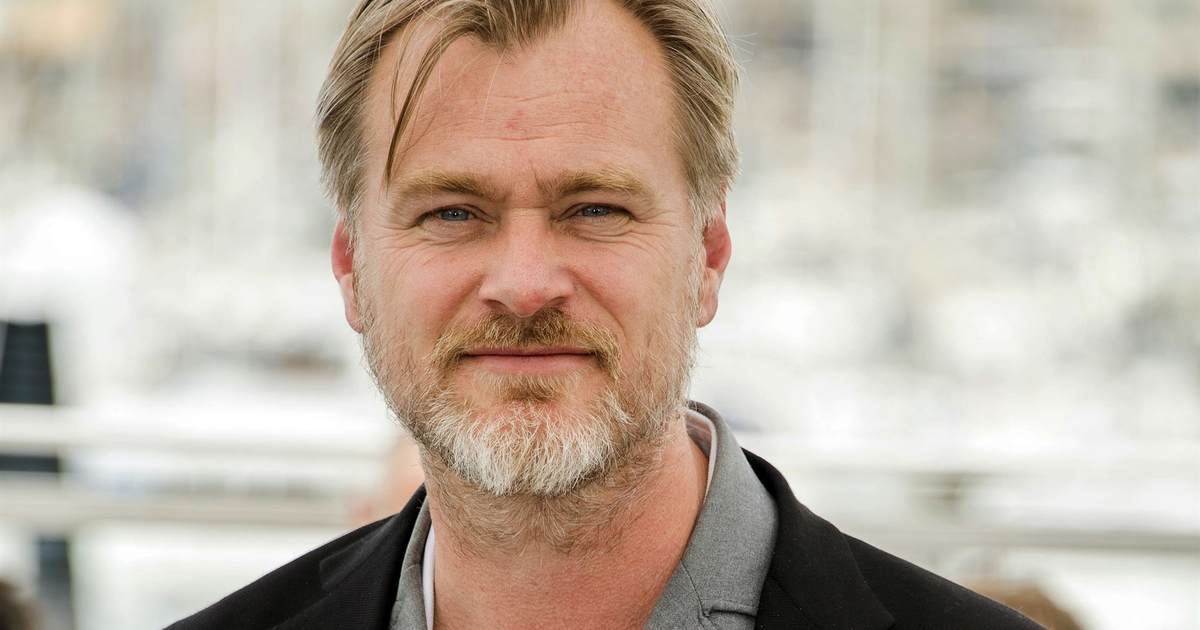
Christopher Nolan’s new take on The Odyssey is stirring a fight over casting, cultural continuity, and Hollywood’s approach to representation.
Christopher Nolan is reworking Homer’s The Odyssey using Emily Wilson’s 2017 translation, which aimed to strip away what it called archaic interpretations. That choice has already set the film up as a cultural lightning rod, with many conservatives and ordinary moviegoers wondering whether the director has traded fidelity for fashionable interpretation. The academic language around the translation masks a clear cultural shift that many find provocative rather than enlightening.
The cast choices have sharpened the debate. Lupita Nyong’o has been named to play Helen of Troy and her sister Clytemnestra, and rumors of Elliot Page as Achilles have circulated, though not confirmed. Critics say this lineup turns a Greek myth into a showcase of diversity at the expense of the story’s cultural anchors, and some blame Hollywood’s obsession with diversity, equity, and inclusion for nudging directors into choices that feel performative.
That accusation of double standards lands hard. Not long ago, actors were criticized for accepting roles that advocates said should go to members of the represented community, from transgender parts to disabled characters. Now those arguments seem to evaporate when the political or cultural benefits of diverse casting align with Hollywood’s elite. The result is the same industry that champions sensitivity suddenly acting as if Greek identity is optional when it comes to one of the pillars of Western literature.
The Greek City Times decided to push back directly and wrote Nolan a letter making the case that Greeks are not relics of the past.
We write to you as Greeks, not as fragments of antiquity, not as echoes from museum displays, and not as characters sealed in marble, but as a living people whose story has never stopped being written.
…
https://x.com/fandompulse/status/2059669039513784547
Cinema has always carried the power to reimagine ancient texts, to cross borders of language and time, and to reintroduce old stories to new generations. Homer’s Odyssey belongs, in many ways, to the shared cultural imagination of humanity. We understand the ambition behind bringing it to the screen on a global scale, and we recognise the artistic tradition of reinterpretation that has surrounded these epics for centuries.
But we also ask you to consider something that is often overlooked in modern retellings of Greek stories.
Greek people did not disappear after the age of myth. Greek culture was not frozen in classical marble. Greek language was not extinguished in antiquity.
We are still here.
For more than 3,000 continuous years, Greek identity has persisted through transformation rather than disappearance. From the Mycenaean world that gave rise to the Homeric epics, through the Classical city-states of Athens, Sparta, Corinth, and Thebes, into the Hellenistic period that spread Greek language and thought across the Mediterranean under Alexander’s successors, through the Roman and Byzantine eras where Greek remained a dominant language of administration, philosophy, and theology, into the Ottoman centuries where identity was preserved through language, faith, and community, and finally into the modern Greek state that emerged through revolution and continues today within Europe and the wider world.
…
That continuity matters when stories like The Odyssey are retold.
Odysseus is not only a universal symbol of endurance, struggle, and homecoming. He is also part of a cultural inheritance that has been carried through every one of those historical layers — retold by Byzantine scholars, preserved in manuscripts copied through the medieval world, studied during the Renaissance, and still taught, spoken, and reinterpreted in Greece today.
This is why conversations about representation matter deeply to us.
We are not asking for exclusion or limitation. We are not arguing against diversity, nor against reinterpretation. Greek culture itself has always been shaped by exchange, migration, and encounter across centuries.
What we are asking is something simpler and more human.
That when Greek stories are retold on a global stage, Greek people are not rendered invisible within them.
The letter also provides a practical tally of Nolan’s cast and their backgrounds to underline the point that a Greek epic is being told with almost no Greek faces. The list names Matt Damon as American with English, Finnish, and Scottish ancestry; Tom Holland as English; Lupita Nyong’o as Kenyan-Mexican; Charlize Theron as South African; John Leguizamo as Colombian-American; and Zendaya as African-American with German and Scottish ancestry.
“Where are the Greeks, or the Greek Americans in this Greek story?” they ask.
Nowhere to be found.
Critics on the left will call this fuss trivial or label anyone who objects as partisan, but the issue is cultural respect and coherence. When an epic that shaped Western storytelling gets wrestled into a casting checklist, it sends a message that heritage can be trimmed away for optics.
One argument you hear is that Greek people look white, so representation isn’t a sticking point for those who police casting on racial grounds. That claim glosses over centuries of language, customs, and history that link modern Greeks to the story’s origins.
Bingo.
No one on the production team seems to have paused to ask whether Greek artists and actors should be visible in a film so rooted in Greek tradition, and that absence fuels resentment in a country that still speaks the language and lives the culture.
I spent time in Greece last summer and saw firsthand how strongly people there feel about their heritage and the stories that made it famous. That emotional ownership explains why a letter from Greek voices landed with so much force, and why many view Nolan’s choices as tone-deaf rather than bold.