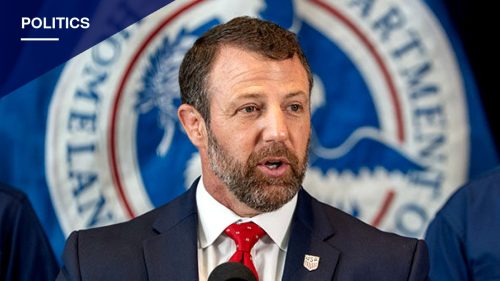
Graham Platner’s online footprint and past behavior have surfaced repeatedly during his Senate campaign, raising fresh questions about his judgment and associations with a messaging app long linked to child exploitation.
Democratic candidate Graham Platner has faced a series of revelations about past behavior that opponents say speak to poor judgment. Reports have detailed episodes described as “bouts of masturbation” in public restrooms, instances of “phone sex” on a network that was compromised by the Taliban, and public complaints about the closure of a Thailand prostitution tax loophole. These incidents have become focal points as voters look at character and fitness for higher office.
Most recently, reporting uncovered that Platner maintained an account on the anonymous messaging platform Kik, using the username phustle0331. The account reportedly remains active, and the chosen avatar was a mirror selfie showing an individual wrapped only in a bath towel; tattoos visible in that image match tattoos Platner displayed in public interviews. Platner later acknowledged to reporters that the Kik account was his, and records show it was created on June 26, 2016.
Kik has long carried a reputation as a haven for predators, with law enforcement and national outlets documenting widespread abuse and exploitation on the platform. A 2016 sting operation led to the arrests of more than 2,600 people on charges related to child exploitation, and investigative coverage at the time flagged the app’s anonymity as a major problem. Those patterns have left the platform labeled by some as “Predator’s Paradise” in coverage and public commentary.
Maine, the state Platner hopes to represent, has not been immune to the dangers associated with such platforms. In one high-profile case a man was sentenced to 30 to 60 years for producing videos of children that were distributed for users of the platform. Another local incident involved a person attending youth sporting events to collect images later sexualized using an AI generator, showing how online tools and offline behavior can become intertwined in harmful ways.
Experts estimate that roughly 70 percent of Kik’s user base falls in the 13-to-24 age range, a statistic often cited by those who warn about the app’s risks to minors. The company has introduced rule changes to restrict minors from accessing the service, but critics note there is still no robust, reliable age verification to guarantee that accounts belong to adults. That enforcement gap has been part of why law enforcement and child protection advocates continue to call attention to the platform’s dangers.
Platner’s campaign has responded by saying he deleted the app from his phone, but reports indicate the account itself was not deactivated and remained accessible. That distinction has become an issue in campaign messaging and media coverage, with opponents arguing the discrepancy undermines the candidate’s explanations. For voters and observers, the persistence of the account is what matters when judging responsibility and candor.
Politically, the timing is sharp: Platner is widely viewed as the favorite to secure his party’s nomination and is just days from his primary. Should he become the nominee, he is poised to face incumbent Republican Susan Collins in November in a matchup that national watchers are already calling one of the most closely watched Senate races of the cycle. These revelations have injected a new line of attack into a race that was already competitive.
From a Republican vantage point, the combination of past public behavior and continued ties to a platform with a documented history of child exploitation raises legitimate concerns about fitness for office. Voters deserve clear answers about why the account remained active and what Platner knew about the platform’s risks when he created and used the profile. Those are straightforward questions of judgment and transparency that play into broader debates over candidate character.
The campaign saga is unfolding under a tight calendar, with primary voters set to weigh these disclosures imminently and the general election looming in November. As the contest moves forward, scrutiny of a candidate’s online footprint and past conduct will likely stay front and center in both campaigns and media coverage, shaping the narrative voters see heading into the fall contest.