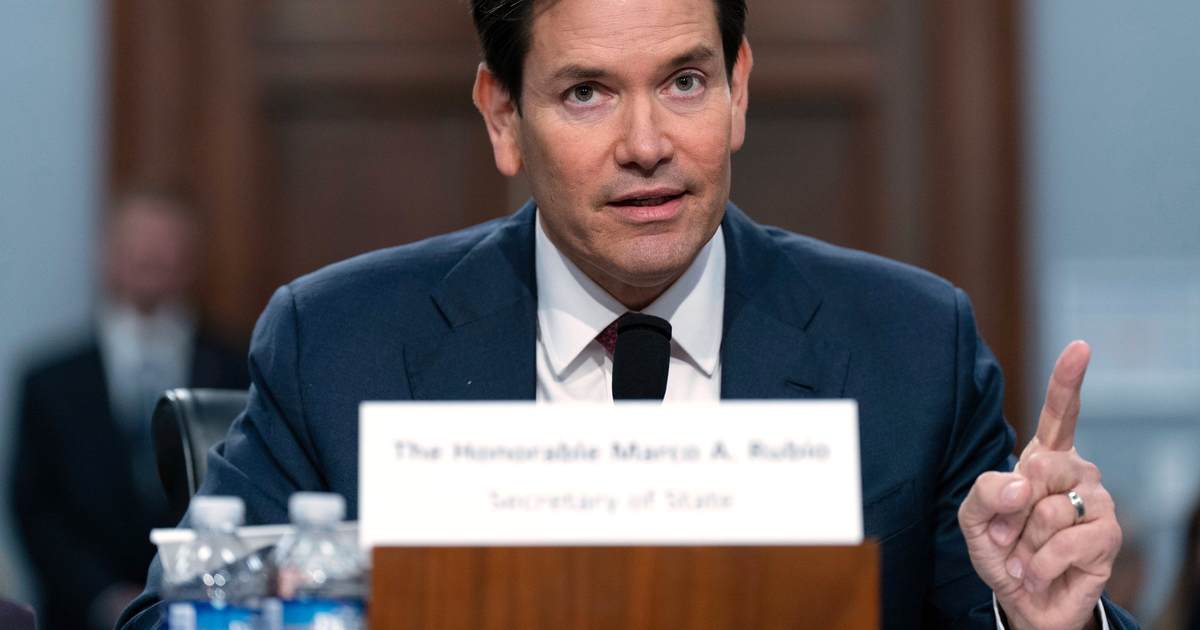
Marco Rubio pushed back hard against critics alarmed by a reported Iran deal, saying the administration won’t sign anything that empowers Tehran’s nuclear ambitions and that diplomacy, not needless boots on the ground, remains the preferred path.
Plenty of voices have rushed to declare the White House soft on Iran after word of a diplomatic accord surfaced, but Senator Marco Rubio dismissed that panic and framed the reaction as premature. He made his comments during a press conference while traveling in India, where he said the public should not assume the administration will accept a deal that harms American interests. Rubio painted the situation as a choice between measured diplomacy and dangerous complacency.
“The idea that somehow this president, given everything that he’s already proven that he’s willing to do, is gonna somehow agree to a deal that ultimately winds up putting position when it comes to nuclear ambitions is absurd,” Rubio said at a press conference during his trip to India. “That’s just not gonna happen, but our preference is to address this through a diplomatic means and that’s what we’re endeavoring to do here.”
🚨 SECRETARY RUBIO: The idea that the President is going to agree to a deal that puts Iran in a stronger position on nuclear ambitions is ABSURD. That’s just not going to happen. pic.twitter.com/v4Lv0X9D64
— Department of State (@StateDept) May 24, 2026
Rubio underscored that President Donald Trump has repeatedly favored negotiated solutions that protect American interests while avoiding needless military commitments. That stance is meant to reassure voters worried about a repeat of past mistakes where diplomatic language masked strategic weakness. “The problem is going to be solved one way or the other,” Rubio stated, and he stressed the administration’s job is to direct that outcome in America’s favor.
His message was blunt: critics who assume capitulation are jumping the gun and ignoring the leverage the United States brings to the table. Rubio argued the point of a deal is to lock in limits and verification, not to hand Tehran cover to chase a bomb. From his perspective, sensible diplomacy uses American strength to constrain threats rather than papering them over.
Along with nuclear concerns, Rubio tackled fears about maritime control in the Persian Gulf and the Strait of Hormuz, a choke point for global commerce. He rejected the idea that Tehran could be permitted to dominate that strategic waterway without consequence. Allowing such a shift, he warned, would create a dangerous new normal for global shipping and regional security.
“If we allowed that to become normal, we’d be normalizing an unacceptable status quo and setting a dangerous precedent that can be replicated in this region and around the world,” Rubio said. He used the Strait of Hormuz as an example of how silencing alarm now could translate into bigger, costlier problems later.
Rubio also took aim at the chorus of former allies and commentators who have publicly defected from the administration’s line, calling some of the criticism performative and disconnected from on-the-ground realities. He suggested that media-driven hysteria often overlooks what negotiators actually need to secure: verifiable, enforceable limits on Iran’s program. The senator argued the smart play is to demand strict enforcement mechanisms and snap-back penalties that keep Tehran honest.
The senator’s remarks reflect a broader Republican impulse to blend robust deterrence with diplomatic tools that maximize American advantage. Rubio portrayed the just-formed diplomatic push as a way to lock in results that serve national security, not to gift Tehran new capabilities. That framing seeks to calm voters while signaling that red lines remain nonnegotiable.
Critics will keep watching for the actual text of whatever agreement emerges, and Rubio made clear he expects scrutiny to follow. He warned that any sign of loopholes or insufficient verification will be called out immediately by those who defend a strong national posture. For now, he framed patience and pressure as the tactics that will decide whether diplomacy wins or a dangerous status quo takes hold.