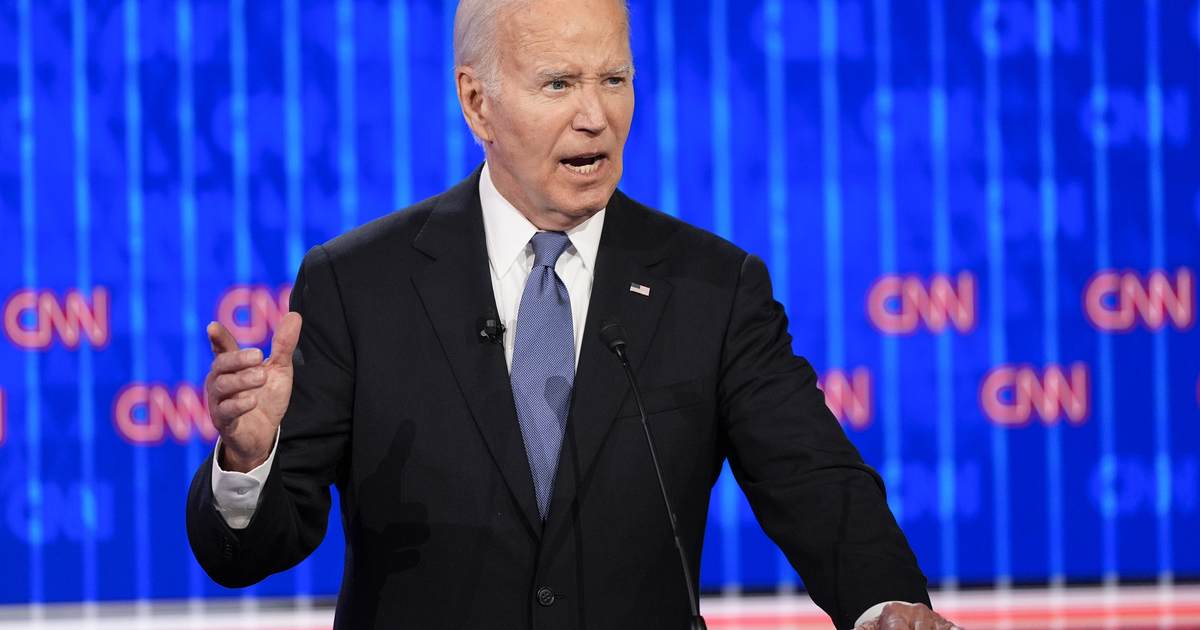
President Trump pushed back hard after Jill Biden said she feared Joe Biden may have had a stroke or been drugged during the June 2024 debate, and the exchange reopened questions about the campaign, the debate night, and why Mr. Biden left the race shortly afterward.
Jill Biden’s description of that debate moment landed in her forthcoming memoir, “View from the East Wing,” and it has prompted a sharp public reply from President Donald Trump. Trump framed her remarks as an admission that even the first family did not understand what had gone wrong on that stage. The timing of the memoir and the candid lines have kept the debate night firmly in the public eye.
Biden’s performance at that June debate sped up concerns about age and fitness, and he left the race not long afterward, endorsing then-Vice President Kamala Harris on July 21, 2024. That sequence of events is central to how Republicans and many voters assess what happened that night. For critics of the Biden team, the exit and endorsement were confirmation that the campaign was unable to carry on in its previous form.
Trump took to Truth Social to respond and used pointed language to frame the moment as evidence of failure. He wrote, “Jill Biden is now out there finally admitting that she did NOT know what went wrong with Sleepy Joe during our spectacular, and highly rated, 2024 Presidential Debate, where Joe was not exactly performing to the highest level of debate standards.” The post was intended to make voters question who was really in control and how the campaign handled a crisis.
He continued, “She said that she thought he was having a ‘stroke,’ and various other really bad things, and yet never rushed onto the stage to help her troubled husband, as any good wife would do.” That line is part of a broader narrative Republicans are advancing about competence, care, and responsibility. Trump also mocked the apparent lack of immediate action during an alarming moment for a candidate.
Trump added another pointed line: “the only thing she failed to mention was how well I was doing prior to his near total collapse.” He followed up with a dramatic flourish: “In other words, as many have asked, did my strong performance in that debate cause him to plain and simple ‘choke,’ leading to his ignominious defeat, or were other reasons the cause? Nobody else knows the answer to that, BUT I DO!!!” Those words were meant to claim credit and cast doubt at once.
Jill Biden’s account includes the blunt line, “I wasn’t horrified, I was frightened,” which she gave in an interview expected to air in full on Sunday. She also said, “I had never, ever seen Joe like that before or since. I don’t know what happened. As I watched it, I said, ‘Oh my God, he’s having a stroke.’ It scared me to death.” Those direct sentences make the memoir feel immediate and personal.
In the book she also wrote that she wondered if he had “been drugged,” a suggestion that has attracted attention and skepticism in equal measure. Republicans have seized on that phrasing to press for clearer explanations and accountability from the people around the former president. The uncertainty has fueled partisan debates about transparency and the standards for presidential health disclosures.
The former First Lady also wrote about frustration surrounding Joe Biden’s post-office health saga, noting the oddities of how the public treated his condition. “Joe couldn’t stub his toe without 10 people wanting to run at him waving bales of gauze,” she observed, and she added, “You put the president in bubble wrap, and he ends up with stage IV prostate cancer? It made no sense.” That blunt metaphor underscores a narrative about misplaced caution and surprising outcomes.
Republicans point to the debate episode and the memoir as further proof that voters need candidates who are vigorous, accountable, and straightforward. The exchange has become another line of attack in a broader political strategy aimed at contrasting performance and leadership styles. For Trump supporters, the episode validates a critique they have long made about the Biden era.
Beyond the political back-and-forth, the memoir and the response highlight how personal recollections can reshape public narratives. A single, dramatic scene can reverberate through campaigns, media cycles, and donor conversations. Whatever one’s views, the debate night and the reactions to it will be replayed and debated for some time.
For now, the key quotes and the timing of the memoir keep the topic alive, and the exchanges show how campaign moments can have lasting consequences. Political operatives on both sides will use these passages to sharpen messages and mobilize supporters. The public will decide how much weight to give a candid book and a social media rebuttal in assessing recent history.
https://x.com/greg_price11/status/2059738009155609025