The article examines claims of a hunger strike at Delaney Hall, the commissary purchases that contradict those claims, and the political and security fallout surrounding the incident.
The story coming out of Delaney Hall has a simple, blunt contradiction: detainees said they were starving, yet commissary receipts and eyewitness accounts suggest otherwise. Reports name sushi, clams, tuna steak, and common snack foods as part of what detainees were buying. That contrast matters because it shapes how officials and lawmakers respond to the claims.
On the ground, critics argue that what looks like a protest is being staged with outside help and organized messaging. Activist groups have been accused of coordinating purchases and encouraging a narrative that plays well in certain media circles. Observers on the right see this as another example of political theater that distracts from basic enforcement and order.
https://x.com/JennieSTaer/status/2062514842020286530
Detainees who are said to be on a “hunger strike” inside ICE’s Delaney Hall detention center are actually stocking up on snacks from the commissary, including sushi, clams, sausage, and other elevated offerings, according to a store menu obtained by The Daily Wire.
Sources have said that the so-called hunger strike at the Newark, New Jersey, facility has involved detainees opting not to eat the meals provided to them, while they rush to the commissary to load up on snacks. The store’s stock includes the typical vending machine snacks, such as Cheetos, Honey Buns, and ramen, while also offering “fresh catch tuna,” “yellow fin tuna steak,” “smoked clams,” a filet of mackerel, summer pork sausage, and teriyaki chicken noodles, according to the menu.
Democratic lawmakers, like Rep. Jerry Nadler (D-NY), have cited complaints that there are worms in the food and poor conditions inside the facility as the reason for the alleged hunger strike.
Former ICE New York Field Office Deputy Director Scott Mechkowski dismissed the claims as a complete hoax and said that activist groups are helping detainees pay for their commissary snacks.
“A hunger strike at Delaney Hall? Where the commissary sells out every single week and they can’t keep Flamin’ Hot Cheetos on the shelf. These folks are loading up on tuna steak, teriyaki chicken, Doritos and candy by the handful but sure, they’re starving,” he told The Daily Wire.
“Nothing says ‘hunger strike’ like clearing out the snack aisle. The only thing going hungry around here is the story they’re trying to sell you,” he added.
Commissary sales at Delaney Hall surged 161%, jumping from $11,498 on May 26 to $30,013 on June 1, according to internal data obtained by The Daily Wire. During that time, the detainee population fell from 724 to 621.
The raw numbers in that blockquote are hard to ignore: commissary sales jumping 161 percent while the detained population dropped by more than 100 people. Those figures, if accurate, undercut a narrative of deprivation and suggest a different kind of crisis—one where messaging, not meals, is the weapon. Republican commentators point to that gap as proof the episode has been gamed.
Border czar Tom Homan’s visit added another layer: he reportedly ate the same cafeteria food as detainees and described it as acceptable. That matters because Homan brings operational experience and a law-and-order perspective many feel is missing from the public debate. His presence also forced a clearer look at what was actually happening inside the facility.
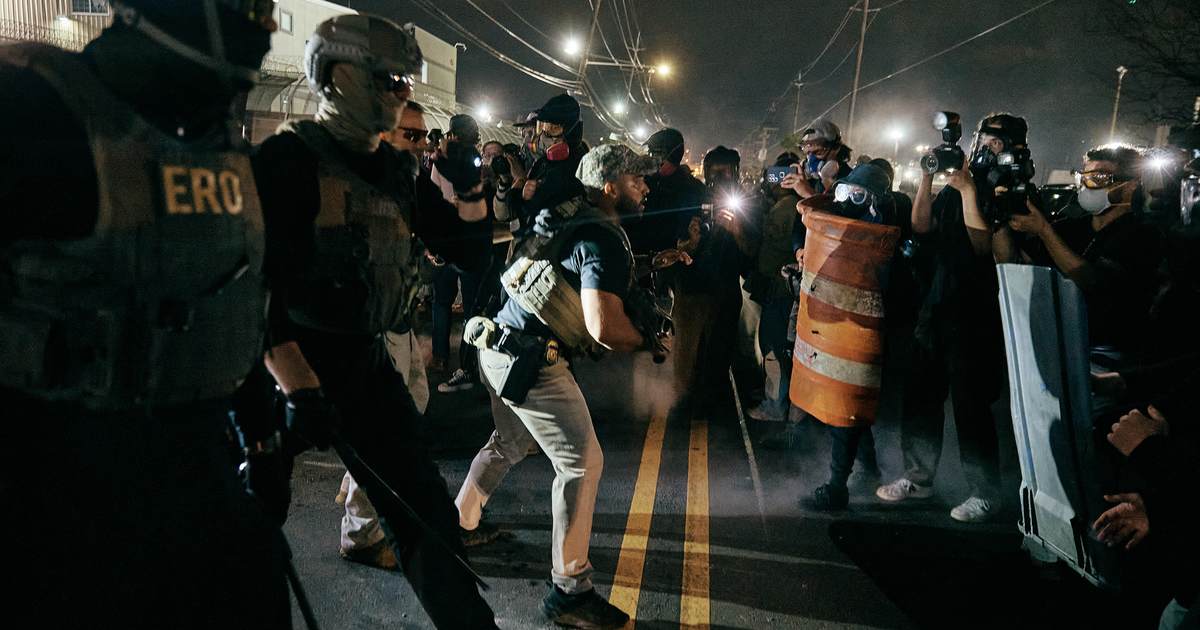
Outside Delaney Hall, clashes between anti-ICE protesters and law enforcement escalated to the point where state police were deployed to restore order. Barricades went up and visitation was temporarily suspended while authorities sorted out security and crowd control. For people focused on public safety, that breakdown in order is its own story.
Republican critics argue that supporters of open borders and activist groups are weaponizing humanitarian rhetoric to score political points. They point to commissary purchases and alleged donor-funded commissary credit as evidence that some demonstrations are curated spectacles. That critique is meant to shift the conversation from accusations about food quality to questions about accountability and honesty.
The names involved—Rep. Jerry Nadler on the left and officials like Scott Mechkowski and Tom Homan on the right—illustrate a broader divide. One side raises health and human rights alarms, the other side demands facts, receipts, and a simple check of reality. The Delaney Hall episode is likely to become a reference point in future fights over detention conditions and oversight.
What happens next will depend on transparency and willingness to let independent monitors verify conditions without being swept up in partisan theater. Conservative readers will watch whether internal data, commissary records, and eyewitness reports are treated as evidence or dismissed to preserve a preferred narrative. Either way, the incident shows how fast a local issue can become a national political flashpoint.