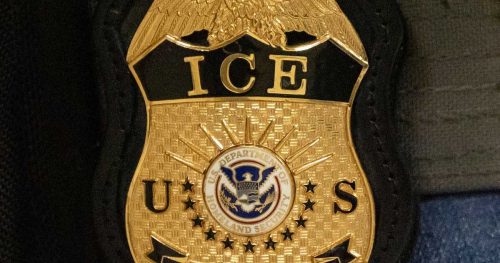
A Santa Monica man admitted in federal court that he doxxed an ICE lawyer, posting her private home address and urging others to “swat” her, a dangerous crime that federal prosecutors say targets protected officials and risks lives.
Federal prosecutors say Gregory John Curcio, 68, pleaded guilty to one count of violating the protection of individuals performing certain official duties after a February 2025 social media post that named an ICE attorney, published her home address, and told followers to “swat” her. The indictment and public filings make clear that publishing certain personal information about covered persons, including federal employees, is illegal when done to facilitate harassment or violence.
Federal law limits the publication of restricted personal information such as a victim’s Social Security number, home address, home phone number, mobile phone number, and personal email address when the target is a covered person. Prosecutors argued Curcio crossed that bright line by posting the attorney’s address on multiple accounts and including instructions meant to prompt an armed-response prank that can turn deadly.
According to court documents, Curcio identified the victim as an ICE agent and posted her home address on Facebook and at least one other social account with directions to “swat” her at that address. That deliberate sharing of a private residence and a call to provoke a false emergency is exactly the kind of conduct the statute was written to punish, because it invites an immediate risk to life and public safety.
“Swatting” is a term used to describe a form of harassment that often involves placing a false emergency call to law enforcement or emergency responders, often reporting a false, serious ongoing crisis or crime at a specific location to prompt a significant law enforcement response. The tactic has led to injuries and deaths in other incidents, and courts treat it as a serious threat rather than a prank.
Court papers state the victim told investigators Curcio was a former resident at her mother’s apartment building in Santa Monica, and that he had been harassing and threatening her mother for years. She said she never met Curcio, but that the harassment campaign against her family began at least in January 2024 and escalated into the online doxxing episode this past February.
https://x.com/USAO_LosAngeles/status/2063003316850749585
Prosecutors say the pattern of harassment—moving from targeting the mother to publishing the attorney’s private information—shows a clear intent to intimidate and to enlist others in dangerous conduct. That intent matters under the statute: the law covers not just the disclosure of identifying information, but disclosures made with a malicious purpose toward an individual performing official duties.
Curcio faces a scheduled sentencing hearing on August 21, 2026, before United States District Judge Michelle Williams. At sentencing he faces a statutory maximum of five years in federal prison, a penalty that reflects how the justice system weighs threats against public servants and the potential harm to innocent bystanders when false emergencies are triggered.
The case is being prosecuted by Assistant United States Attorney Lauren Restrepo of the National Security Division, and U.S. Immigration and Customs Enforcement’s Office of Professional Responsibility is investigating the matters surrounding the victim and the agency. Law enforcement officials say preserving the safety of federal employees and their families is a priority, and that the courtroom is where disputes like this belong, not in violent online mob tactics.
This prosecution underscores a larger point about online lawlessness: anonymous or semi-anonymous posts that reveal private data and urge violent responses are not protected speech, and they carry real-world consequences. Republican-leaning law-and-order principles favor enforcing existing statutes that protect officials and private citizens from coordinated campaigns of harassment that can escalate into violence.
The guilty plea also serves as a reminder to social platforms and users that turning private information into a weapon invites federal involvement. When posts cross into targeted threats and give instructions to provoke armed responses, local and federal authorities have tools to hold the perpetrators accountable and to deter copycat behavior that could put families and first responders at risk.