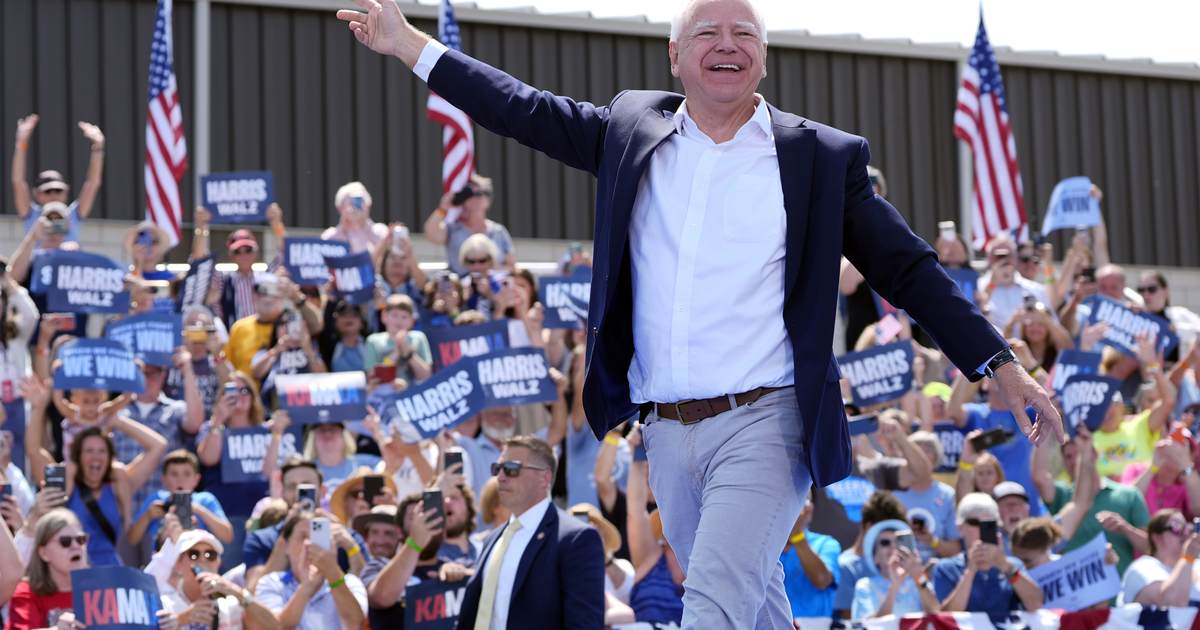
This piece argues that removing private firearms does not automatically create freedom, using recent comments from Tim Walz and examples from England and Australia to question whether disarmament delivered the liberties its proponents promise.
Minnesota Gov. Tim Walz makes it clear he trusts himself with guns and not other people, and that attitude matters whenever politicians propose broad gun restrictions. Lawmakers in Minnesota resisted his push this session, but the debate keeps circling back to a familiar claim: hand over the guns and you’ll be safer. That claim deserves close scrutiny, because safety and freedom are not the same thing.
Walz’s view of liberty looks very different from the traditional idea of individual rights, especially when he points to nations that have largely disarmed their populations. The examples people name most often are English-speaking democracies, places many Americans assume are natural allies in the defense of liberty. Those comparisons are convenient talking points, but they deserve careful unpacking.
This video is floating around on X. Pay no attention to the text, as I can’t find that specific call anywhere, but listen to Walz’s words instead. The clip feeds a simple narrative: fewer guns equals more freedom. That sounds neat on the surface, but the reality on the ground is messier and, in some cases, worse for individual liberty.
In the U.K., there are recurring episodes where police knock on doors over social posts or jokes, and people get hauled into formal investigations for speech online. Authorities have argued that certain comments disrupt public order, which in their view justifies a crackdown. Yet many Americans recognize a different principle: “Free speech is free speech.” If government can police memes and deleted posts, the line between public order and political policing gets dangerously thin.
https://x.com/DefiantLs/status/2061289130227847519
When citizens are largely disarmed, their ability to resist state overreach or violent crime changes fundamentally. Critics point to cases where violent attackers stab children, then claim victim status, and law enforcement response can look slow or confused. Those tragedies feed the argument that disarmament leaves ordinary people with fewer options to defend themselves when seconds count.
Australia’s social media rules illustrate a related concern: speech limits framed as public protection quickly narrow acceptable criticism. Laws against posting so-called hate speech are enforced in ways that chill public debate and make it risky to voice unpopular opinions. When criticism becomes criminalized, the space for open discussion that underpins a healthy republic shrinks.
Across much of the West, institutions still use the rhetoric of the “free world,” while simultaneously empowering officials to force entry over online posts and to treat uneven enforcement as fairness. That contradiction is troubling; law and liberty drift apart when political aims replace neutral application of the law. Punishing speech or treating one group worse under the guise of equity erodes trust and civic cohesion.
Not every country that has reduced private gun ownership is a police state, and nobody claims they’ve fully resurrected the Stassi or the KGB of the communist bloc. Still, the presence of heavy-handed enforcement and selective prosecutions shows how liberty can fray far from the extremes of totalitarianism. Being less free does not require a single dramatic event; it happens through many small legal and cultural shifts that add up.
The argument that guns were taken to stop mass shootings but those shootings kept happening is worth noting, because policy outcomes matter more than intentions. If disarmament does not produce the promised drop in violence, the trade-offs — especially to civil liberties — become harder to justify. Those of us who value constitutional protections should pay attention to how rights are traded away in the name of safety.
Walz might not have actually called for mass gun confiscation, but we all know he wouldn’t object to the idea so long as his hunting weapons are spared. I won’t rule out his willingness to give up his own guns in the process, even. If communities surrender firearms hoping for a freer society, they risk surrendering a broader set of checks on power as well, and that outcome should give any freedom-minded person pause.