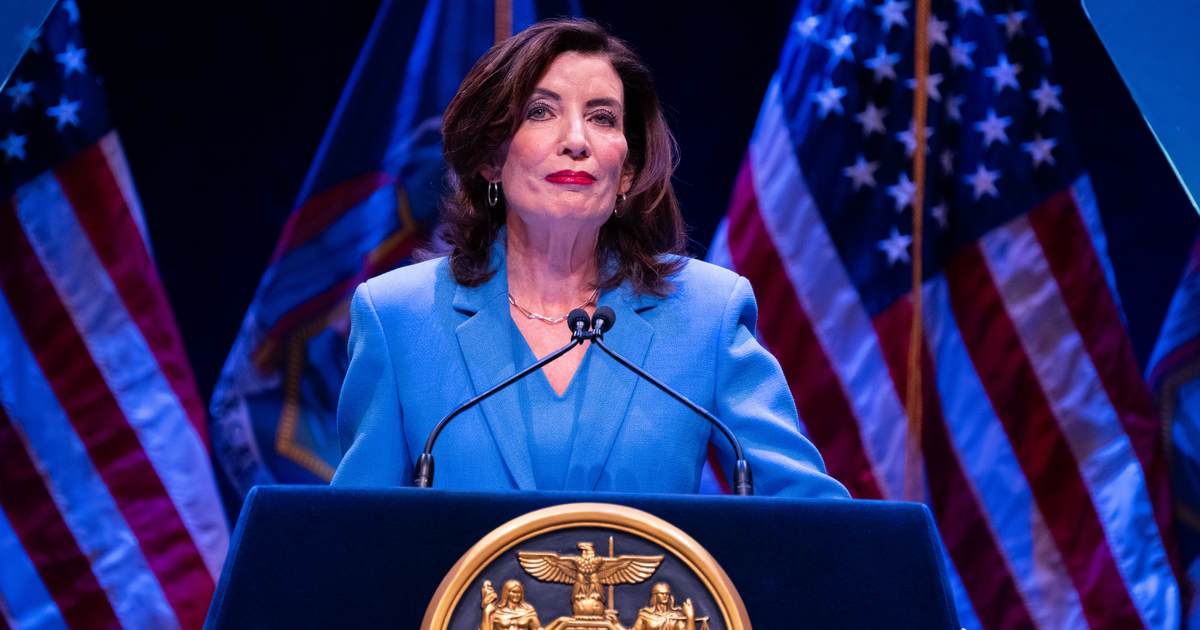
New York and Texas traded taunts over the NBA Finals, and a social media jab meant as sports banter turned into a political headache when New York Governor Kathy Hochul responded in a way that blew up online and refocused the debate on men competing in women’s sports.
The New York Knicks and the San Antonio Spurs meet in the Finals, and Texas Governor Greg Abbott leaned into the rivalry with a bit of trash talk, saying the Spurs would ‘dunk on the Knicks’ like Texas ‘dunks on New York.’ It was pure sports-banter fuel, meant to rally fans and rile opponents. Instead, the exchange quickly slid from basketball into a culture fight when images and reactions were dragged into the public square.
Because Kathy Hochul can’t take a joke, she decided to make what we’re sure she thought was a brilliant point. Her move felt less like a zinger and more like political signaling, and it landed badly on a lot of people who expect politicians to have at least a sense of humor about sports. What started as a playful governor-to-governor jab now looks like a misfire.
https://x.com/GregAbbott_TX/status/2061264566860865676
She not only can’t take a joke, but she’s also not very bright, at least judging by this exchange. The timing and tone were off, and the response opened her up to criticism across the board. Her Press Office account is also cringe, turning a simple moment into an avoidable mess.
People online were quick to seize on the post and lampoon it; critics called the whole thing tone-deaf and clumsy. The backlash wasn’t limited to one corner of the internet either, and that shows how fast a small political jab can balloon into a larger controversy. Public figures would do well to remember that a single tweet can define a narrative for days.
If she wants to play that card, fine, let’s play that card. The image Abbott shared showed a wheelchair bound man absolutely bodying a woman at basketball. That image underscored a blunt point many are pushing: men have physical advantages over women in many sports contexts, even when those men “pretend” they’re women. The picture wasn’t a clever meme; for critics it was evidence of an unfair mismatch and a policy problem more than a punchline.
For the governor, the misstep was more than a tone-deaf joke; it was a missed political opportunity to handle a thorny subject with finesse. Critics warned that clumsy messaging on sensitive issues like competitive fairness and women’s sports hands opponents easy ammunition. In other words, sloppy political theater can turn hearts and minds against you faster than a policy debate ever could.
She’s the worst, some conservatives declared, leaning into that frustration and using the moment to highlight broader concerns about fairness and safety in women’s athletics. The debate is no longer just theoretical or academic for athletes, parents, and coaches who see real consequences on the court and in locker rooms. Once that visual evidence circulated, the argument shifted from abstract to immediate.
Yes, she is. She didn’t mean to do that, either, of course, but the mistake was made and the fallout followed. Public officials often misjudge how a single post will be read, and in this case the reading was harsh and unforgiving. Social media magnified the error, and critics pounced.
Hochul’s really batting a thousand here, to mix our sports references, which is to say she keeps making avoidable gaffes that feed the narrative critics want to spin. That narrative ties into a larger partisan divide over how to balance inclusion with fairness in competitive sports. On that front, many conservatives argue you can’t simply graft ideological positions onto competitive categories without consequences for women and girls who have trained for years inside those categories.
Democrats don’t oppose that because Democrats don’t care if our women and girls, who’ve spent years training, win. They just care that their preferred constituency gets to play and ruin everything. That blunt assessment captures the anger a lot of people feel when a political class appears willing to overlook competitive fairness for the sake of signaling or identity politics.
Hochul didn’t seem to think through the optics or the message, and now the only question is how she handles the cleanup. Will she double down, apologize, or quietly move on and hope the internet forgets? Whatever she chooses, the episode makes one thing clear: sports banter among governors can become a surprisingly potent battleground for cultural fights, and politicians who misjudge that risk getting hammered as badly as any team on the court.