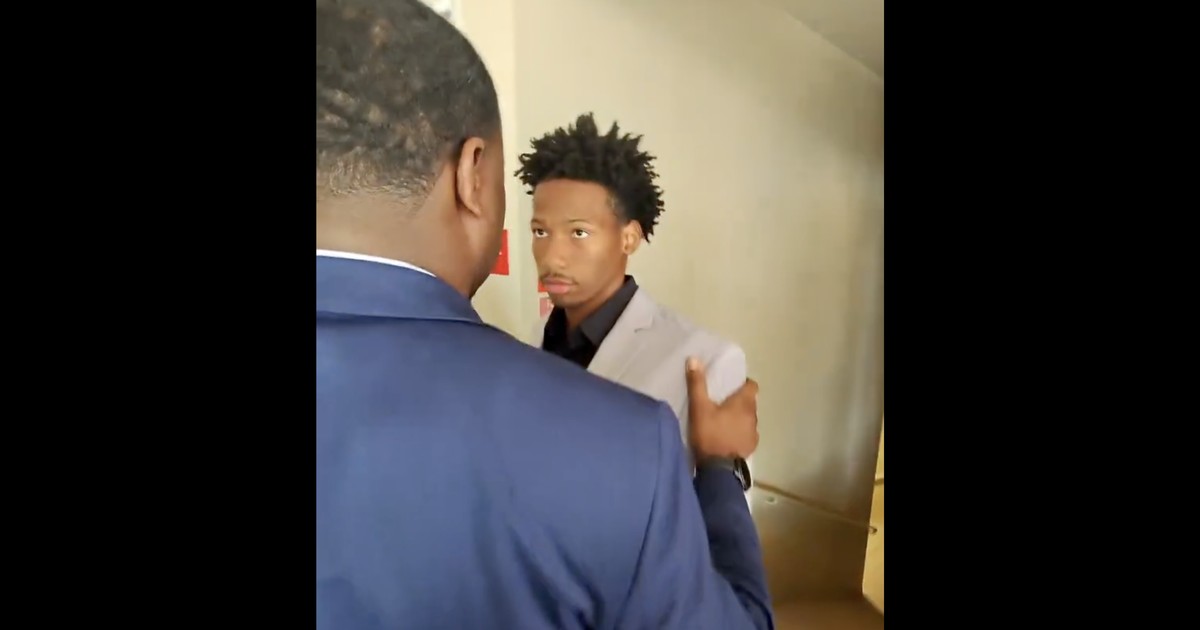
The defense in the Karmelo Anthony trial has rested after a series of courtroom setbacks, leaving closing arguments imminent and jurors facing sharply conflicting testimony that prosecutors say undercuts the self-defense claim.
The case moved toward its final phase when Anthony’s lawyers finished presenting witnesses and asked the judge to throw out the case for lack of sufficient evidence, a bid that the court denied. Observers inside the courtroom described the defense’s day as chaotic, and family members were reportedly taken aback by the performance of the legal team. The denial set the stage for closing arguments and a jury decision looming the next day.
Anthony’s team began by asking the judge to rule in their favor, arguing the state had not met its burden, but the motion was rejected. That motion appeared to be the defense’s central tactic, and at one point the team said they “didn’t know” where to proceed next, according to MaryAnn Martinez of the Daily Mail. People close to Anthony were reportedly disappointed with how the defense presented its case.
https://x.com/MaryAnnreports/status/2063353408313020727?ref_src=twsrc%5Etfw
Several witnesses called by the defense failed to support the narrative that would clear Anthony, including an unnamed teen who initially told police one story and later gave different testimony at trial. That teen had said students were “surrounding” Anthony before the stabbing, a claim that did not hold up under scrutiny. When the prosecutor cross-examined the witness, it emerged the teen had been warming up on the field and said he was unaware of the event until after it happened.
Under cross-examination the teen retreated from the idea that a crowd had hemmed in Anthony, and portions of his earlier statements were walked back in court. That weakening of the defense witness timeline allowed the prosecution to emphasize inconsistencies and raise doubts about the self-defense theory. Those shifts in testimony played into the state’s argument that Anthony’s account was not reliable.
Other defense witnesses added to the trouble for Anthony by offering testimony that suggested he may have instigated the confrontation rather than acting in self-defense. Prosecutors seized on those accounts, arguing they undercut any reasonable claim that Anthony faced an imminent threat requiring lethal force. The pattern of testimony made it harder for the defense to thread a coherent alternative explanation for what happened.
Perhaps the most startling moment came when the defense suggested the victim, Austin Metcalf, had in effect caused his own death by “impaled himself” on Anthony’s knife. That phrase drew audible reactions from jurors and a tense atmosphere in the courtroom as people absorbed the defense’s theory. The claim struck many observers as both sensational and difficult to accept without solid supporting evidence.
With the defense finished, attorneys will present closing arguments tomorrow morning and the jury will then begin deliberations. The prosecution will aim to tie the conflicting testimony and the denied motion into a clear narrative of culpability, while the defense will try to salvage reasonable doubt from the gaps and inconsistencies they highlighted. Either way, the next day will be decisive in determining whether the jury returns a guilty verdict or an acquittal.