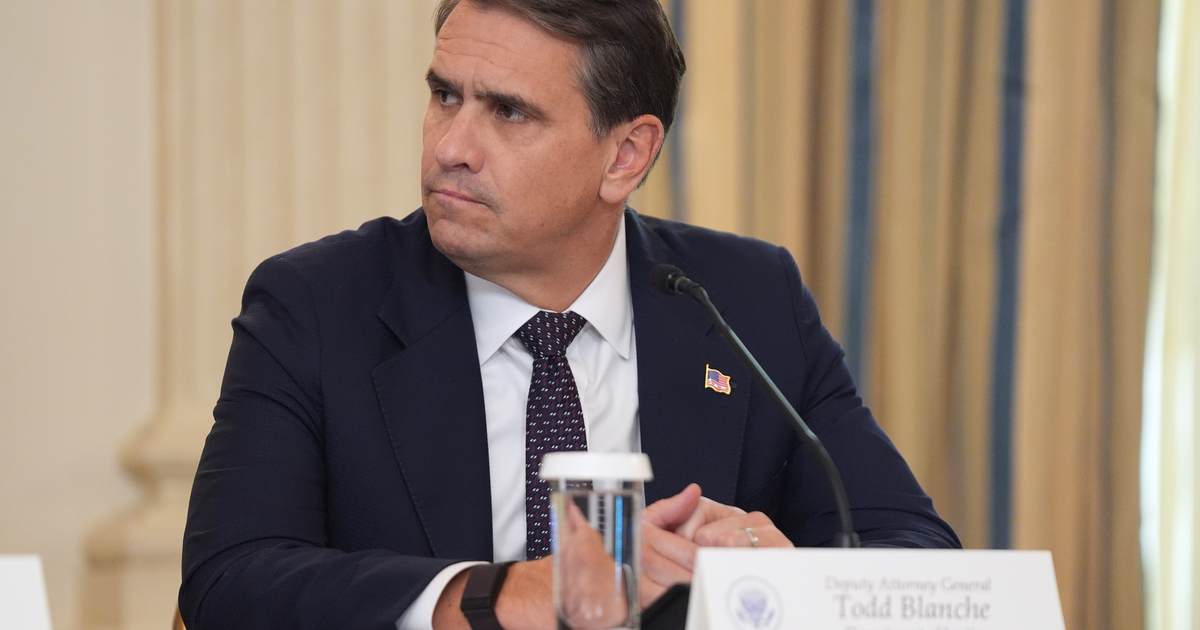
President Donald Trump has named Acting Attorney General Todd Blanche as his pick to lead the Justice Department, setting up a contentious confirmation fight that will test Senate dynamics and party loyalties.
President Donald Trump has officially tapped Acting Attorney General Todd Blanche to lead the Department of Justice on a permanent basis, moving the administration to lock in its top law-enforcement post. The announcement signals a clear choice about how the White House wants the Justice Department to operate going forward. That decision will immediately draw fire from Democrats and trigger a full confirmation process in the Senate.
Blanche comes to the role with prior experience inside the Justice Department, having served as Deputy Attorney General under former Attorney General Pam Bondi after being confirmed in the early days of the second Trump administration. Before his time back in the department he acted as Trump’s lead counsel in numerous lawfare cases, representing the president across high-stakes legal battles. His resume blends courtroom experience with inside knowledge of DOJ operations, which appeals to conservatives seeking steady leadership.
https://x.com/townhallcom/status/2064099669991403672
His initial confirmation was narrow, clearing the Senate with a 52-46 vote in a tight contest that underscored partisan fault lines. Democrats fought that confirmation then and have signaled they will mount the same kind of opposition again. Expect a replay of the last confirmation drama, with senators trading sharp questions and partisan messaging.
Public pushback has already begun on the left. “He’ll have a torturous confirmation—with ferocious opposition from me & others,” Democrat Sen. Richard Blumenthal said on social media. That blunt warning is a preview of the tone Democrats intend to take, casting Blanche as a controversial pick rather than a steady hand. Republicans will need to counter that narrative by highlighting qualifications and experience rather than getting dragged into political theater.
The arithmetic in the Senate is a real factor for Blanche’s prospects. With some Republicans like Thom Tillis, Bill Cassidy, and John Cornyn appearing to distance themselves from the former president following election losses, Blanche is unlikely to enjoy wide bipartisan support. Confirmation could move forward, but almost certainly on a razor-thin margin that gives every single vote outsized importance. That narrow path will shape strategy and talking points for both sides.
Supporters argue Blanche would restore a focus on enforcing the law impartially while pushing back against what conservatives see as politicized prosecutions. From a Republican perspective, the Justice Department should prioritize clear rules, resource allocation to violent crime and border enforcement, and defense of administrative prerogatives. Blanche’s background as a litigant defending the president gives him credibility with those who want a DOJ that resists selective enforcement.
Still, Senate hearings are likely to spotlight past cases and any opinions Blanche expressed while representing Trump. Democrats will ask tough questions about ethics, prosecutorial discretion, and how he would handle investigations tied to the president. Republicans should be ready to shift the conversation to competence, adherence to law, and the need to stop weaponizing the department for political ends.
The nomination also matters for ongoing and future litigation involving the administration and the president personally. A confirmed attorney general aligned with administration priorities could change internal policies and decision-making on investigations, appeals, and prosecutorial guidelines. That means the confirmation vote is not just a personnel decision; it has immediate legal and political consequences.
On the ground, the next steps are clear: prepare for committee hearings, mobilize floor votes, and frame the debate in public. Expect a tight timeline as both sides jockey for advantage and aim to use the nomination as a platform for broader messaging. The outcome will tell us not only who runs the Justice Department but how much influence each party can exert over its future direction.