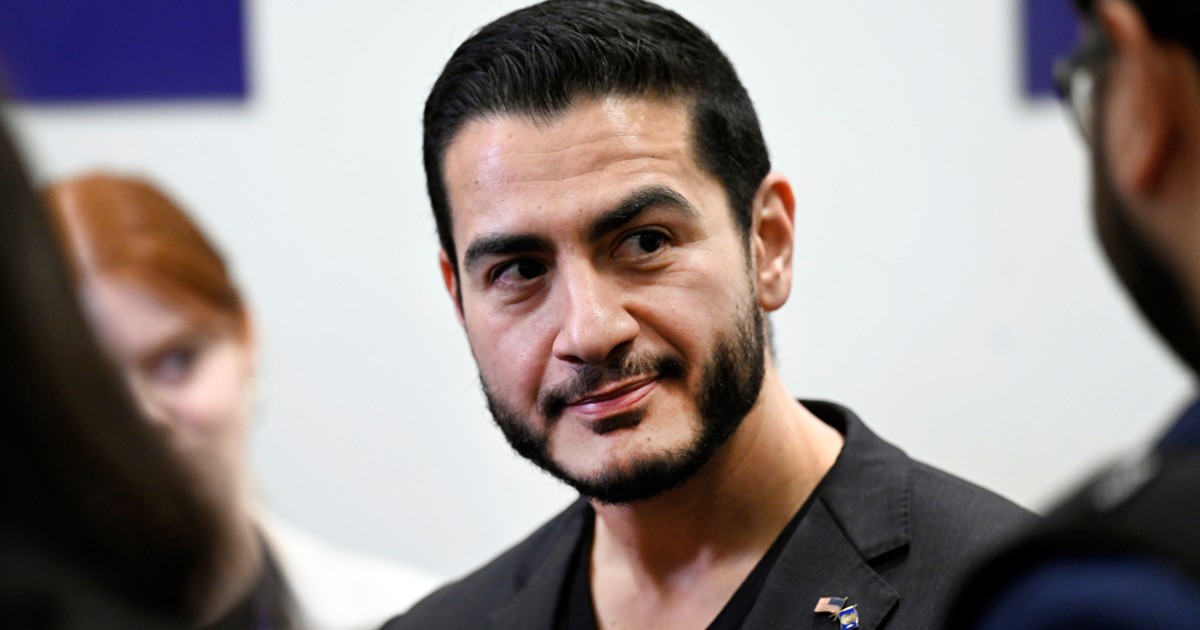
Polls show Michigan Senate hopeful Abdul El-Sayed trailing badly with Black voters, his campaign scrambling as critics point to his socialist ties and a narrative that isn’t landing.
On July 16, public polling indicated that Michigan U.S. Senate candidate Abdul El-Sayed was losing Black voters to Haley Stevens by nearly 50 points, a shift that campaign aides are now trying to explain away. The numbers prompted immediate reaction across the political spectrum, and the campaign’s early attempts at damage control have already attracted attention. For many observers, the outcome underscored a growing discomfort among key constituencies with the candidate’s rhetoric and alliances.
One response to the fallout came in the form of a Community Note applied to a social post, and that note cited a familiar line about pay disparities. The exact language printed in that Community Note reads: “The gender pay gap exists only when job comparisons are not equal (uncontrolled). When data is controlled by factors such as job title, experience, education, industry, job level and hours worked, women’s earnings are almost equal to men; $.99 for every $1.00 men make.” That passage has been used to push back on simplistic claims and to shift the conversation toward nuance.
https://x.com/AbdulElSayed/status/2079630311407644816
According to Payscale.com, when uncontrolled, the pay gap between women and men is 82 cents, and when controlled, it rises to 99 cents. Those figures have been waved around by both supporters and critics as proof that statistics can be framed to fit a political point, but the broader problem for El-Sayed is not a line of argument about numbers. It’s that his message and his affiliations are running into resistance in communities he needs to win.
Political strategists on the right and center argue the campaign’s pivot to emphasize controlled statistical contexts feels defensive rather than persuasive. That defensive posture makes it easy to paint the candidate as out of touch with pragmatic economic concerns. Opponents have been quick to highlight the contrast between technocratic explanations and voters’ everyday experiences.
Critics also point to El-Sayed’s ties to left-wing organizing, which some voters interpret as ideological more than practical. The candidate’s alignment with Democratic Socialists of America allies and high-profile progressive figures has become a focal point for messaging from rival campaigns. For many Black voters, promises framed as ideological absolutes can feel disconnected from priorities like safety, schools, and jobs.
That criticism has not been limited to rhetoric; it’s bled into imagery and campaign events, where opponents emphasize differences in tone and policy emphasis. The claim “It’s all he’s got.” has appeared in commentary criticizing the campaign’s reliance on talking points rather than concrete local outreach. That critique tries to signal that rhetoric alone won’t flip those 50-point margins.
The campaign’s response so far has been a mix of data-driven rebuttals and attempts to reframe priorities, but shifting perceptions takes more than a news cycle of clarifications. Grassroots work, consistent local engagement, and tailored messaging are what voters expect, especially in communities historically courted by both parties. When that work feels absent, skepticism grows.
The Islamist communism El-Sayed and his DSA allies are pushing does not go over well with black voters. That phrasing has circulated among critics who argue that the candidate’s ideological mix alienates mainstream voters. Whether framed as socialism, radicalism, or simply impractical policy, the label has become a tool for opponents to consolidate doubts.
When a campaign leans heavily on academic or theoretical arguments, it opens itself to the charge of preferring ideology over results. Opponents highlight stark examples meant to show how abstract policy goals can produce real-world tradeoffs for working families. That line of attack has traction when contrasted with local anecdotes about jobs, wages, and community institutions.
Another recurring critique is rhetorical: socialists believe the burger flipper at the local McDonald’s should make the same as the plumber and the nurse. That assertion pops up in debates to emphasize concerns about incentives and economic complexity. For many voters, questions about fairness are mixed with pragmatic worries about opportunity and upward mobility.
Supporters of the candidate counter that big ideas spark necessary debate, but critics reply that ideas must translate into practical policy outcomes. Those back-and-forths are exactly why the current polling is so damaging; they suggest a credibility gap voters may be reluctant to bridge. Campaigns that close those gaps tend to show sustained, local work rather than quick media fixes.
Commentary on both sides has grown sharper as the primary season heats up, and partisan outlets are using the story to underline larger themes about electability and message discipline. Short, punchy lines like “We are always right.” and “No, he’s not. He knows exactly what he’s doing.” have surfaced in the commentary, illustrating the polarized tone of the discussion. Sound bites can fire up a base, but they rarely win over undecided voters on their own.
Editor’s Note: The 2026 Midterms will determine the fate of President Trump’s America First agenda. Republicans must maintain control of both chambers of Congress.