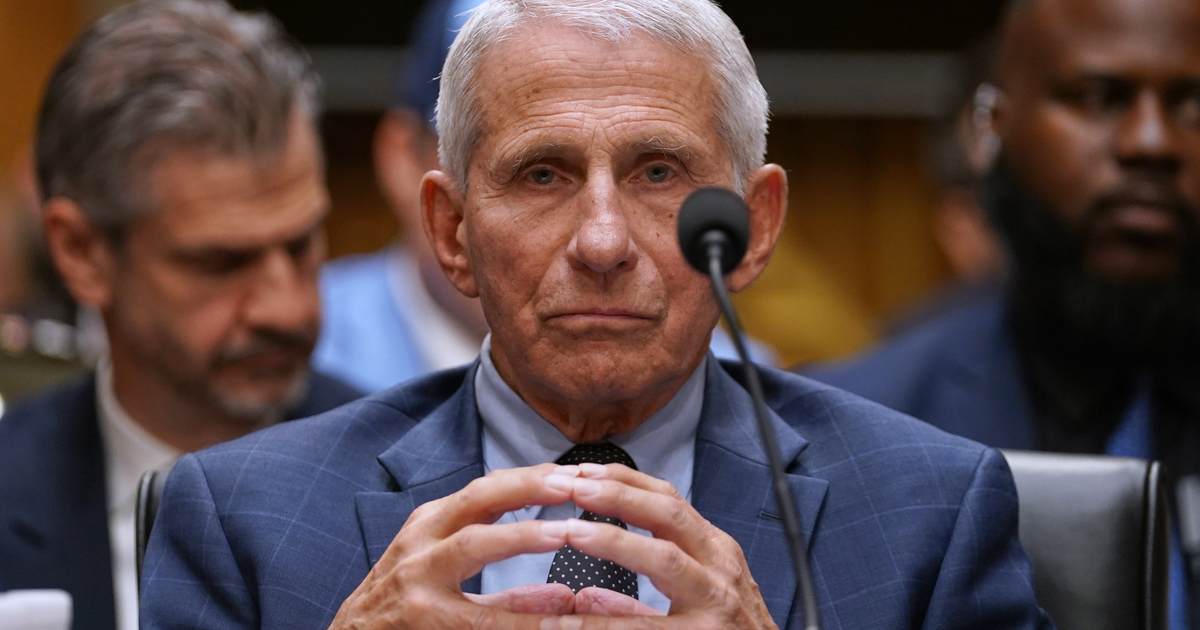
Fauci used his position during COVID to chase personal cash awards while staff worked on federal time, senators say, and his repeated invocation of the Fifth has only sharpened the questions about how taxpayer resources were used.
The central claim is sharp and simple: senior public health officials allegedly converted pandemic authority into a personal prize-collecting operation. Witnesses and senators described federal employees preparing award submissions and other materials while the country was in crisis. The scene in the hearing room felt less like oversight and more like an inventory of conflicts of interest.
Lawmakers laid out a pattern in which senior staff were reportedly turned into a sweep team for nominations and applications, all of which could produce significant cash or prestige for the target. Those resources were, according to the accusations, taxpayer-funded time and government systems. The idea that public servants spent pandemic hours writing award entries for their boss landed hard with Republicans on the committee.
When questioned, the man at the center of it invoked the Fifth Amendment repeatedly, refusing to answer point-blank. That refusal itself became a focal point, because it left the public with only the evidence senators pushed across the dais. Senator Josh Hawley pressed the matter as a ledger: who did the work, what awards were pursued, and how much money was involved.
https://x.com/BillMelugin_/status/2081849209028808826
Hawley and Senator Bernie Moreno took an aggressive tack, displaying emails and reading nominations aloud to make a simple point about misuse of federal personnel. The testimony and documents they presented tried to show that these were not occasional notes of gratitude but organized efforts to apply for high-dollar prizes. Republicans framed those efforts as a misuse of the pandemic response for private enrichment.
“You were using federal employees with TAXPAYER MONEY to apply for and solicit cash prizes for you personally. Cash prizes totaling over a million dollars.”
“And what were these individuals doing in the depth of the pandemic in November of 2020 when millions of Americans were suffering from COVID? What were they doing? I tell you what they’re doing. Folkers was on your behalf soliciting and gathering information for a cash award.”
“Let’s look at it. We’ve got his email right here. Right over my shoulder. Folkers says, ‘I’m working on this nomination for the Dan David award for Fauci. We need to beef up the COVID part. Do you have language in the that you could share that delineates how we responded in new ways to Covid.'”
“He sends this to multiple federal employees. What was the Dan David award? Do you remember, doc?”
FAUCI: “On the advice of counsel, I respectfully decline to answer based upon my rights under the Fifth Amendment to the Constitution.”
HAWLEY: “It was a $900,000 cash award. $900,000 cash award. And he got it because he used federal employees to get it. And this wasn’t the only award, was it, Dr. Fauci? In fact, you applied for and received at least eight other federal cash prizes on federal time using federal employees and federal resources.
“Here they are over my shoulder. Besides the Dan David award, you’ve got the Partnership for Public Service. You’ve got the Adelson prize, you’ve got the Smithsonian award, you’ve got the National Academy of Medicines award, you’ve got the CDC Foundation. In fact, you turn your staff into a full-time application machine.”
“You actually wrote to people and said, ‘Do you think maybe I’d qualify?’ And you got cash for all of this. And it wasn’t just one or two employees, was it? In fact, you used eight separate federal employees on federal time using federal resources to solicit cash awards. Isn’t that true?”
FAUCI: “On the advice of counsel, I respectfully decline to answer based upon my rights under the Fifth Amendment to the Constitution.”
HAWLEY: “Here they are, right over my shoulder. Here’s all of them. The people that you use federal employees so that you could go and get cash money.”
The block of emails and the list of awards dropped the monetary details into public view and forced a contrast between crisis duty and personal recognition-seeking. Republicans argued that the optics are damning because taxpayers paid for the staff time and the infrastructure used to prepare these nominations. That argument resonated with those who expected pandemic work to stay focused on patients and public health, not prize applications.
Witnesses and whistleblowers pointed listeners to a classic follow-the-money instinct. CIA and other sources encouraged investigators to trace where incentives and influence converged during the pandemic. For many senators, the question was not only whether the conduct was improper but also whether it violated rules about using government resources for private gain.
Across the hearing, the emphasis was procedural and moral: federal employees cannot be reassigned to personal projects without oversight, and agency culture should not permit it. Republicans framed this as an accountability test for the public-health apparatus that handled the pandemic. The refusal to answer under the Fifth only intensified demands for records and for clear corrective action.
In short, the hearing staged a confrontation between recorded correspondence and constitutional silence, and those moments were leveraged to push for deeper scrutiny. Committee Republicans said they would follow up on documentation, employee testimony, and any other records that point to misuse of federal time. The exchange made clear that the GOP message will be relentless on any sign of public servants using crises to cultivate private rewards.
If nothing else, the hearing served as a reminder that oversight committees will pursue answers until the public sees the full paper trail. That process will involve depositions, records requests, and ongoing public scrutiny. For voters watching, the core issue is simple: did those trusted with crisis response use their people and resources properly, or did they treat a national emergency as a chance to chase prizes?
Senators framed the stakes as a test of trust in public institutions, and they signaled that the investigation is far from over. The questions raised in the hearing underscore how oversight Republicans intend to press on alleged misconduct tied to the pandemic response. The record is being gathered, and the political fallout will be decided as more facts come to light.
If there’s one thing about Hawley, when someone needs to be attacked or grilled at these hearings, he and Moreno have been the point of the lance.
Hawley’s grilling in full here:
CIA COVID whistleblower said to follow the money, too. Well…