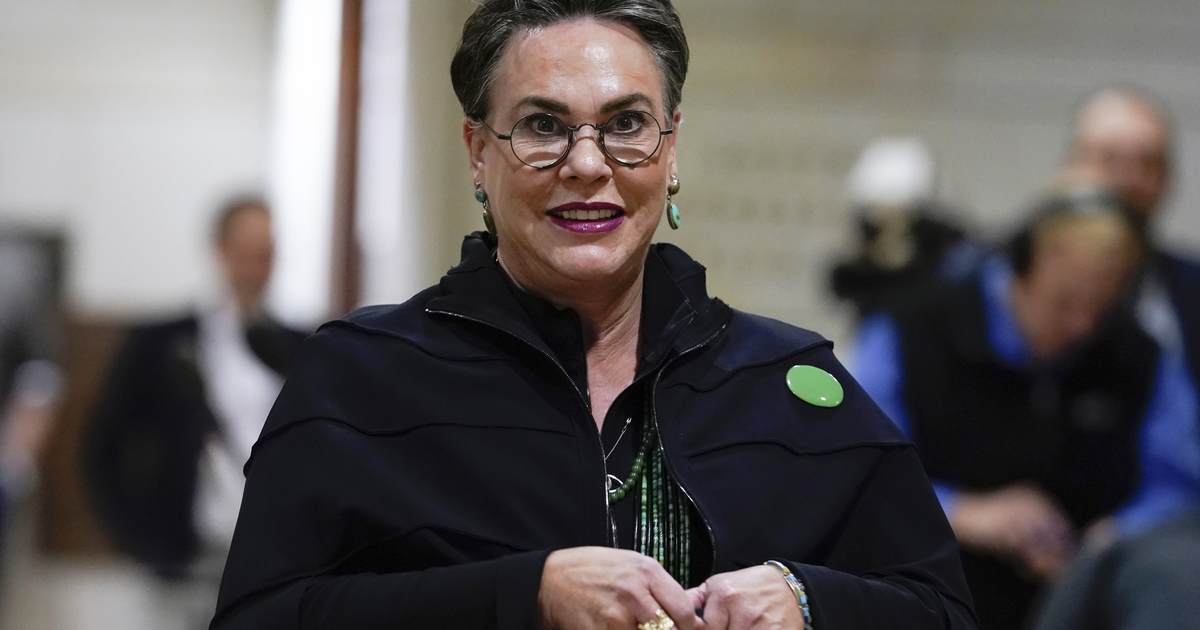
Rep. Harriet Hageman has introduced the Stop Climate Shakedowns Act to block lawsuits that aim to extract money from energy producers and, effectively, tax Americans through the courts; she warns that activist-driven litigation is a backdoor for policies Congress and state legislatures refused to pass and will raise costs for consumers if allowed to succeed.
Congresswoman Harriet Hageman is pushing back against a legal strategy she says environmental activists are using to force revenue from energy companies. She frames those lawsuits as a way to sidestep democratic processes and impose what looks like a tax through litigation. Her Stop Climate Shakedowns Act targets the tactic directly, aiming to halt suits that seek massive payouts from producers.
Hageman argues these lawsuits are not genuine attempts to assign liability but rather an organized campaign to recover billions from the energy sector. She points out that communities and certain states are pursuing novel legal theories to hold producers responsible for climate effects. In her view, that effort amounts to an end-run around representative government and fiscal accountability.
Her bill, introduced alongside Senator Ted Cruz, is built to cut off that litigation at the federal level. The proposal would limit the ability of local governments and activist groups to bring broad claims that demand industry-wide damages. Proponents say this protects consumers and avoids a patchwork of judicially imposed charges that would ripple through the economy.
https://x.com/RepHageman/status/2082901896361127937
“It is the Stop the Climate Shakedowns Act, and what this has to do with is there are many communities and states around the country that have … filed lawsuits against our energy companies claiming that they are responsible for climate change and the impacts of climate change, and this is an effort to try, really, it’s another way of taxation, is really what these communities are doing,” Hageman said.
“So they’ve either adopted superfund laws claiming that producing energy has caused climate change and so those energy producers should be responsible for paying billions upon billions upon billions of dollars in fines,” she continued, “and then on the other hand, they’re just flat-out suing.”
“The city of Boulder, Colorado, has a lawsuit pending in front of the United States Supreme Court right now against Suncorp. So the purpose of my legislation, and I filed this in conjunction with Senator Ted Cruz, is to stop these lawsuits in their tracks,” Hageman said.
The stakes she describes go beyond abstract legal theory: Hageman warns that the cost will cascade to everyday Americans. If judges impose multi-billion-dollar judgments on producers, companies will pass those costs on through higher prices and reduced investment in domestic energy. That outcome would hit households and industries already stretched by rising energy bills.
She paints a clear picture of how litigation can become a stealth tax when lawmakers decline measures like carbon pricing or cap and trade. According to her argument, activists turn to courts when they fail at the ballot box and in legislatures. The result is policy through lawsuits rather than through elected representatives.
“These Boulder and the radical Left and the radical environmentalists, the activists, they cannot get, Congress and their state legislatures are not adopting things such as cap and trade or carbon taxes or the things that they want,” she added. “So this is their way of generating revenue. This is just another tax that they’re attempting to impose. It’s going to go against the oil and gas companies, the coal companies, the mineral producers, but in reality the consumers are the ones that ultimately are going to suffer dramatically because it’s going to make the cost of everything absolutely skyrocket if they were ever successful in one of these cases.
Critics of the lawsuits say the legal theories are novel and overreaching, bending municipal and environmental law to create expansive industry liability. Supporters of litigation argue it forces accountability, but Hageman and others see a political motive that bypasses deliberative policymaking. That tension is at the heart of the debate over how to balance environmental concerns with economic stability and legal limits.
Beyond the courtroom, the clash reflects a broader disagreement about energy policy and national priorities. Hageman frames her effort as a defense of reliable, affordable energy and property rights against activists who would use lawsuits to reshape markets. Her message is that voters and legislatures, not judges, should set policy choices that affect the economy.
The Stop Climate Shakedowns Act is positioned as a clear, targeted response to a growing trend of climate-related litigation. Whether it becomes law will depend on political forces and the appetite in Congress to block these legal strategies. For now, Hageman is making the case that judicially driven fees and damages are a backdoor tax that must be stopped to protect consumers and economic stability.