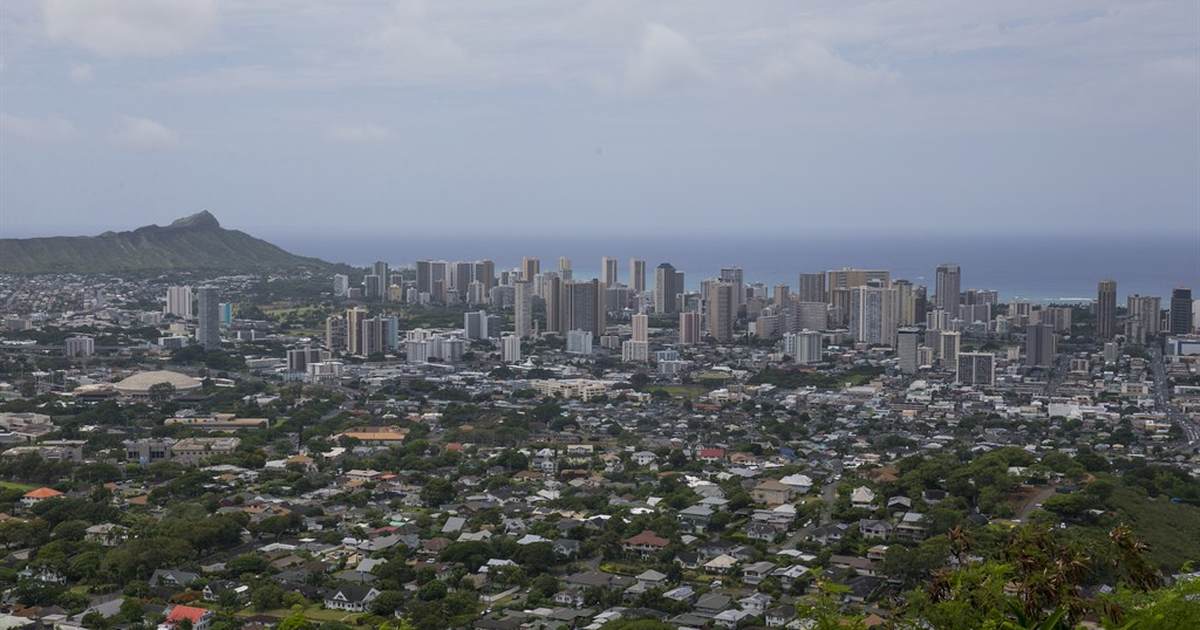
Hawaii’s lieutenant governor has been indicted on charges tied to an alleged bribery scheme involving COVID testing funding and campaign contributions.
If the allegations are true, the charges make sense: prosecutors say a businessman sought government money for testing sites and promised campaign payments in return. The core claim is that Tobi Solidum pursued emergency appropriations and discussed payments totaling at least $35,000 tied to Lt. Gov. Sylvia Luke’s 2022 campaign. That allegation helped sink a reelection push and triggered a broader probe that has ensnared several current and former officials.
Public attention snapped to the case after court filings outlined meetings, recorded conversations, and campaign checks exchanged at a dinner. The timeline laid out by investigators is tight: the alleged checks were handed over, and within days government meetings about emergency appropriations took place. From a political angle, it looks bad—especially for someone who chaired the House finance committee while running statewide.
Ms. Luke, a Democrat, was one of five individuals indicted on Friday. The others were Ryan Yamane, a former state representative; Tobi Solidum, a businessman and lobbyist; Ford Fuchigami, an official with Hawaii’s Transportation Department; and Leo Asunción, a former official with Hawaii’s public utilities commission.
David Louie, a former state attorney general Ms. Luke hired as a lawyer this year, according to local news reports, could not immediately be reached for comment. It was unclear on Friday whether the other four people charged were represented by lawyers.
Before any charges were announced, Ms. Luke had taken a leave of absence. She was replaced by an acting lieutenant governor, and abandoned her bid for re-election.
[…]
Court filings released on Friday allege that in 2022, Mr. Solidum, a businessman, sought government funding for the Covid-19 test sites he was operating and promised Ms. Luke — then a state representative running for lieutenant governor — at least $35,000.
There are two ways to look at this: as a straightforward corruption case, or as a messier legal fight where intent and quid pro quo must be proved beyond a reasonable doubt. Prosecutors have to show that payments were exchanged for official action, not just that campaign checks were handed over. That gap between troubling behavior and criminal proof is why observers warn this could be a tough prosecution.
Prosecutors may have a harder time proving the criminal bribery and conspiracy case against Lt. Gov. Sylvia Luke than with the other four defendants she was indicted with Friday by a 1st Circuit Court grand jury.
There is no clear “quid pro quo” to be found in the indictment in which Luke allegedly either asked or was asked to make in exchange for campaign donations in her successful 2022 run for lieutenant governor, according to retired federal deputy public defender Alexander Silvert.
[…]
The indictment accuses Solidum of four counts of conspiracy to commit bribery and three counts of bribery for allegedly bribing Luke and others with campaign contributions, checks and cash.
[…]
Luke at the time was chair of the state House Committee on Finance while raising campaign funds for her race for lieutenant governor. Also at the dinner at Morton’s The Steakhouse at Ala Moana Center was Solidum’s daughter Kristen Pae and Finance Committee Vice Chair Ty J.K. Cullen, who was secretly working as an FBI informant and recorded the conversation.
According to transcripts of recordings included in the 30-page indictment, Solidum told Luke that “Pae had a couple of checks to give her.” Pae placed an envelope on the table and Luke reportedly put it in her handbag. The envelope contained a $5,000 check from Solidum and a $5,000 check from Pae, both written out to “Friends of Sylvia Luke.”
Solidum told Luke, “By next week we’ll have 35 — so it will be halfway to our 70.”
Luke responded, “Oh, wow,” and, “That’s terrific.”
Solidum continued, “So I’ll get you your 70 but just gotta get to that point, OK? It’s our fundraiser.” He also told Luke he would help pull union support for her.
The following day, Luke ordered the chair of the House Committee on Pandemic and Disaster Preparedness to set up a meeting with government officials to discuss emergency appropriations to the state Department of Health, according to the indictment. Three days later, Luke attended a meeting with government officials to “discuss emergency appropriations to DOH and DOH’s ability to pay for COVID community testing.”
The recorded exchanges make for a striking narrative: checks, envelopes, fundraising targets, and promises of union support tied to urgent appropriations talks. Republicans and watchdogs will point to the sequence and ask why someone in a position of influence met with donors and then quickly convened meetings about appropriations. That pattern is exactly what voters fear when trust in government breaks down.
Legally, this is not over by a long shot; courts will sort intent, context, and admissible evidence. Politically, the damage is immediate: the lieutenant governor paused her duties, an acting officer stepped in, and the campaign is finished. For residents and observers alike, the case is now about whether the system will deliver both accountability and a fair trial.