Minnesota now has a jury verdict that treats offensive speech as a punishable act, and that ruling sits alongside recent decisions and policy trends that raise real concerns about unequal enforcement and the shrinking scope of free speech.
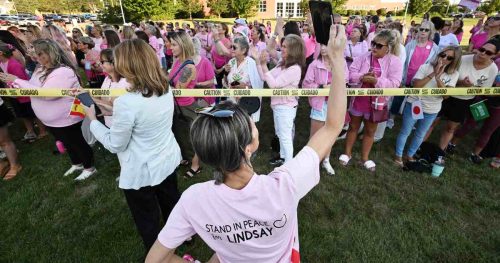
Tim Walz once said the First Amendment protects neither “hate speech” nor “misinformation,” and a Minnesota jury’s guilty verdict against Shiloh Hendrix for disorderly conduct after she used the N-word at people who were harassing her in a public park looks like a concrete result of that attitude. Hendrix was accused of violating public order for replying to harassment with a slur, and the case shows how speech can be criminalized even when it is a response to provocation. This is not a defense of the slur itself, but it is a defense of the principle that offensive words alone were not supposed to be crimes.
The political context matters. In cities and states run by the Left, there’s often talk about defunding police and dismantling prisons, but enforcement follows a different script for different people. Officials who push radical criminal-justice reforms rarely face the consequences when violent offenders return to the street and threaten public safety. The public sees a system that treats speech as criminal while tolerating or excusing violent conduct.
https://x.com/FischerKing64/status/2080643322327257301
Consider the case of Corey Durrell Ruiz in Madison: he had 42 prior arrests, including felony convictions, and was released in May. Ruiz allegedly failed to comply with supervised release and then pulled a knife on officers during a stop; he was shot and killed. Francesca Hong called the shooting an “execution” within minutes and demanded dismantling of the police, a stance that looks tone-deaf when violent recidivists keep coming back to the streets.
Police will still be the ones called to handle situations like Hendrix’s, even if progressive officials want to reimagine law enforcement. When speech becomes a criminal offense and violent behavior is relativized, the net result is more chaos for ordinary citizens. People see police as the only immediate option to keep order when laws are applied inconsistently.
Worse, the case around Hendrix involved people who were accused of far worse crimes. The man who harassed her, and his brother, were charged with sexual assault of an underage girl, then those charges were dismissed “in the interest of justice.” That decision undercuts public confidence when leniency appears directed at the violent and predatory. It’s hard to argue the system is fair when prosecutions of serious accusations are dropped while speech is punished.
There are other examples that point to odd priorities. In Portland, a black man stabbed a white man, and the victim called the attacker the N-word; the attacker was acquitted. The not-guilty finding was not based on innocence of the stabbing but on the fact that he was insulted after stabbing a man. That sequence raises questions about where legal sympathy is placed and whether the focus is on actions or emotions.
Look at the rhetoric coming out of parts of the Left: some officials argue violent crime is not actually violent but an “artificial construct.” Others broaden the definition of violence to include pollution, poverty, prisons, and even hurt feelings. If calling someone a slur or objecting to an ideology can be treated as violence, then words, not actions, will dominate how justice is meted out.
The ideological project of prison abolition and transformative justice sometimes treats offenders as victims of systems, and it treats speech as a public harm worth punishing. Angela Davis, who is widely credited as the intellectual parent of prison abolition, has made choices that reveal a selective compassion for some and not others. That selective approach undermines the message that everyone deserves equal treatment under the law.
These trends matter because the First Amendment exists precisely to protect speech people dislike. If the state can punish offensive speech in public settings, the principle that free speech protects the unpopular and the uncomfortable collapses. The whole point of constitutional free-speech protection is to shield expressions that most people find objectionable.
We are at a moment where the left-wing tendency to redefine violence and to prioritize feelings over actions collides with real public safety problems. The result is a legal landscape that can punish someone for a slur while letting serious criminal allegations fade away under odd prosecutorial choices. That imbalance is exactly what worries people who still believe in clear, consistent application of the law.
Protecting the right to offend is not the same as endorsing every offensive act, but it is a necessary guardrail for liberty. If courts and juries start treating speech as a standalone crime, we will see more selective enforcement and fewer protections for dissenting views. That is the dangerous direction these recent cases and policies are pointing toward.