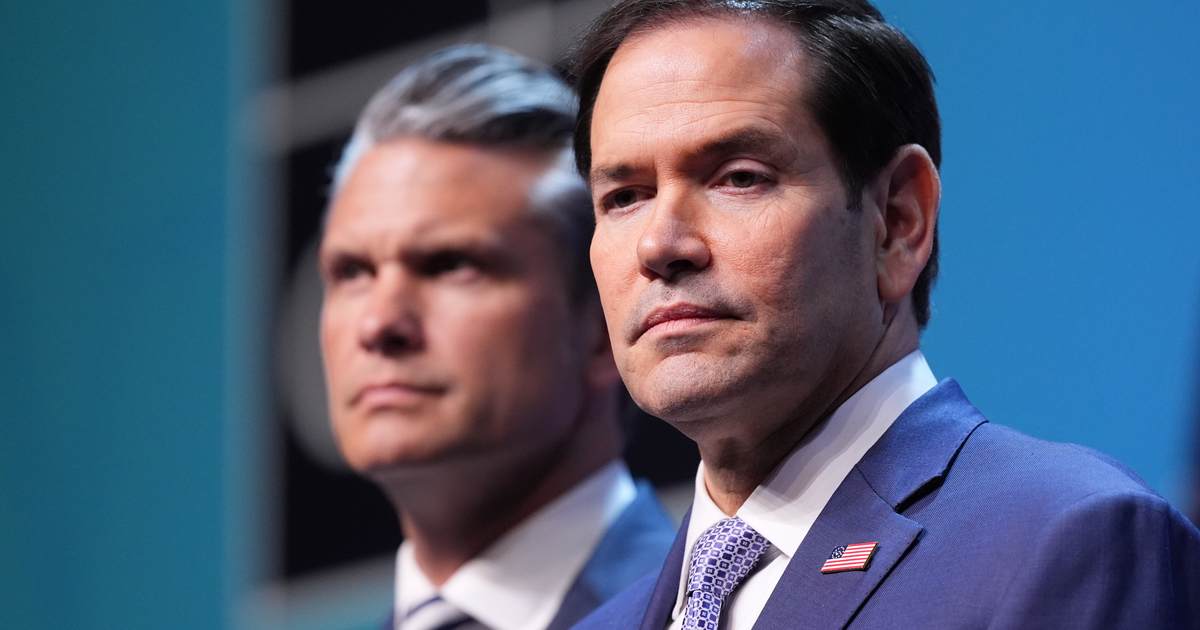
Marco Rubio laid out a blunt case: Iran is failing at home while funding chaos abroad, and that contradiction explains much of its instability.
Marco Rubio has been clear and unapologetic about the root causes of Iran’s unraveling, and his framing is simple and tough-minded. He points to sharp economic collapse and moral choices by the regime as the key reasons the country is in disarray. That combination of self-inflicted hardship and external aggression makes Iran a central security challenge for the region and for the United States.
Rubio’s assessment focuses on the everyday reality Iranians face alongside the regime’s priorities. Ordinary people in Iran are squeezed by soaring prices, shortages, and mismanagement while hardline leaders divert resources to proxies. That contrast is politically explosive and strategically revealing for any observer who wants to understand why the system is cracking.
https://x.com/RapidResponse47/status/2079041984325652521
“I mean, Iran’s economy is in a shambles,” Rubio said. “300 percent inflation, particularly on life-sustaining goods. They have dwindling revenues to meet even their own payroll, they have food shortages, they have a drought which we didn’t cause, and they have a gasoline shortage, a fuel shortage.”
Those figures are stark: 300 percent inflation on essentials, public payroll problems, and shortages that hit daily life. Rubio connects those facts to clear policy failures and misplaced spending priorities by Tehran. When a country with resources ends up with shortages and drought-driven distress, leadership choices matter more than geography.
“All of these problems existed before all this began; they’ve just gotten worse. They will continue to get worse. And one of the reasons why Iran is in a shambles. This is a rich country. Iran is a rich country,” Rubio continued. “One of the reasons why Iran is in a shambles is because every penny that this regime ever gets—be it through sanctions relief or through the oil they’re able to get out—they invest it in Hezbollah. They invest in Hamas. They spend billions of dollars supporting militias in Iraq, Hezbollah, and Hamas.”
Rubio’s point is not subtle: Iran has money but spends it on exporting terror and influence rather than rebuilding its own economy. That diversion explains how a country with hydrocarbon wealth can still struggle to feed and fuel its people. It’s a judgment about priorities and a rebuke of a regime that prefers power projection to public welfare.
“They should be spending billions of dollars supporting the people of Iran. They should be spending billions of dollars building their country. But instead, they use it to sponsor terrorism. So I think there’s a growing awareness of that inside of Iran, and I think there’s even a growing awareness among some of the people in their government. In fact, we have heard that from some of the people in their government,” Rubio said.
He does understand it.
The mullahs, ayatollahs, and leaders have made it clear: they want to destroy the ‘Great Satan’ America and the ‘Little Satan’ Israel, and usher in the Islamic apocalypse. Nuclear weapons are the way to do all of that.
Rubio and like-minded conservatives see the regime’s rhetoric and its proxy network as two sides of the same threat. When a state channels wealth into armed groups that attack neighbors and destabilize the region, that state is an adversary by design. Confronting that reality requires clarity in policy and willingness to act when American lives and allies are threatened.
Yes. The regime needs to crack and be broken.
The U.S. responded with strikes after the Memorandum of Understanding dissolved and after attacks in Jordan killed two service members, a reminder that rhetoric has consequences. Those operations are framed as necessary to defend Americans and deter further escalation, and they reflect a view that weakness invites worse behavior. From a conservative perspective, decisive responses protect interests and signal that aggression will carry a cost.
Rubio’s rhetoric is meant to do two things at once: make the moral case for supporting the Iranian people and make the strategic case for denying the regime the means to wage war by proxy. He emphasizes accountability for leadership choices and the need to cut off the financial lifelines that fuel violence. That approach pushes policy toward pressure on Tehran while supporting those within Iran who want change.
The facts Rubio cites are easy to verify and hard to ignore: rampant inflation, shortages, and continued funding of militant networks. Those realities explain why the regime feels threatened and why internal unrest strengthens, even as leaders double down on external aggression. For conservatives watching the region, that mixture of failing domestic governance and aggressive foreign policy demands a firm, principled response.