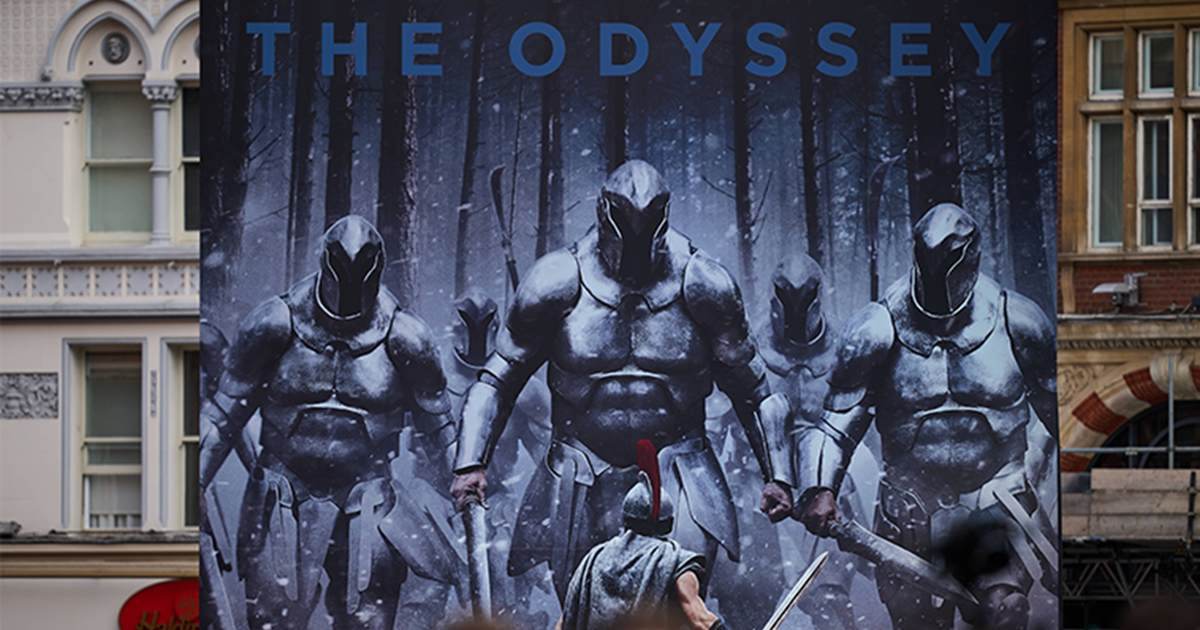
The new Christopher Nolan take on the Odyssey is a blockbuster that has drawn big crowds but also sharp criticism from the very translator whose work inspired the script.
The film opened to huge box office numbers and a lot of social media noise, yet reactions have been mixed across the spectrum. People are packing theaters, but the surprise has been how many thoughtful critiques have emerged alongside the ticket sales. A few commentators who usually praise spectacle still found the movie wanting in crucial ways.
I haven’t watched the film and I make that plain up front; I prefer to read about adaptations and compare them to source texts rather than join every opening-night stampede. That distance shapes the tone here: this is an observation about how an adaptation lands in public debate, not a frame-by-frame review. Financial success does not automatically equal artistic fidelity.
Clips and reviews have circulated online, and they’ve formed the basis for a lot of the criticism aimed at the production. Some of that early pushback focused on casting decisions that struck many as mismatched to the material. Beyond casting, though, critics are arguing the film takes liberties that undermine the original epic’s moral and emotional texture.
Emily Wilson, the classical translator whose translation helped inspire the screenplay, voiced a withering assessment of the finished movie. Her critique goes to the core of storytelling: she says the film fails to make the themes feel earned or the characters believable.
“It has nothing convincing to say about time, memory, history, war, or about the relationship between one warrior’s glorious return and the lives of his family, adversaries, comrades, friends and neighbors,” Wilson told Variety. “It lacks psychological, emotional, political and ethical depth. Its narrative structure is gimmicky. The writing is abysmal. None of the characters has convincing motivation for their actions or words.”
https://x.com/Variety/status/2081792482228994169
That kind of public dismissal from a translator who has made Homer accessible to modern readers landed hard. Wilson has fans and detractors, but her take is rooted in close engagement with the texts she translates, and that gives her opinion a specific weight. Even readers who appreciate her style noted that her approach trims some poetic flourish, so her dislike of an adaptation that strips more away is telling.
Many commentators have also noted a thematic shift in Nolan’s telling, arguing that the director reshaped elements of the original tale to suit a contemporary sensibility. Nolan said as much himself, stating that he changed the ending of the story because he was disturbed by the “grim” and “misogynistic” nature of it. That decision has provoked questions about where fidelity ends and reinterpretation begins.
Other critics compare this production to previous big-screen attempts to handle Greek myth, and those comparisons are rarely flattering to works that rewrite character motives wholesale. There are whispers that the film’s narrative choices reflect a kind of disdain for the source rather than an attempt to illuminate it. For some viewers, that makes the movie feel less like adaptation and more like reinvention.
At the same time, the film’s spectacle and Nolan’s name are drawing audiences who want large-scale cinema experiences, which explains the box office numbers. People who prioritize visual thrills may find what they expect. For those who want a translation of the epic’s moral complexity and human texture, however, reactions have been colder.
The debate unfolding around this release highlights a broader tension in adapting ancient works: how to honor the original while speaking to modern audiences. Some filmmakers opt to update themes and reshape endings; others work to preserve the narrative and character motivations even at the cost of accessibility. The conversation this film has provoked will likely continue as viewers weigh spectacle against substance.